6:25 AM, a landscaping yard in Lake Worth, July. A crew chief we'll call Big E, 44, twenty summers deep, watches his newest hire — a kid we'll call Tyler, 22, second week — load the trailer with visible first-week swagger. Big E has seen the swagger before. He hands Tyler a jug and delivers the yard's oldest orientation speech: "Drink when I drink. Shade when I say shade. The heat doesn't care that you're twenty-two — it's been doing this longer than both of us." Tyler grins the grin of a man who will learn something by Thursday. Big E makes a mental note to watch him at the 1 PM property. The chief's real job in July isn't landscaping. It's physiology.
The arithmetic of the job
The numbers deserve stating plainly, because no office worker believes them: heavy outdoor labor in Florida heat runs around a liter of sweat per hour at peak — a full summer workday can genuinely bill 8 to 12 liters. Nobody drinks that on thirst; thirst under-reports catastrophically at exactly these volumes, which is why the industry standard is scheduled drinking — Big E's "drink when I drink" — not instinct. And the sodium clause is where good crews separate from lucky ones: at these sweat rates, plain water alone becomes dangerous over a long day — diluting blood sodium toward hyponatremia, the risk serious heat industries formally train on. The vet drinking electrolyte mix and eating salted peanuts at break isn't old-school. He's the safety program.
The kid chugging plain water all day thinks he's the responsible one. At a liter an hour, water without salt is its own hazard — the heat industries learned that the hard way, repeatedly.
The two-week window and the August wall
Acclimatization is trained, not assumed: the majority of serious occupational heat injuries hit workers who are new or returning from time away — Tyler's exact demographic — because heat tolerance (sweat efficiency, plasma volume, the whole adaptation package) builds over one to two progressive weeks. Ramp the new guy; schedule the brutal tasks early; watch him at 1 PM. Then there's the veteran's opposite problem — the August wall: months of daily deficit compounding into the late-summer pattern every yard knows — night cramps, shortening fuses, the morning report running amber for weeks. That's not toughness territory. That's arrears.
Crew culture is the safety equipment
The buddy-system list, posted in every good yard: confusion or out-of-character irritability, dry skin when everyone else is soaked, stumbling, spreading cramps, nausea — and heat stroke is a 911 event: shade, active cooling, call, immediately, per the warning-sign ladder. The culture finding is the one Big E teaches without knowing the literature agrees: crews where "I need ten in the shade" is respected have measurably fewer emergencies than crews where it reads as weakness. And for the August arrears — the compounding no water cooler clears — the county's outdoor employers have started running crew-scale recovery sessions: the full fluid-and-mineral settlement, delivered to the yard or the crew chief's carport on a Saturday, months of deficit cleared in an hour per man. The heat is the job. The job deserves funding.
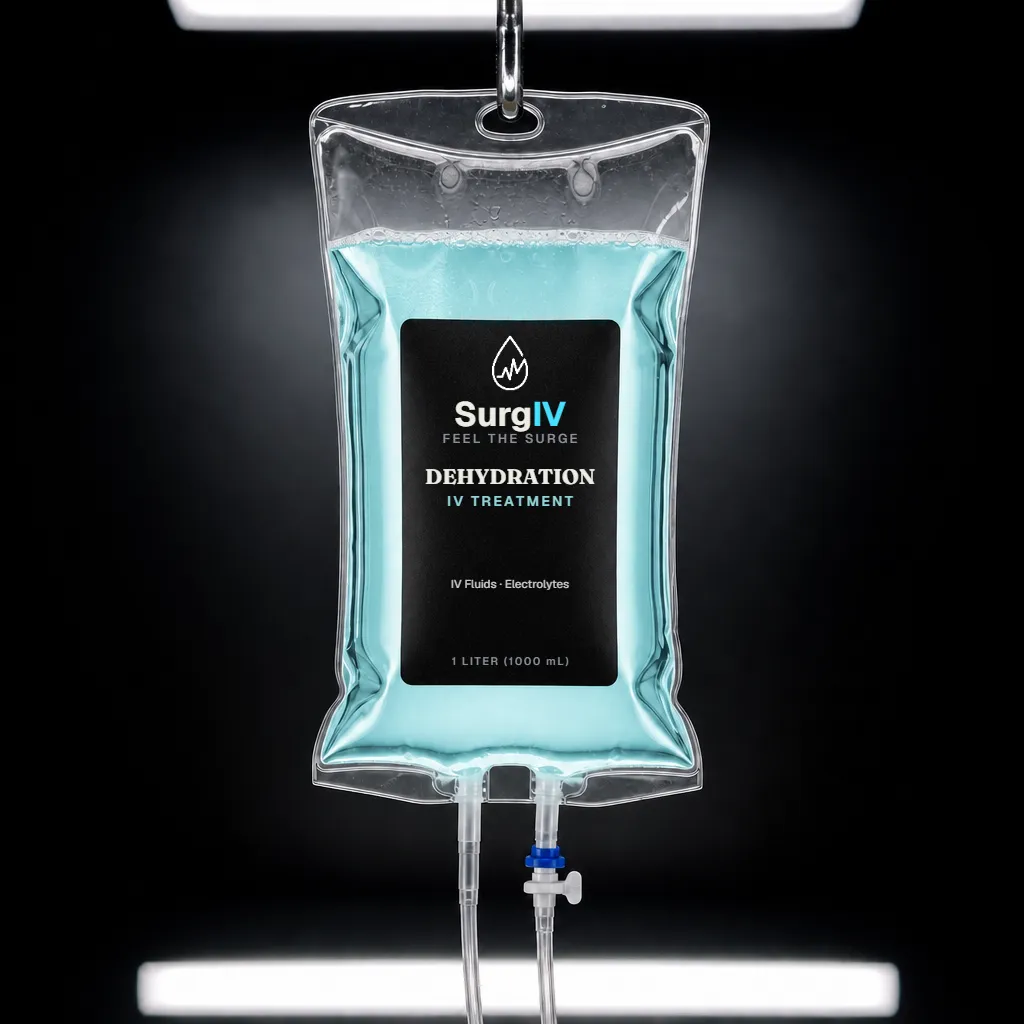
Crew-scale recovery
Dehydration $199
Group sessions for the teams that carry the summer — the deficit settled properly.
IV Fluids · Electrolytes
Tyler, by September
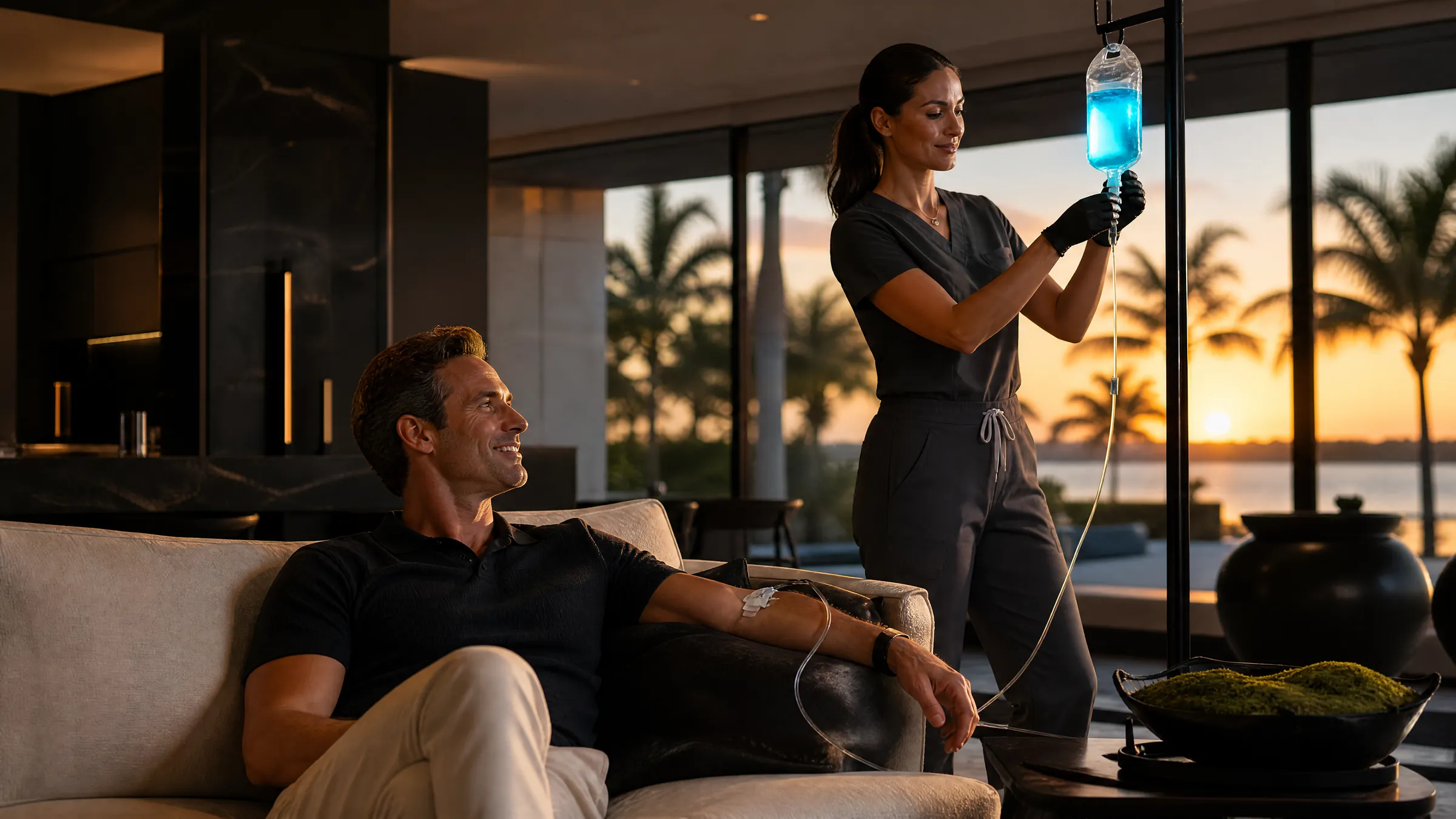
Thursday of week two delivered the lesson as scheduled — wobbly at the 1 PM property, shaded, salted, schooled — and by September the kid was the one handing the new hire a jug. The yard ran its first crew session after Labor Day; Big E went first, "to show the men the needle's nothing." His verdict, delivered from the folding chair, drip running, twenty summers of authority behind it: "Half my August used to live in my calves. This is the first September I've walked into flat. Should've been doing this since the nineties."
This article is for general education and is not medical advice. IV therapy at SurgIV is administered by registered nurses under physician-written protocols, with a health screening before your first visit. Talk to your doctor about what is right for you.