The U-Haul arrived in Palm Beach Gardens on a Thursday in July — because closings don't consult forecasts — carrying the entire household of a family we'll call the Kowalskis, late of suburban Cleveland. By Saturday afternoon, Dave Kowalski, 42, had unloaded roughly half a truck in what his weather app cheerfully called "feels like 106," powered by northern instincts and two Gatorades, and was sitting on a moving box in his new garage experiencing his first genuine Florida lesson: the gray-static head rush, the pounding forehead, the sudden understanding that he had moved to a different physical reality with its own enrollment requirements.
Every year, waves of new residents arrive in this county — and every year, their bodies take the same first-year curriculum. Here's the syllabus in advance, from a company that meets a lot of students mid-lesson.
Semester one: unlearning the north
The transplant's core problem is calibration: every heat instinct you own was trained on northern physics — where 90° is a dry event, where sweat evaporates and cools, where thirst is a reliable gauge. Florida voids the training: the dew point disables evaporative cooling (you pour without cooling — Dave's Saturday in one mechanism), the losses run invisible (breeze and AC evaporate the evidence), and thirst lags the deficit by hours. The first-semester habit set, non-negotiable: the everywhere-water-bottle (console, desk, garage), electrolytes after any real outdoor block (northern hydration was water; Florida hydration is the grid), and drinking on schedule, not signal — the single deepest recalibration, and the one that prevents most first-year incidents.
You didn't move to a hotter version of Ohio. You moved to a different physics department. Enroll accordingly.
Semester two: the seasonal inversion
The cultural curriculum surprises transplants more than the physical one: Florida's summer is the indoor season. The northern instinct — sun's out, get out — inverts here: natives schedule outdoor life before 10 and after 4 from June through September, hibernating through the furnace hours the way Cleveland hibernates through February. The corollary lessons: the sun itself is a different sun (UV at this latitude burns northern skin on shocking schedules — the SPF discipline is immediate, not eventual), the standing deficit is the resident condition (the afternoon headaches Dave blamed on moving stress were the county's welcome letter), and acclimatization is real but partial — 10–14 days of gradual exposure genuinely upgrades your cooling system (more efficient sweat, expanded plasma volume — the same adaptation returning snowbirds rebuild each fall), but adaptation discounts the bill; it never voids it. Year one is the tuition year. Year two, every transplant reports, feels categorically easier — the body and the habits both graduated.
The first-year incident file (and the safety net)
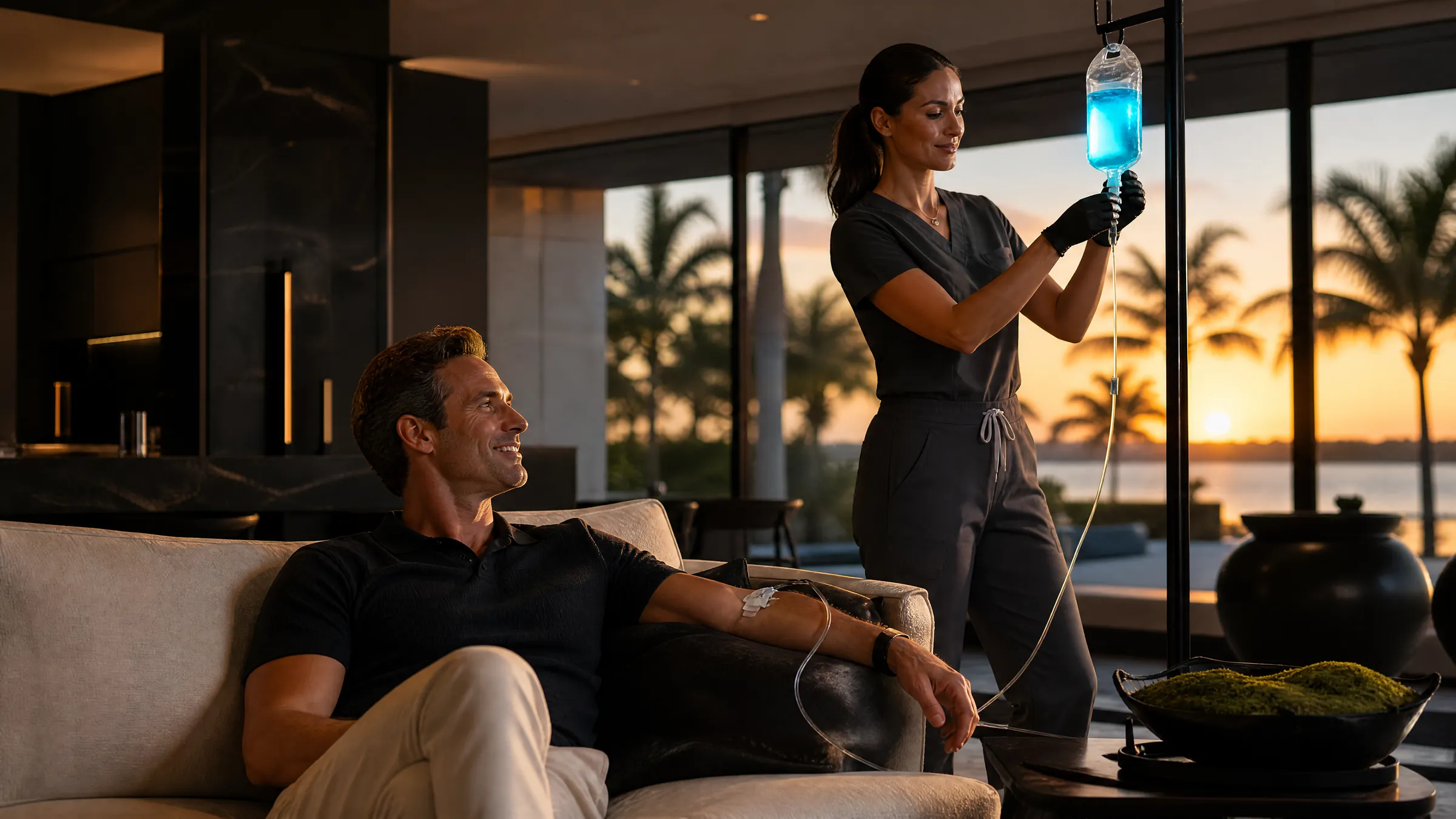
Our dispatch could write the transplant calendar from bookings alone: the July moving weekend (Dave's cohort — truck unloading is an athletic event here), the first real beach day run on Lake Erie instincts, the yard project that seemed reasonable at 9 AM and wasn't by 11, and the first boat invitation (see: the entire genre). All four are deficit events a northern calibration didn't price, and all four are why the same-day liter functions as the transplant's safety net during the learning curve — the fast way out of holes your instincts didn't see coming. Dave's Saturday ended with exactly that call, a nurse among the moving boxes, and the family's first Florida vendor relationship.
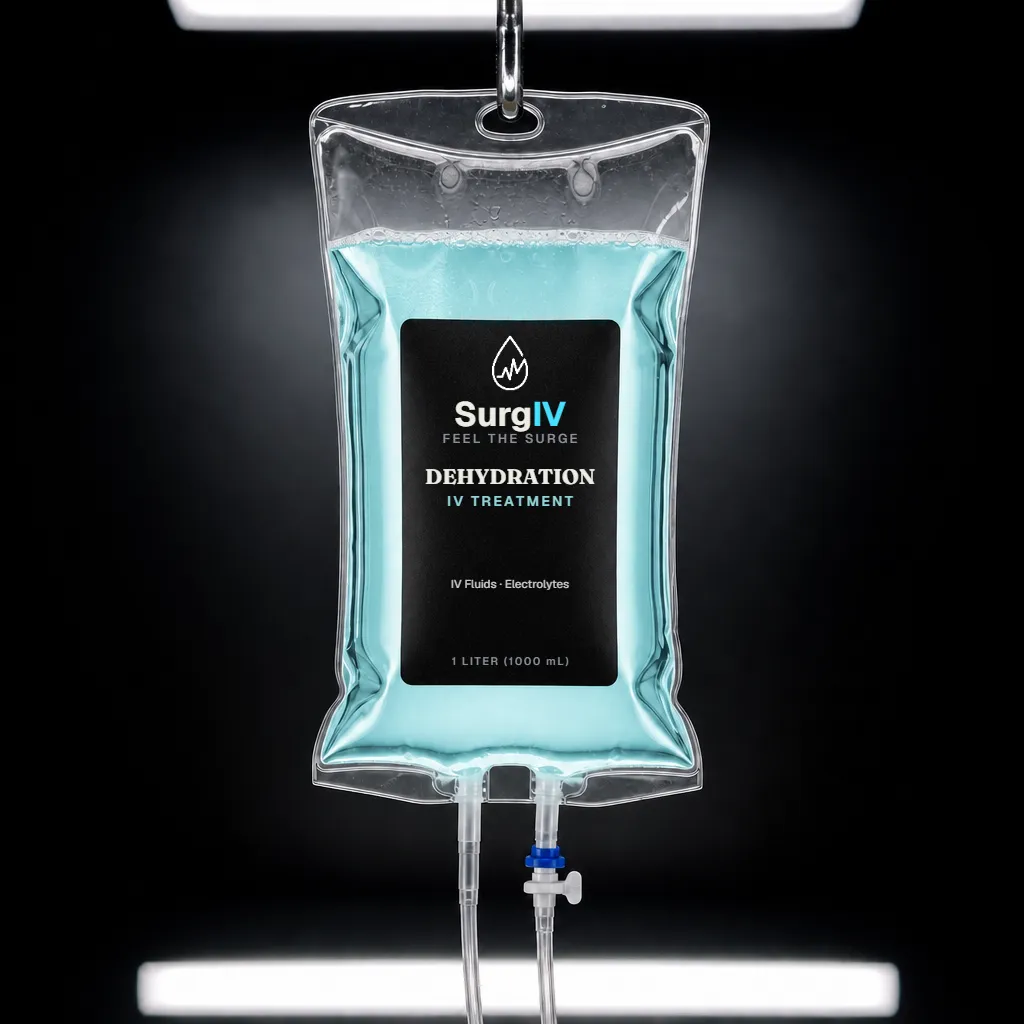
The transplant's safety net
Dehydration $199
For the first-summer days that outrun your northern calibration.
IV Fluids · Electrolytes
The Kowalskis, year two
This July's report from the garage: boxes long gone, console bottles standard, yard work concluded by 9:40 AM sharp, and Dave — per his wife — "checking the dew point like he's day-trading it." The curriculum took. His advice for the next U-Haul wave, offered with a graduate's authority: "The sunshine is real and it's worth it. Just know it comes with homework — and know who makes house calls while you're learning." Welcome to the county, transplants. Class is always in session.
This article is for general education and is not medical advice. IV therapy at SurgIV is administered by registered nurses under physician-written protocols, with a health screening before your first visit. Talk to your doctor about what is right for you.