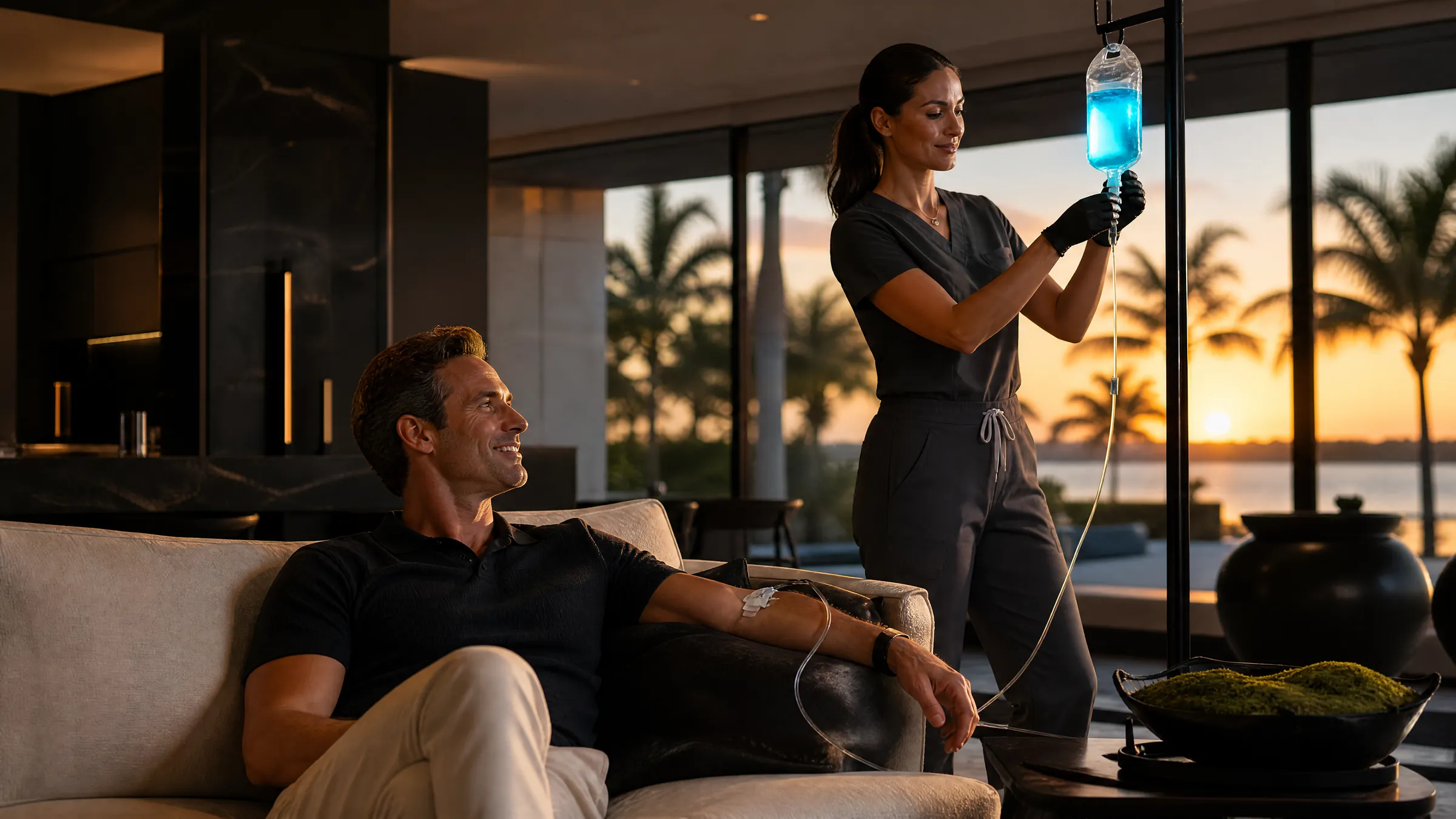
Turnaround day at a Palm Beach marina, 10 AM. The charter guests departed at 8 — helicopter, naturally — and aboard a 40-meter we'll call M/Y Discretion, the crew is executing the between-trips ballet: provisioning pallets, laundry mountains, the wash-down. A chief stew we'll call Bri, 29, four seasons in, is running the interior turnover on her sixth espresso, having averaged five hours' sleep across a ten-day charter of 17-hour service days. Next guests arrive in 52 hours. Her assessment of the industry, delivered while inventorying champagne: "Everyone sees the Instagram. Nobody sees that the Instagram is a 17-hour shift performed while smiling on a treadmill that floats."
Palm Beach County is one of American yachting's home ports — the marinas, the crew houses, the season — and yacht crew might be the county's most physically taxed invisible workforce. The below-decks manual.
The charter ledger
- The 17-hour standard. Charter days run up-before-guests to down-after-nightcaps: stews performing hospitality doubles in a moving building, deckhands stacking boat-day sun exposure onto genuine labor (toys launched, lines handled, hulls washed), everyone running guest-facing performance energy the entire waking day. The service smile at hour sixteen is a skilled trade.
- The floating sleep problem. Crew quarters — shared cabins below the waterline, generator hum, anchor watches, crossing schedules — deliver fragment sleep during peak workload: the night-shift problem with nautical features.
- The hydration irony. Surrounded by water, serving hydration beautifully, chronically skipping their own — the galley espresso economy plus no-time-to-pee service blocks produce the standard deficit, at sea, in season.
- The season's length. Not a weekend but months — back-to-back charters through winter season, the compounding math every long-season profession on this blog shares, floating.
"The Instagram is a 17-hour shift performed while smiling on a treadmill that floats." — four seasons of chief stew, one sentence
The turnaround protocol
What the smart boats and seasoned crew have built: on charter — the crew-mess water rule (a bottle per service block, enforced by the chief stew who's read this), real crew meals defended against the graze-and-go default, and sleep hygiene squeezed from the cabin reality (earplugs and eye masks as uniform items); on turnaround — the dockside session that's become standing practice on several program boats: the Recovery IV delivered to the marina or crew house during provisioning day, the whole crew rotating through between tasks — fluids for the season's debt, aminos for the deckhand load, B vitamins for the espresso economy. Captains book it like the wash-down and for the same logic: maintenance between deployments — and the boats that run it, the crew-agency scuttlebutt confirms, are the boats that keep their crews through a whole season, which in this industry is the actual flex; and off-season — the June reset our yachting clients treat the way teachers treat it: the closing ceremony before the refit.
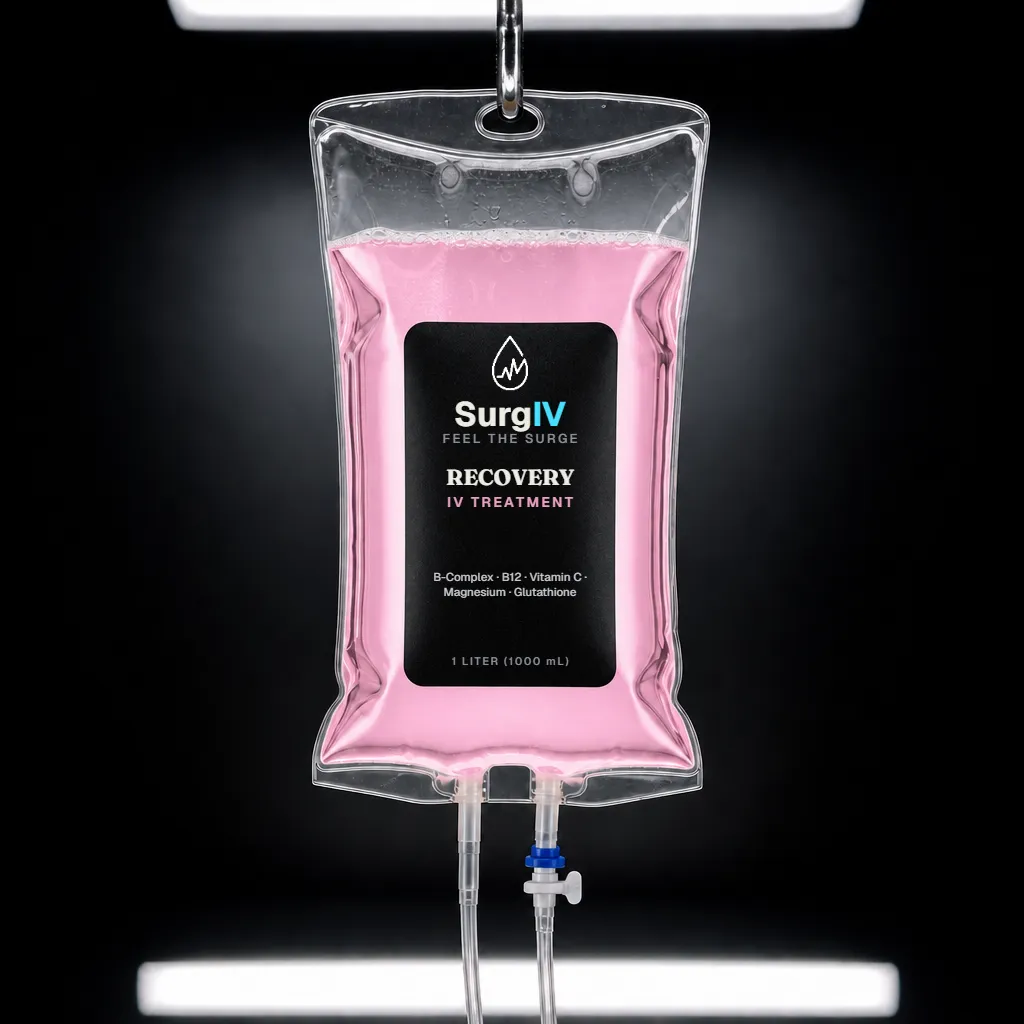
Dockside, between charters
Recovery $299
Crew sessions at the marina or crew house — the turnaround-day tradition of the smart boats.
B-Complex · B12 · Vitamin C · Magnesium · Glutathione
Bri, next turnaround
Discretion's captain — after one crew-house group session Bri organized "as an experiment on the deck team" — made it program policy by charter three. Bri's current turnaround runs: guests off at 8, nurse at 10:30, interior turnover at noon on a full tank, and a crew that boarded the next charter, per her report, "smiling for free instead of professionally." The Instagram remains a treadmill. The treadmill, at least, now gets serviced.
This article is for general education and is not medical advice. IV therapy at SurgIV is administered by registered nurses under physician-written protocols, with a health screening before your first visit. Talk to your doctor about what is right for you.