4:12 PM, a third-grade classroom in Boynton Beach, late October. The students are gone. A teacher we'll call Ms. Alvarez, 34, is sitting — actually sitting, for the first time since 7:50 AM — at a desk decorated with two cold coffees she never finished and a water bottle she deliberately never started (bathroom access at 11:40 and 2:15; veterans plan accordingly). Her voice is at 60% from six hours of professional projection. A student sneezed directly into her lesson at 9:30, as one does. And she is doing the October math every teacher knows: eight more weeks to winter break, on an energy account that emptied in September.
Teaching is the profession this blog was built to describe and somehow hadn't yet: maximum performance demand, industrial germ exposure, structural dehydration, and a schedule with no margin. The survival manual, faculty edition.
The classroom ledger
- The performance load. Six hours of on-stage energy daily — projecting, managing, improvising, being watched by thirty people — is executive-function and adrenaline spending on par with any job on this blog. The 4 PM crash isn't weakness; it's a matinee performer's curtain.
- The exposure math. A classroom is the exposure column's maximum case: 25–30 immune systems sharing air, doorknobs and pencils, restocked with fresh viral catalog every September (the merger, from the teacher's side of the desk). The first-year teacher who's sick all year isn't fragile — she's meeting the catalog.
- Occupational dehydration, by design. The bathroom-at-bells reality trains teachers to under-drink deliberately — Ms. Alvarez's untouched bottle is a professional technique — producing the full deficit symptom set (fatigue, afternoon headache, fog) as a job feature.
- The voice. Six hours of projection is real physical work and real fluid loss; the profession's raspy October is the invoice.
Two cold coffees and a deliberately unopened water bottle: the still life of American teaching.
The 180-day protocol
What our educator clients run against the calendar: the water treaty — a hydration schedule built around the actual bells (a full glass before school, at each planning period, at lunch — scheduled beats aspirational when the windows are fixed), because the under-drinking technique costs more than the bathroom trips it saves; the voice economy — classroom-management tricks that spend attention instead of volume (the veterans' quiet-signal repertoire is vocal-cord preservation disguised as pedagogy); the seasonal armory — the Immune Boost at the high-leverage windows: pre-season week (stocked before the catalog arrives), the October slump, post-break re-entries, and the March long haul — the same defense calendar logic, tuned to a school year; and the June ritual — the summer's first-week recovery session that our teacher clients treat as the year's actual closing ceremony. Grade-level teams increasingly book together, organized — always — by the one teacher who found the article you're reading.
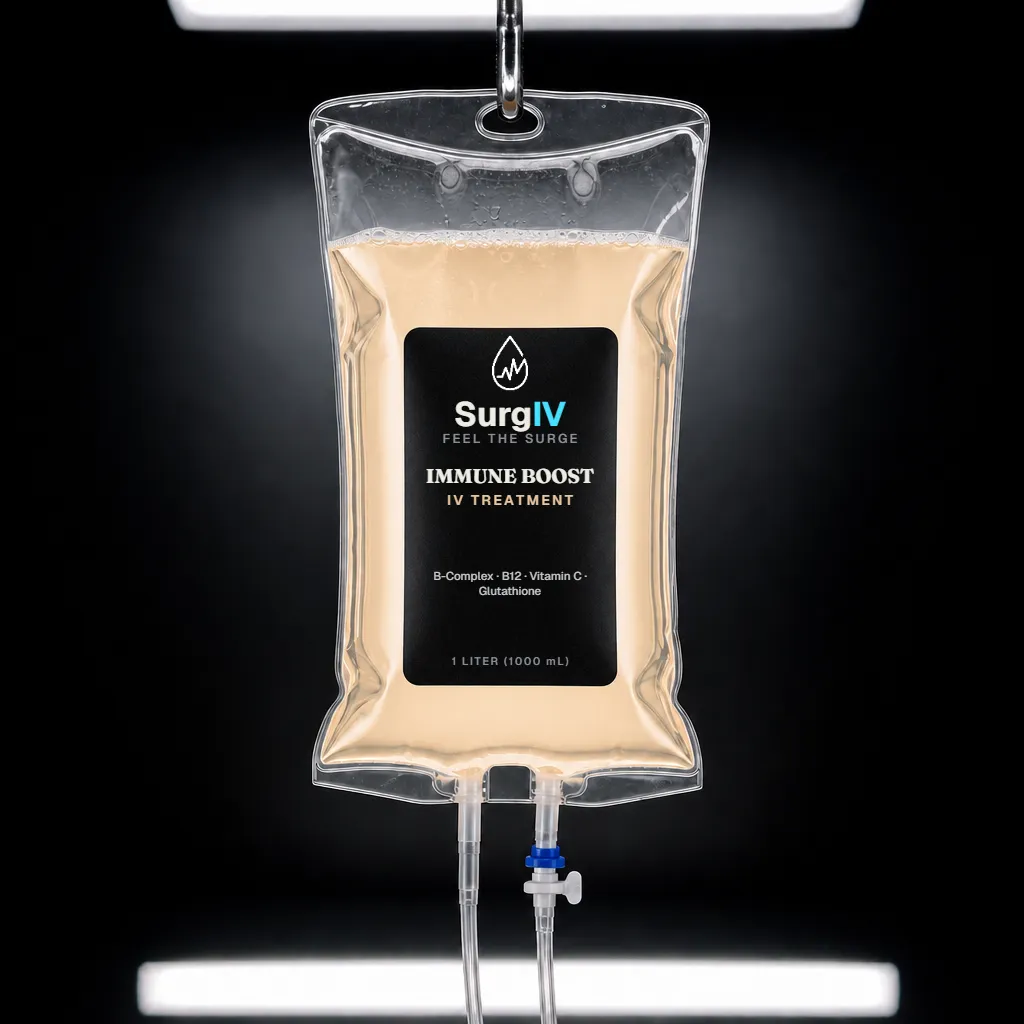
The educator's armory
Immune Boost $299
Immune support and energy restoration for the profession with thirty exposures per period.
B-Complex · B12 · Vitamin C · Glutathione
Ms. Alvarez, June
This year's implementation: the bell-scheduled water treaty ("my students now remind me — I've weaponized them"), October and February Immune Boosts, and the June 3rd session she booked in September as, her words, "a promise to future me." The verdict from the far side of 180 days: "First year I reached summer as a person instead of a substitute for one. The kids got the same teacher in May they got in September. THAT'S the actual win." Eight weeks at a time, faculty. The armory's open.
This article is for general education and is not medical advice. IV therapy at SurgIV is administered by registered nurses under physician-written protocols, with a health screening before your first visit. Talk to your doctor about what is right for you.