
A Palm Beach-based flight attendant we'll call Renata, 41, eighteen years flying, once explained her profession's core physics problem to our nurse using the hotel-room kettle she'd just described befriending in four time zones: "Passengers do one flight and feel like jerky. I live up there. My skin figured out the truth in year two. My energy took ten more years to file its complaint."
The complaint is legitimate. Flight crew run, as a career condition, the exact experiment this blog keeps describing in single doses — the cabin problem, the circadian inversion, the chronic deficit — professionally, repeatedly, for decades. Here's the crew-room manual.
The occupational ledger
- The 8% life. Cabin air at cruise runs 8–12% humidity — desert-dry, by design of physics (outside air at altitude holds nearly nothing). Crew lose fluid continuously through breath and skin across 80+ block hours a month, while under-drinking on duty for the profession's worst-kept secret reason: mid-service bathroom logistics. The result is a standing deficit that makes Florida's look amateur.
- Circadian roulette. Short-haul crew live the night-shift problem in fragments — 4 AM van times, minimum rests, five legs a day. Long-haul crew practice professional jet lag, crossing more zones monthly than human physiology can track. Aviation's fatigue-management science (anchor sleep, strategic light, protected rest) exists because the industry knows exactly what this costs.
- The service load. Cabin crew add the physical shift: miles of aisle walking per trip, carts, overhead lifting, six hours of professional voice use (real fluid loss), all in compression conditions. It's the hospitality double performed at altitude.
- The immune exposure. A metal tube of recycled proximity, rotated across hundreds of strangers weekly — the germ math of the exposure column, professionalized.
"Passengers do one flight and feel like jerky. I live up there." — eighteen years of cabin air, summarized
The crew protocol
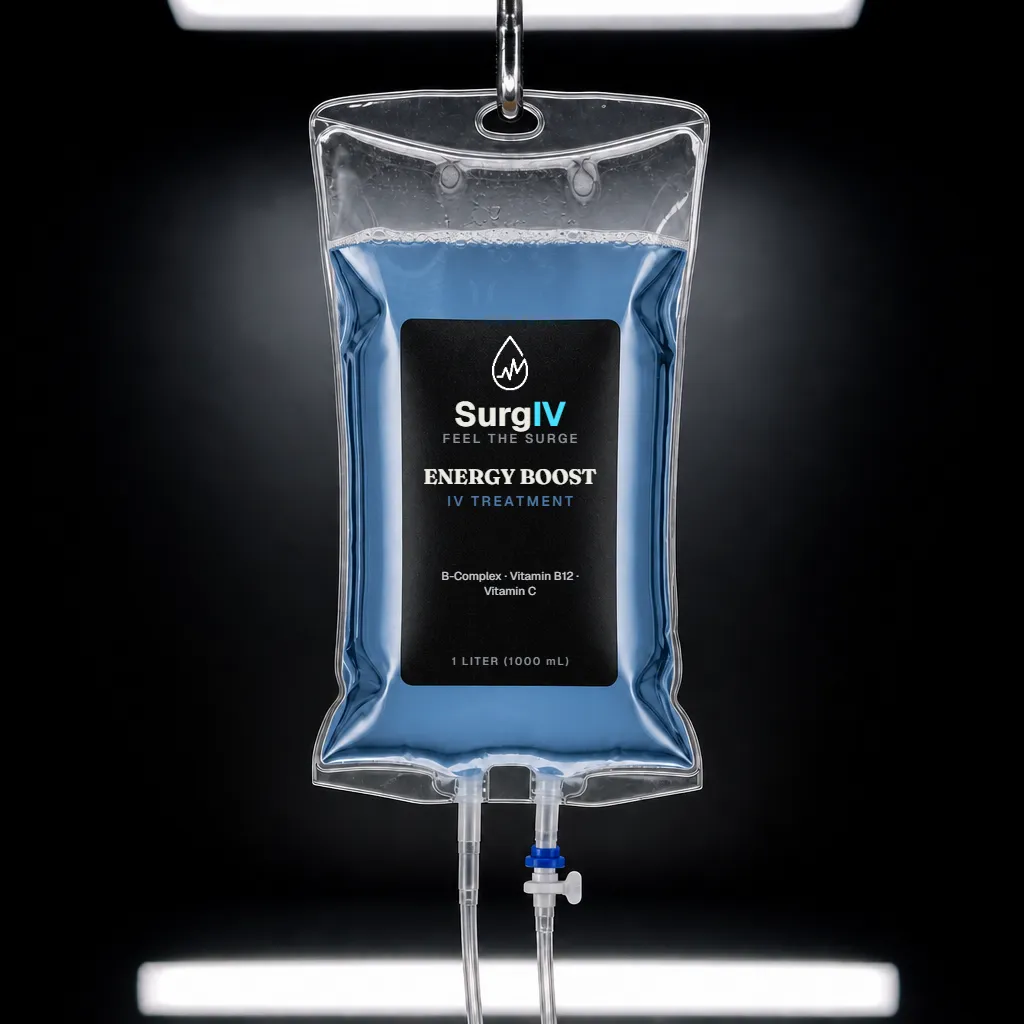
What our aviation members layer onto the industry's fatigue rules: on duty — the water bottle war fought deliberately (a bottle per leg as the floor, bathroom logistics be damned; dehydrated crew make worse fatigue math), caffeine timed to the fatigue-science windows rather than habit, and the compression-socks-plus-movement routine long-haul veterans swear by. At the layover — the salvage rules: hydration before the crew-room beer (order matters), blackout discipline, anchor sleep protected against the layover's tourist temptations. And at home base — the piece the industry doesn't provide: the first-day-home reset. The Energy Boost on the day after a block ends — a full liter against the month's cabin debt, B vitamins for the schedule's burn — booked around bid schedules (our dispatch speaks crew-calendar fluently by now). Renata's cadence: the afternoon after every four-day trip, "before the laundry, after the dog."
Between trips, at home base
Energy Boost $249
Hydration and B vitamins for the profession that lives in cabin air — booked around your bid schedule.
B-Complex · Vitamin B12 · Vitamin C
Renata, year eighteen
Her current assessment, delivered with the veteran's precision: "The kettle friendships continue. But I stopped landing home as luggage — the first-day drip gives me back the day between trips, and eighteen years in, those days are the whole quality of life." The profession lives at 8% humidity. The recovery, at least, gets to happen at sea level, on a couch, fully pressurized.
This article is for general education and is not medical advice. IV therapy at SurgIV is administered by registered nurses under physician-written protocols, with a health screening before your first visit. Talk to your doctor about what is right for you.