
7:45 AM, a kitchen in Boca. A man we'll call Gordon — the megadose-basket Gordon, chastened but still enthusiastic — is taking his morning supplements the way he has for six years: vitamin D, a multivitamin, and a B-complex, all washed down with black coffee on an empty stomach at a dead sprint before work. His wife, watching: "Does that even work?" Gordon, mid-swallow: "Vitamins are vitamins." They are not, Gordon. There are two families with two entirely different rulebooks, and you've been following neither. Roughly half of that D just went to waste.
The one distinction that explains everything
Fat-soluble: A, D, E, K. They dissolve in fat, require dietary fat for proper absorption, and are stored — in the liver and fatty tissue, for weeks to months. Water-soluble: the eight B vitamins and vitamin C. They dissolve in blood, need no fat escort, and are largely excreted when in surplus — not meaningfully stored (B12 being the famous exception: the liver banks years' worth). That single fork in the road determines the dosing schedule, the timing rules, the toxicity risk, and — the part that matters on this site — whether IV delivery changes anything at all.
One family checks in and stays for months. The other passes through by dinner. Same shelf at the pharmacy, completely different rulebooks.
What each rulebook says
Fat-soluble rules: take with a meal containing fat — Gordon's black-coffee D is the single most common supplement error in America, and it's a big one; dose conservatively and long-term, because accumulation is the mechanism — which is exactly why genuine vitamin toxicity lives almost entirely on this side (A and D especially), and why stacking four products that each contain them is how ordinary people reach clinical levels. Water-soluble rules: replenish regularly, since surplus exits (the neon urine is the receipt); toxicity risk is much lower though not zero (long-term high-dose B6 is the real asterisk); and their ceiling isn't storage — it's absorption: transporter-limited uptake means the gut rations them no matter what the label promises.
Where the IV enters
That last line is the whole answer to a question this site gets constantly: IV delivery changes the math mainly for the water-soluble family. Bypassing the gut's rationing lets B vitamins and vitamin C reach blood concentrations no swallowed dose achieves — which is precisely why wellness formulas are built around that family. Fat-soluble vitamins, by contrast, absorb well orally when taken with fat and carry accumulation risk, which is why you won't find megadose A and D headlining a legitimate menu (and why any provider offering them should prompt questions, not enthusiasm). The formulary follows the biochemistry. It always did — most people just never got the two-family briefing.
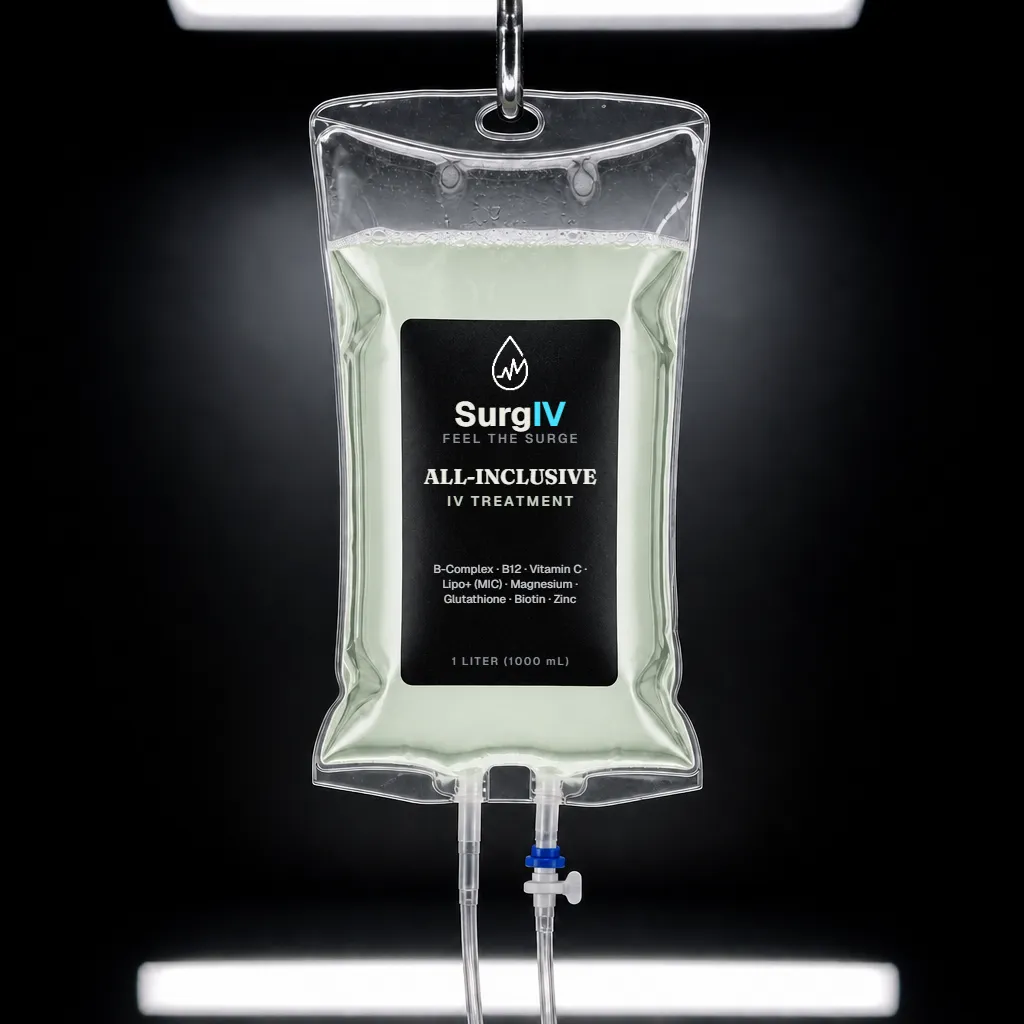
The water-soluble family, delivered
All-Inclusive $349
B vitamins and C — the family IV delivery actually changes the math for.
B-Complex · B12 · Vitamin C · Lipo+ (MIC) · Magnesium · Glutathione · Biotin · Zinc
Gordon, rulebook in hand
New routine: D and the multivitamin moved to lunch (with actual food containing actual fat), B-complex kept at breakfast where it's fine, the stack audited for overlap, the sprint-and-coffee ritual reformed. Six weeks later his D level — retested at his physician's, since he'd been supplementing blind for years — finally moved. His verdict, delivered to the same wife at the same counter: "Six years of taking vitamin D correctly-ish and expensively wrong. Two families. Two rulebooks. Somebody should put that on the bottle."
This article is for general education and is not medical advice. IV therapy at SurgIV is administered by registered nurses under physician-written protocols, with a health screening before your first visit. Talk to your doctor about what is right for you.