7:50 AM, the beach at Lake Worth, a Tuesday. A woman we'll call Pilar, 41, walks out of the Atlantic after her 3,000-meter training swim — training for a crossing event she's told almost no one about — feeling strong, cool, and virtuous. She is also, by the quiet arithmetic of her sport, further behind on fluids than the runners jogging past her on the sand, and unlike them she has no idea: no soaked shirt, no dripping forehead, no evidence. By 2 PM the evidence arrives anyway — the headache, the wooden afternoon, the thirst that shows up hours late like a witness who missed the trial. Her note to her training log, genuinely puzzled: "Felt great in the water. Died at my desk. Again. WHY."
The sport that shreds its receipts
Swimming's accounting problem is total: you sweat hard and never see it. Hard swimming generates the same metabolic heat as hard running, and the body sheds it the same way — the ocean just erases the evidence in real time, the same receipt-shredding surfers discovered. Stack the second drain: immersion diuresis — water pressure shifts blood centrally, the heart reads "surplus," the kidneys export accordingly; you leave the water having sweated and urinated a session's worth of fluid. And the auditor is compromised too: cool water suppresses thirst, so the one signal that might have reported the loss stays silent until mid-afternoon. Pilar's sport hides the sweat, doubles the drain, and gags the witness. Her 2 PM desk collapse isn't mysterious. It's bookkeeping.
Runners see their deficit on their shirts. Swimmers get told about theirs at 2 PM, by a headache, hours after the bank closed.
The salt-mouth clause
Ocean training adds the marginal insult: swallowed seawater — unavoidable in chop — delivers concentrated sodium into a draining system, part of why the eventually-arriving thirst feels so strangely fierce. The fix is balance, not volume: rehydrate with proper electrolytes, not plain water alone — the post-swim body needs the full panel, and plain water on a salt-loaded, mineral-drained system runs the dilution trap from the wrong side. Rinse the mouth at the car; fund the account within the hour.
The crossing-season protocol
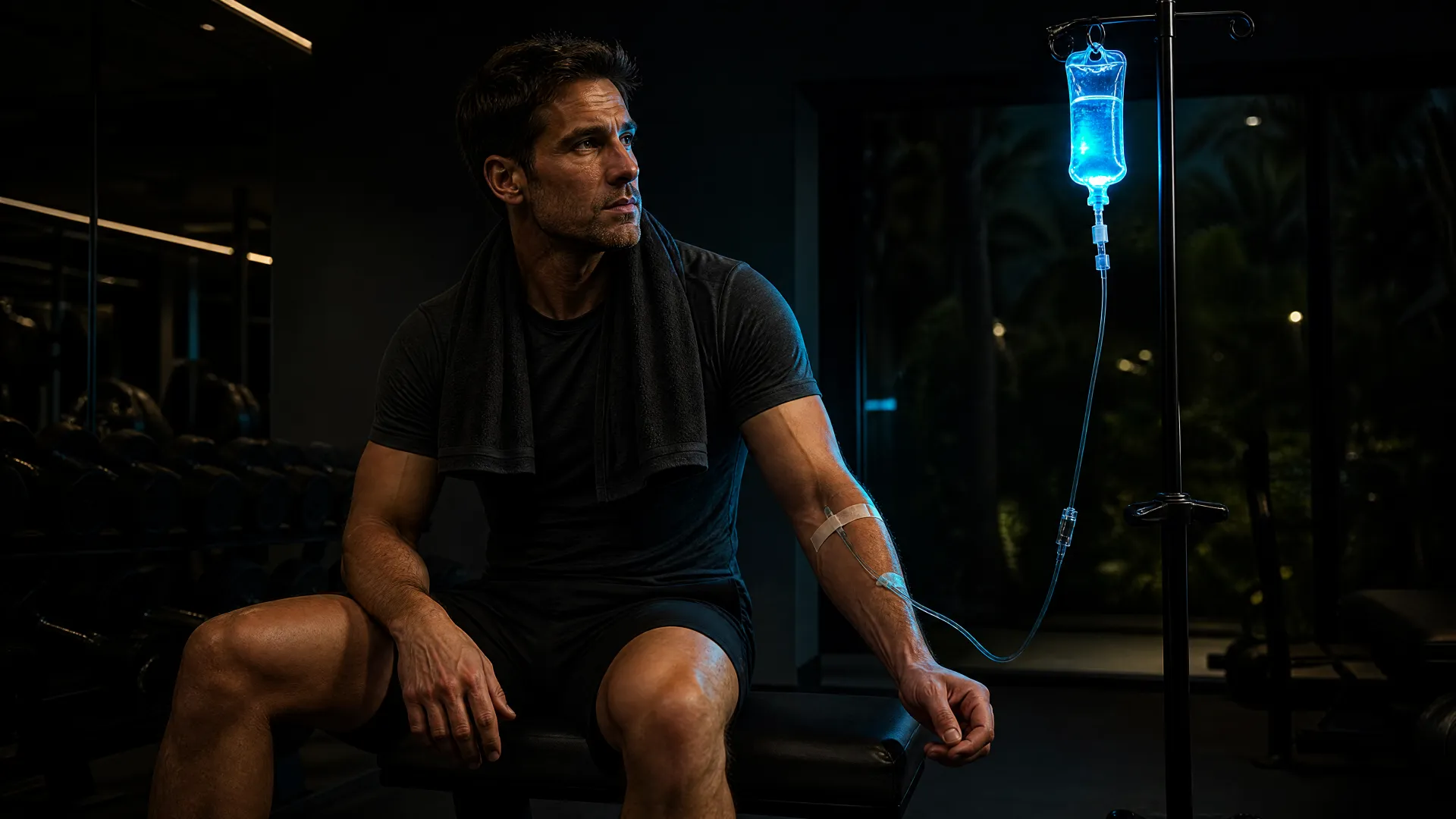
Every session: electrolytes and real food within the hour, logged like laps — the sport's invisibility means the protocol must run on schedule, not on signals. Big weeks: morning-urine color as the daily audit (the report reads the same for swimmers), and afternoon energy as the tell — recurring 2 PM collapses mean the invisible ledger is compounding. Event season — crossing prep, race blocks, the triathlete's swim-heavy weeks: the periodic full settlement, fluids and minerals restored at visible, clinical scale — the one transaction in this sport where you actually watch the account refill.
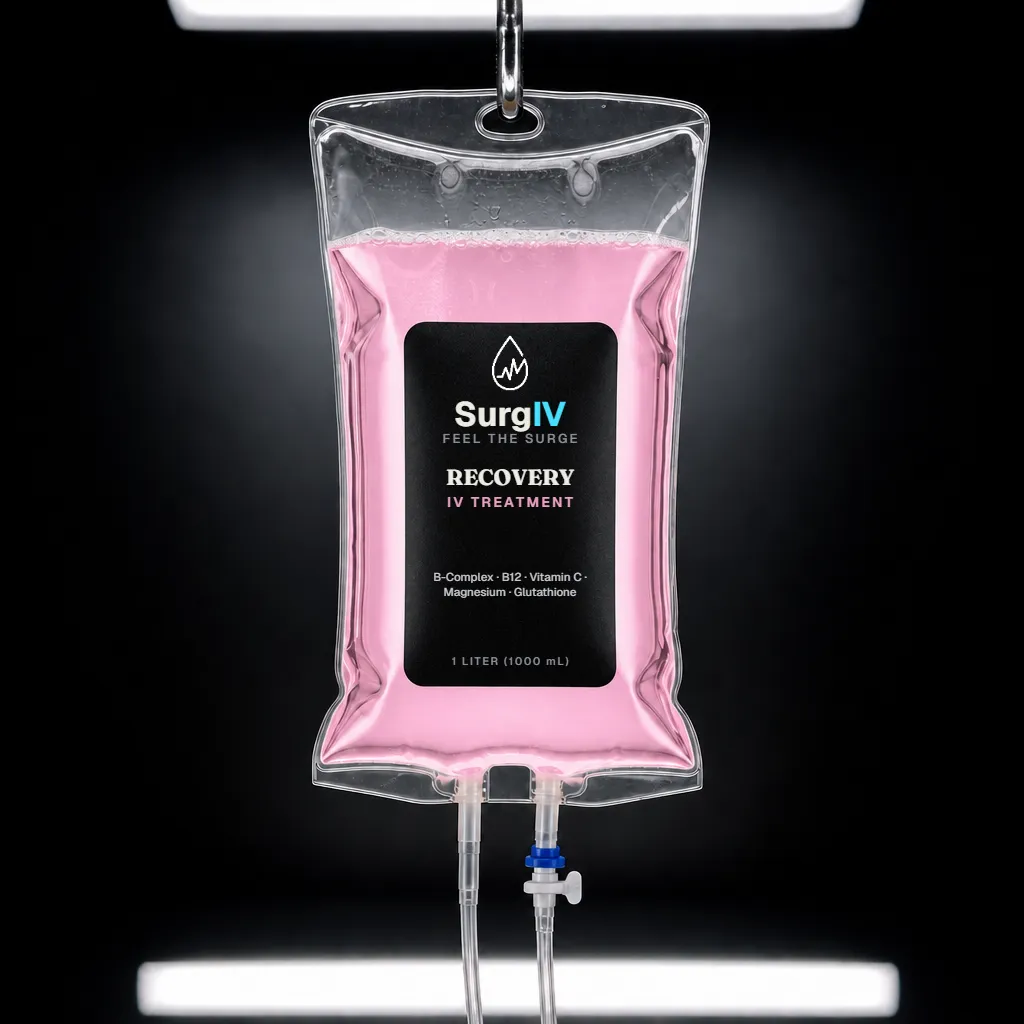
The swimmer's settlement
Recovery $299
The deficit you never saw accumulate, settled in one visible sitting.
B-Complex · B12 · Vitamin C · Magnesium · Glutathione
Pilar, books balanced
Protocol adopted: the beach-bag packet, the logged post-swim liter, a drip at the end of each peak week. The 2 PM deaths stopped within a fortnight — "turns out my desk wasn't the problem" — and the crossing she'd told almost no one about got finished, and told to everyone. Her log's new standing header, all caps: "THE OCEAN HIDES THE SWEAT. FUND THE SWIM ANYWAY."
This article is for general education and is not medical advice. IV therapy at SurgIV is administered by registered nurses under physician-written protocols, with a health screening before your first visit. Talk to your doctor about what is right for you.