
Saturday, 5:15 AM, the beach at Lake Worth pier. A triathlete we'll call Marissa, 38, five months from her first 70.3, is pulling on a swim cap in the dark next to her training group. Today's program, taped to her top tube: 1,900 meters of ocean swim, 45 miles of A1A, and a 10K brick run — the whole race-day rehearsal, conducted in a Florida July that will hit a heat index of 104 before she's off the bike. Her coach's note at the bottom of the workout, all caps: "HYDRATION IS THE FOURTH DISCIPLINE. DON'T LOSE IT."
Three sports, three different fluid crimes
Triathlon's hydration problem isn't just volume — it's that each discipline drains you differently and hides it differently:
- The swim: the invisible leak. You sweat in the water — hard, in a wetsuit — and perceive none of it, while immersion diuresis accelerates fluid loss on top. Triathletes exit the water already down a bottle's worth and count it as zero, misreading the whole day's ledger from leg one.
- The bike: the biggest bill and the only bank. Two-plus hours in full sun at output — the day's heaviest sweat losses — but also the only leg where drinking is mechanically easy. This is the strategic center: in Florida, the bike leg is a rolling hydration station or it's a rolling bankruptcy, and the run inherits whichever one you rode.
- The run: paying the estate's debts. By the run, absorption is compromised (gut blood flow diverted for hours), sweat rates are peaking, and you can only sip — the leg with the highest need and the lowest intake ceiling. Every run-leg collapse story is really a bike-leg accounting story, published late.
The run doesn't dehydrate you. It audits the first two sports — and the audit is always accurate.
The fourth-discipline protocol
What the experienced Florida tri crowd runs: pre-load — electrolytes the evening before and morning of, because the swim is un-drinkable and shouldn't start the deficit; bike on a schedule — a bottle per 30–40 minutes with sodium, alarms on the head unit, because thirst lags catastrophically at Florida dew points; run on maintenance — sips plus poured-over-head cooling, spending what the bike banked; and weigh the big days — the before/after scale on brick days is the sport's cheapest lab test (every pound down = roughly half a liter still owed after everything you drank).
The block-level ledger
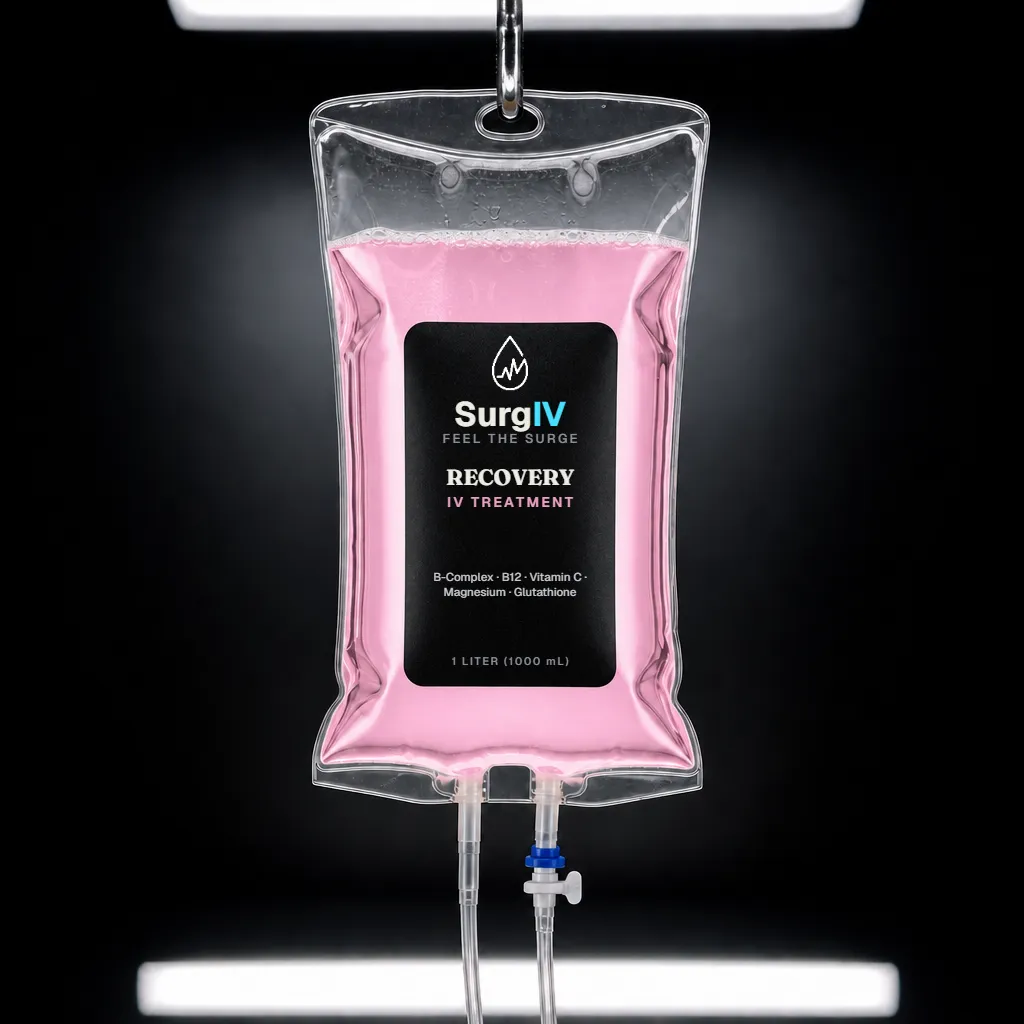
Then there's the season math: a 70.3 build runs 8–12 training hours weekly through a Florida summer, and the compounding-deficit spiral stalks triathletes hardest because three sports mask the pattern (tired on the run? blame running form; it was Thursday's ride). The tri members' anchor: the Recovery IV after the weekend's monster brick — full fluids, electrolytes, aminos for the double-discipline rebuild — so Monday's swim starts the new week at zero instead of minus-two. Race week runs the standard 48-hour protocol. And the post-race week deserves respect nobody gives it: a 70.3 is a 5–6 hour depletion event; the finishers who feel wrecked for ten days aren't weak — they're unresupplied.
The brick-day reset
Recovery $299
Fluids, electrolytes and aminos after the big sessions — three sports' worth of resupply in one bag.
B-Complex · B12 · Vitamin C · Magnesium · Glutathione
Marissa, race day plus one
Five months later: 6:41:22, a negative-split run, and — her stated proudest metric — "I peed at T2, which my coach says is the real medal." The Sunday-after Recovery session has become her group's post-race tradition, conducted in compression socks with the race replayed mile by mile. Her coach's tape-note got one word added for the next athlete: "Hydration is the fourth discipline. Don't lose it. SHE DIDN'T."
This article is for general education and is not medical advice. IV therapy at SurgIV is administered by registered nurses under physician-written protocols, with a health screening before your first visit. Talk to your doctor about what is right for you.