
2:15 PM, a car in the school pickup line in Wellington. A woman we'll call Marisol, 39, opens her console to a sight she refuses to examine philosophically: eleven lip balms. Drugstore sticks, boutique pots, a medicated one, a French one. Eleven. All partially used, all purchased in the last year, all — she applies the twelfth from her purse — not working. Her lips have been chapped since roughly February. Her search, typed while the line inches forward: "lips always chapped no matter what." The answer starts with a question none of the eleven balms ever asked: chapped from the outside — or underfunded from the inside?
Why lips file the report first
Lips are the body's most honest skin: thinnest barrier, zero oil glands, full weather exposure, and constant saliva contact. When systemic hydration runs a deficit, this is the first territory the budget abandons — blood volume and vital organs outrank lip moisture in every triage your physiology runs. Which reframes Marisol's year: chronic chapping that survives eleven balms usually isn't a surface problem being under-treated. It's a systemic report being cosmetically silenced — same category as the morning color chart, published on your face. The balm was never wrong; it was just answering a different question than the one being asked.
Eleven balms is not a skincare routine. It's a filing cabinet of ignored memos from the same department.
The checklist that actually ends it
Run in order: One — the deficit: honest fluid audit (coffee-heavy, water-light days are the Marisol pattern), electrolytes if you're sweating Florida-style, two weeks of actual hydration before judging any balm again. Two — the lick cycle: saliva enzymes strip the lip barrier, chapping provokes licking, licking deepens chapping — and menthol/camphor balms that tingle keep the loop running; switch to bland (plain petrolatum-style) and break the habit consciously. Three — the air: mouth-breathing at night (waking cracked = the tell), bedroom A/C blasting, airline cabins. Four — the nutrients: cracked corners specifically point toward B-vitamin or iron gaps — riboflavin classically — which earns a doctor's lab panel, not a guess; persistent lesions of any kind, same referral. The inside-out layer, when the audit finds a real deficit: fluids plus the B family and biotin — the Beauty formula's exact territory — funding the reservoir the balms kept writing checks against.
The two-week experiment
The protocol that settles it for most chronic cases: real hydration daily, bland balm only, mouth-tape or a humidifier if mornings are the worst, and — if the year's deficit runs deep — one proper inside-out session to reset the baseline. If lips normalize, you've confirmed the diagnosis eleven purchases couldn't. If they don't, you've earned the doctor visit with useful data. Either way, the console drawer stops growing.
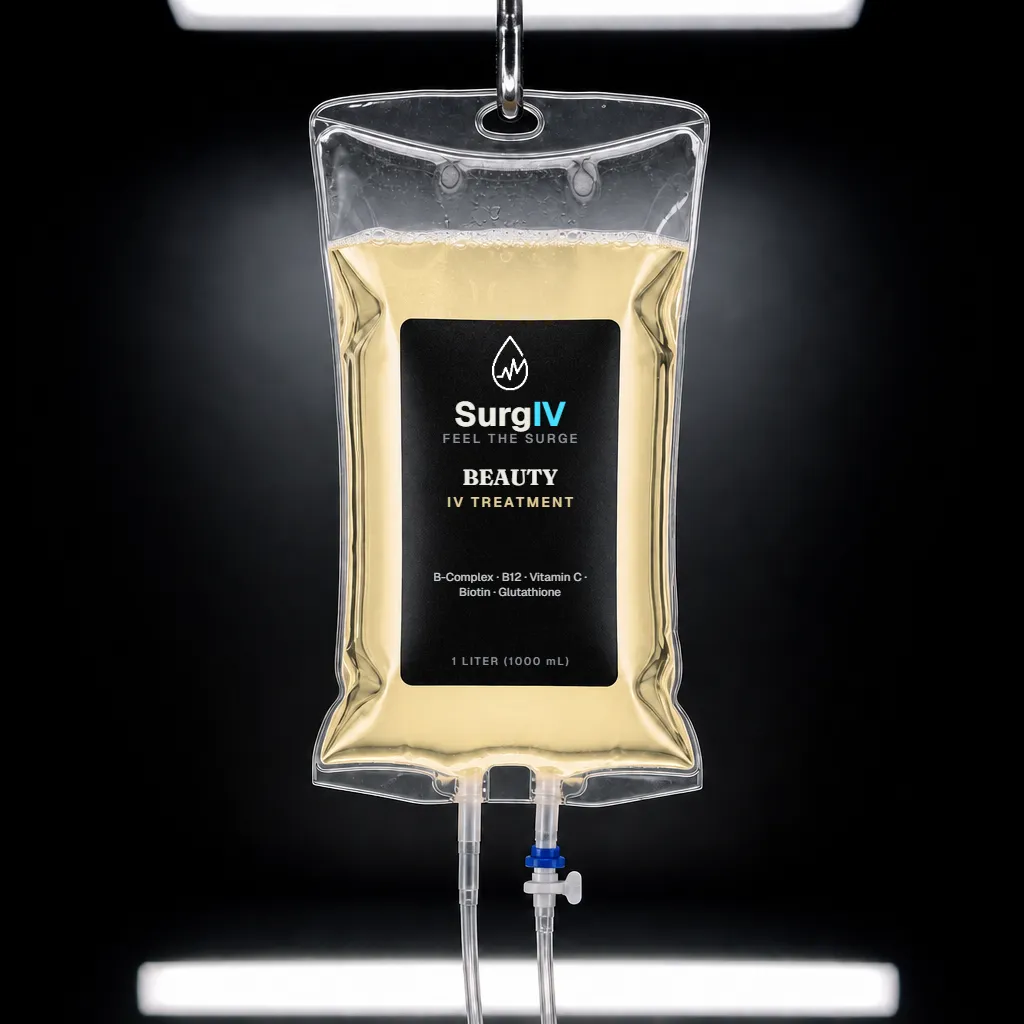
Hydration from the inside
Beauty $299
Fluids plus the B vitamins and biotin skin actually runs on.
B-Complex · B12 · Vitamin C · Biotin · Glutathione
Marisol, memo received
Her audit was textbook: three coffees to one water daily, bedroom A/C on arctic, a cinnamon-tingle balm feeding the lick cycle. Two weeks of the protocol plus one drip, and — her group-chat verdict, accompanied by a photo of the console drawer being emptied into a donation bag: "It was never a balm problem. I was moisturizing a drought from the outside." One balm survived the purge. It finally gets to work alone.
This article is for general education and is not medical advice. IV therapy at SurgIV is administered by registered nurses under physician-written protocols, with a health screening before your first visit. Talk to your doctor about what is right for you.