
A client we'll call Maria, 48, arrived at her first appointment with a hydration résumé that should have disqualified her from needing us: the giant marked water bottle (refilled thrice daily), the tracking app (goal exceeded, gold stars), the lifestyle-blog habits, all of it. And a complaint that made no arithmetic sense: "I drink four liters a day and I am thirsty ALL THE TIME. My mouth is a desert by 3 PM. Explain me."
Maria is one of the most common paradoxes in hydration — the over-drinker who's under-hydrated — and her decoder ring has three settings. Let's turn them in order, because one of them belongs to a doctor.
Setting one: the retention problem (most common)
Here's the mechanism the water-tracking apps never mention: your body can only hold water it has the sodium to hold. Fluid balance runs on osmotic math — water follows minerals — and a system depleted of electrolytes (Florida sweat, exercise, clean-eating low-salt diets, the whole grid story) treats plain water like a hotel guest without a reservation: in, briefly noted, out. Maria's four liters were largely passing through — hence the paradox of high intake, frequent urination, and genuine thirst, because thirst tracks what you're keeping, not what you're pouring. The over-drinking even compounds it, diluting the remaining minerals further. The fix is almost insultingly simple: minerals with the water — electrolyte packets, honest salt on real food — and suddenly the same intake actually lands. (At the extreme, plain-water over-drinking becomes genuinely dangerous — hyponatremia — another reason 'more' was never the answer.)
Thirst doesn't count what you drank. It counts what you kept.
Setting two: the outflow problem (Florida's contribution)
Sometimes retention is fine and the tap is just losing a race: the county's standing losses (heat, sun, AC's dry air), plus caffeine and alcohol's diuretic taxes, plus a heavy-sweat lifestyle — outflow that keeps genuine pace with a four-liter intake. The tells: thirst that tracks your activity and season (worse in summer, after golf, on boat weekends), improves with proper electrolyte rehydration, and calms in mild weeks. This setting responds to the standard playbook — scheduled fluids with minerals, the real rehydration protocol after big-loss days, and the full reset session when a deep summer deficit needs its baseline restored in one sitting.
Setting three: the signal problem (the doctor's setting)
And then there's the version this article exists to not miss: thirst as a medical signal. The escalation list, stated plainly — intense thirst with frequent urination and fatigue is the classic presenting triad of diabetes and earns a same-week doctor's appointment, not a better water bottle; thirst that arrived with a new medication goes back to the prescriber; dry mouth with dry eyes is autoimmune-screening territory; and any relentless thirst that ignores two weeks of genuinely proper rehydration has graduated beyond wellness. Excessive thirst is one of medicine's oldest and most useful early warnings — the whole reason we put this setting in the decoder is that hydration companies who never mention it are doing their customers quiet harm.
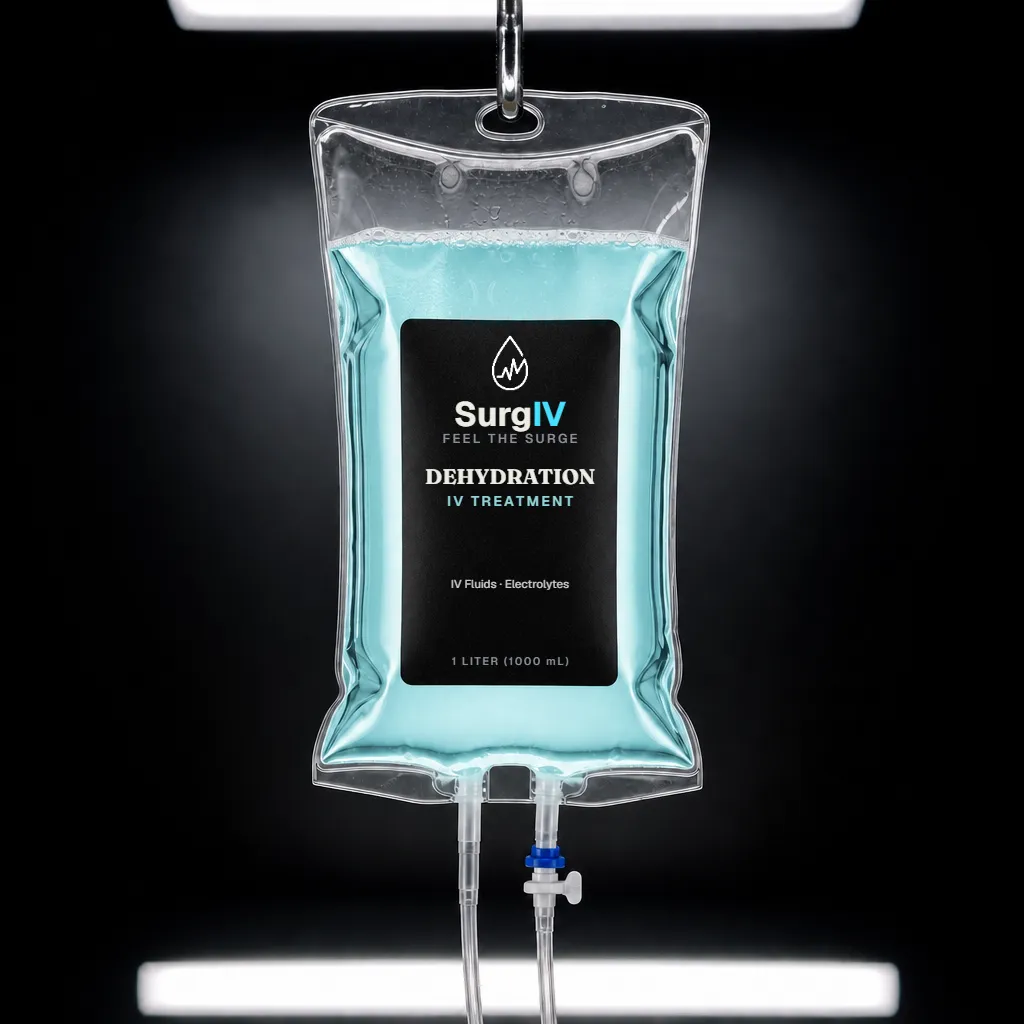
The retention reset
Dehydration $199
Fluids WITH the minerals that hold them — the difference between drinking water and keeping it.
IV Fluids · Electrolytes
Maria, decoded
Maria's setting was the first one — confirmed the cheap way (electrolytes with her existing four liters; thirst quieted within a week) after the responsible step (labs at her doctor: clean, diabetes ruled out). Her review, delivered with the energy of a woman vindicated against her tracking app: "Four years of gold stars for drinking water my body was politely returning. Nobody ever said the word 'sodium' to me. FOUR YEARS." The bottle stays. The minerals joined it. The desert closed at 3 PM sharp, permanently.
This article is for general education and is not medical advice. IV therapy at SurgIV is administered by registered nurses under physician-written protocols, with a health screening before your first visit. Talk to your doctor about what is right for you.