
9:40 PM, baggage claim at PBI. A woman we'll call Diane, 48, back from five days of business in Chicago, attempts to check the time and discovers her watch has become a tourniquet. Rings: tight. Ankles: upholstered. Stomach: inflated to airline specification. She catches her reflection in the rental-counter glass and delivers the traveler's eternal audit: "I ate a salad and a biscotti. HOW am I two sizes bigger than at boarding?" The answer, Diane, is that the aircraft ran its standard program on you — it runs it on everyone; you just flew enough hours this week to complete the full install.
The program's four modules
Module one — the physics balloon: cabin pressure at cruising altitude sits well below sea level, and gas expands under lower pressure — including the ordinary gas in your gut, which inflates like the chip bag in your seatback pocket. The balloon-stomach is Boyle's law, not the biscotti. Module two — the pooling: hours of seated immobility lets gravity bank fluid in your feet and ankles; calf muscles are the return pumps, and they were off-shift. Module three — the dry air: cabin humidity runs desert-low, quietly exporting moisture every breathing hour. Module four — the salt service: airline food and snacks run heavily salted, prompting retention at the exact moment usable fluid is shrinking.
Dehydrated AND retaining water isn't a contradiction — it's the body hoarding during a drought. The fix is the counterintuitive one: drink your way to deflation.
The paradox at the center
Module three and four together produce the program's signature move: dehydration raises retention hormones, so the fluid you have gets held — in tissue, as puffiness, rather than circulating usefully. Which means Diane's instinct ("I look swollen, I should drink less") is exactly backwards: proper rehydration signals abundance and the body releases the hoard — the same drought-hoarding logic as every retention story, sped up by altitude. One serious boundary, stated firmly: ankle swelling that persists for days, favors one leg, or arrives with calf pain, warmth, or breathlessness is the blood-clot conversation — medical attention promptly. The symmetrical, both-legs, deflates-with-movement version is the benign program this article covers.
The deflation protocol
In-flight, next time: water hourly, an aisle walk every 60–90 minutes (the calf pumps clock back in), salt and alcohol on a budget. On landing: a genuine walk before the couch, electrolyte-forward rehydration (plain water alone is slow at drought-signaling), potassium-rich food — the sodium counterweight — and a salty-dinner curfew. For the heavy-rotation traveler or the deep-deficit week, direct IV rehydration runs the abundance signal at clinical speed: the landing-night session that lets the watch fit by morning.
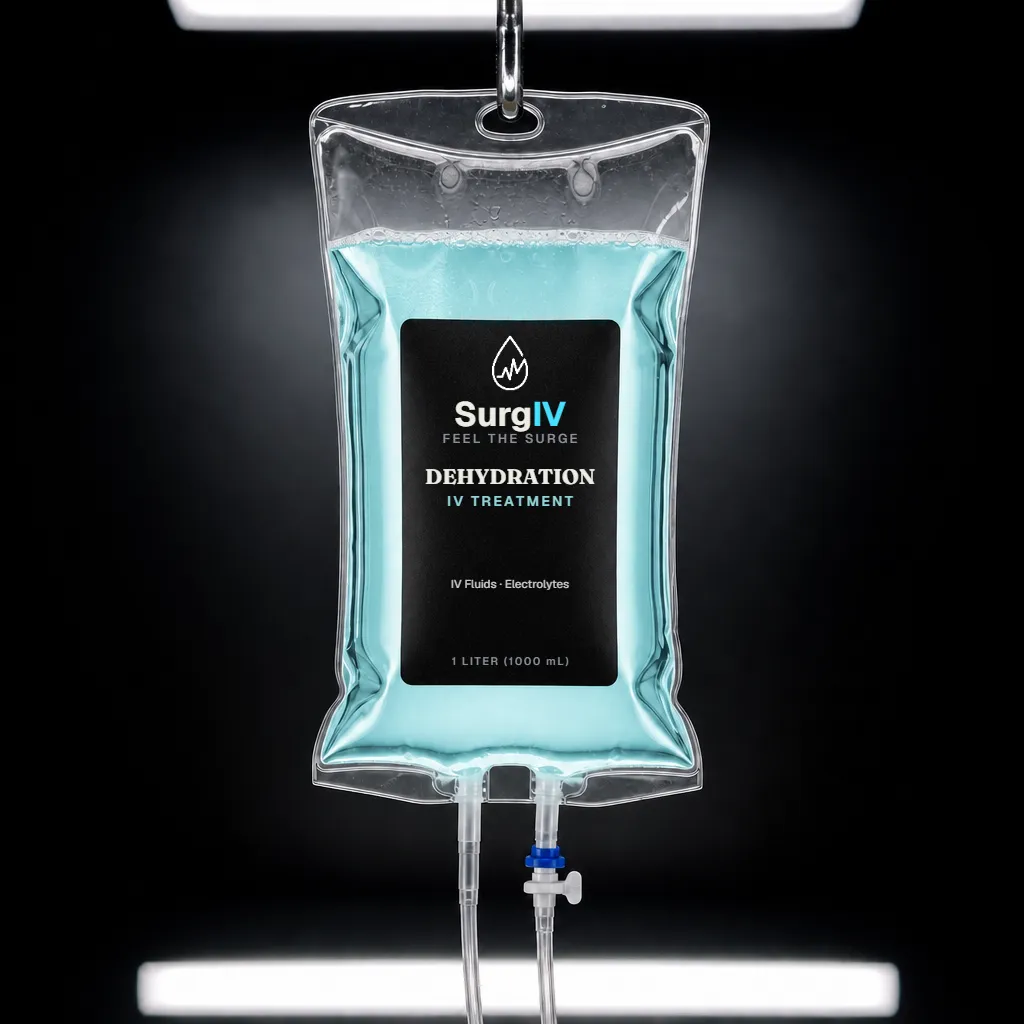
The landing protocol
Dehydration $199
Rehydrate properly and the retention lets go — fluids and electrolytes, at home.
IV Fluids · Electrolytes
Diane, deflated on schedule
She ran the landing protocol plus a booked evening drip — five flights in five days had earned it — and issued her findings at breakfast, watch spinning freely: "The plane inflates everyone. It's not a you problem, it's a program. Run the uninstall before bed and you wake up your own size." Standard program, standard fix. Fly accordingly.
This article is for general education and is not medical advice. IV therapy at SurgIV is administered by registered nurses under physician-written protocols, with a health screening before your first visit. Talk to your doctor about what is right for you.