Saturday, 11:40 AM, a soccer complex in Wellington, heat index 102. On the sideline, a father we'll call Marcus watches his 11-year-old — a midfielder with a motor that has no off switch — chase a through-ball in the game's fortieth minute. And he notices something a season of Florida sidelines has trained him to notice: his son's touch is off. Not tired-off. Clumsy-off — a stumble on a routine trap, a pass that dies weirdly. The kid would never come out voluntarily; there's a game on. Marcus signals the coach anyway. Two minutes later, in the shade with a bottle, his son is flushed, headachy, and — the tell — quiet. Twenty minutes of cooling later, he's fine, furious about missing the half, and completely unaware of how good his father's catch was.
That catch — noticing 'clumsy' before it becomes 'scary' — is the entire skill of Florida youth-sports parenting. Here's the full playbook.
Why kids are the hardest heat case
The physiology stacks against young athletes: they generate more heat per pound during exercise than adults, sweat less efficiently (their cooling systems are still developing), and acclimatize slower to Florida's dew-point reality. Then the psychology doubles the risk: kids in competition are the world's worst self-monitors — the same motor that makes your midfielder relentless makes him play through every warning sign an adult would heed. Add the structural hazards (August two-a-days when acclimatization is lowest, tournament formats with noon slots, coaches of wildly varying training) and the conclusion writes itself: youth heat safety is a supervision sport, and parents are the deep safety.
The kid will never take himself out of the game. That was never his job. It's yours.
The sideline escalation ladder
Memorize three tiers, because the transitions can be fast: Tier one — working hard: heavy sweating, red face, normal behavior. Fine; enforce the scheduled breaks. Tier two — heat exhaustion territory: cramps, headache, dizziness, nausea, unusual fatigue — and the underrated early tells Marcus caught: clumsiness, stumbling, deteriorating skills, and going quiet. Out of the game, shade, fluids, cool cloths, and genuine observation — a tier-two kid does not return that day, whatever the score. Tier three — the emergency: confusion or strange behavior, staggering, skin that's hot and possibly dry, collapse. That's heat stroke — 911 immediately, aggressive cooling while you wait (ice, water, shade — cooling first is the medical consensus). The line between tiers two and three is the same one from the adult version, with less margin: in a child, confusion is the alarm that overrides coaches, tournaments, and the kid's own protests, every time.
The prevention system (and whose job each piece is)
The kid's job: none of this — that's the point. The parent's: pre-hydration before every practice (send them wet — kids arrive dry constantly), the cooler with more than you think needed, electrolytes for tournament days and two-a-days (water alone for the short stuff), the shade tent that makes breaks actually cooling, and the schedule-enforcement — drink breaks every 15–20 minutes in heat, imposed, because thirst lags worst in children. The smart-question job: ask the league about heat policies (wet-bulb monitoring, mandated breaks, trainer presence at tournaments) — programs vary wildly, and the asking itself raises standards. And the pediatrician's job: everything clinical — any tier-two event worth a call, all of tier three, and every protocol question for kids with medical conditions. Our own lane at youth tournaments, stated plainly: the adults — the parents running three-game Saturdays in the same heat (the sideline crew's recovery is real too). Children's care belongs to children's medicine, always.
For the sideline crew
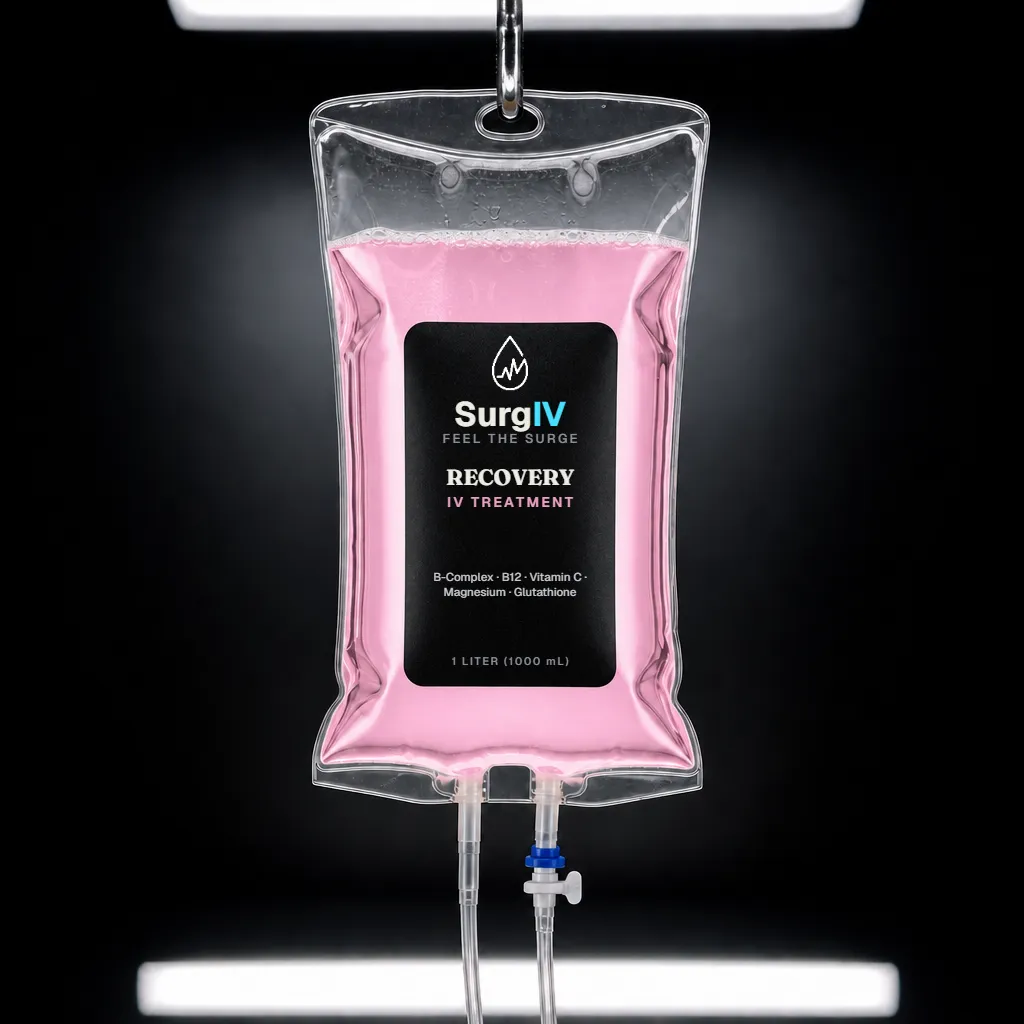
Recovery $299
Tournament-weekend recovery for the parents doing the driving, carrying and vigilance — kids see their pediatrician.
B-Complex · B12 · Vitamin C · Magnesium · Glutathione
Marcus's sideline kit
The current inventory, refined across seasons: the double cooler, the shade tent, electrolyte packets, a cheap infrared thermometer ("for the turf, not the kid — 140° turf changes my substitution opinions"), and the vigilance that caught a stumble at minute forty. His son, now 12, remains furious about every precautionary substitution and fully ignorant of their value — which, Marcus notes, is exactly the arrangement: "He plays like he's invincible because I sideline like he isn't. That's the division of labor until he's twenty-five."
This article is for general education and is not medical advice. IV therapy at SurgIV is administered by registered nurses under physician-written protocols, with a health screening before your first visit. Talk to your doctor about what is right for you.