
3:10 PM, a realtor's car between showings in Delray. A woman we'll call Bethany, 42, is attempting to reply to a client email and watching her own thumbs miss the keys. Breakfast was coffee. Lunch was a granola bar at 11, eaten while driving. Now: hands trembling, heart tapping like it knows something, and a rage — a genuine, disproportionate rage — at the driver ahead of her doing the speed limit. Her voice memo to herself, for later: "Why do I turn into a shaky supervillain every time I miss lunch? Is my blood sugar broken?" Not broken, Bethany. Armed.
Meet the alarm system
The tremble isn't the low blood sugar itself — it's the emergency response to it. When glucose dips below your body's comfort line, it treats the moment as a survival event and fires counter-regulatory hormones — adrenaline front and center — to mobilize stored fuel. Everything Bethany is experiencing is adrenaline's signature kit: shaky hands, sweat, the tapping heart, and the hair-trigger fury (the "hangry" that ruins afternoons is a stress hormone, not a personality flaw). The system works perfectly. The problem is how often modern eating triggers it.
Your body treats a skipped lunch like a wilderness emergency. The tremble is it handing you a spear.
The rollercoaster's real engine
Here's the head fake: the crash's depth is set by the spike before it. A granola-bar-and-coffee morning sends glucose up fast, summons a proportionally large insulin response, and overshoots on the way down — a steeper, deeper dip that fires a bigger alarm. Steady eaters — protein and fat slowing absorption at every meal — barely visit this loop; spike-crash eaters ride it daily and call it their personality. It's the same physics as the sugar crash with the volume turned up, and it's why the fix isn't carrying emergency candy (which treats each crash by scheduling the next one) but flattening the curve: protein-forward breakfast, real lunch with fat and protein, no skipped meals on demanding days, and episode treatment sized as a snack, not a panic feast. Hydration rides shotgun — mild dehydration amplifies every symptom on adrenaline's list, and a showings-marathon realtor's day runs both deficits at once.
The boundary, brief and firm
Skipped-meal shakiness that resolves within minutes of eating: benign, behavioral, fixable by structure. Shakiness despite normal eating, episodes with confusion or fainting, night-time wake-ups, or anything in a diabetic or glucose-medication context: physician and glucose workup — real hypoglycemia has causes worth finding. Know which story you're in before you file it under lifestyle.
Steadier baselines
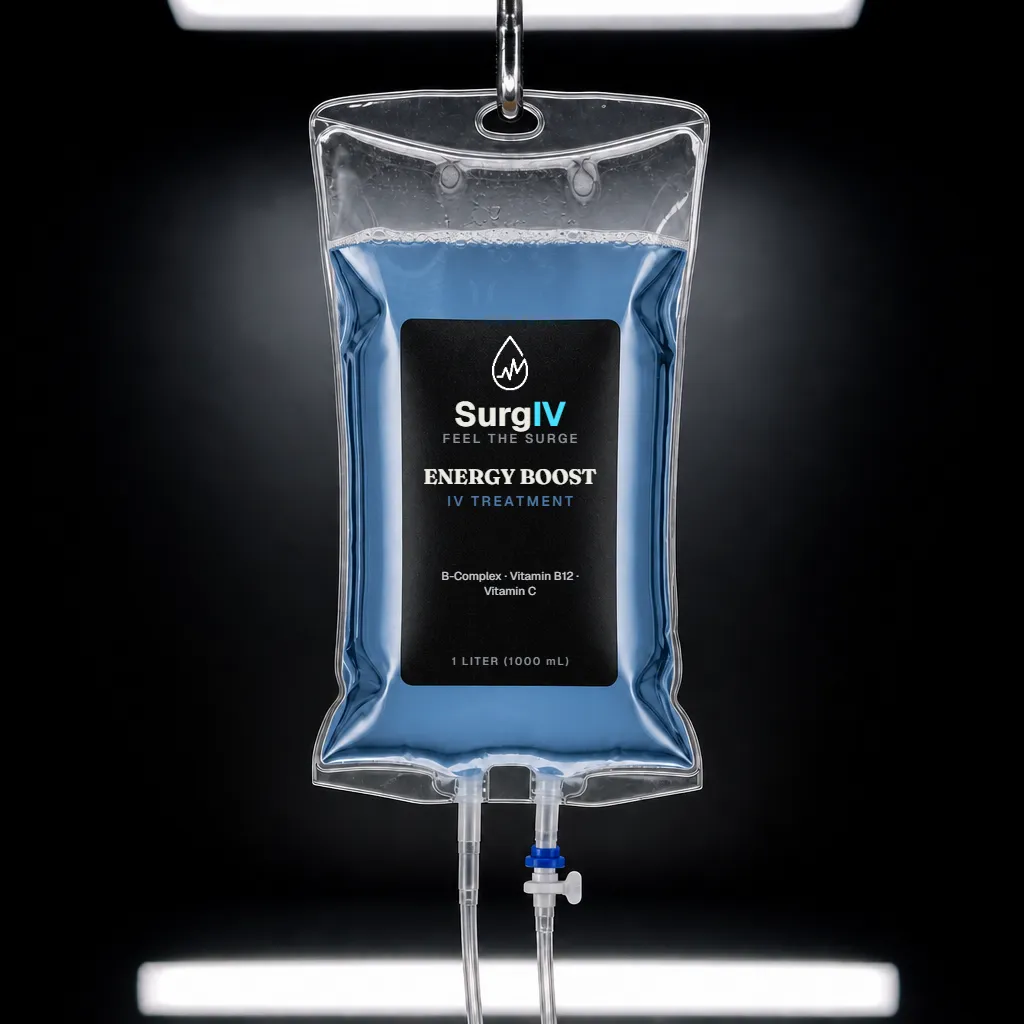
Energy Boost $249
B vitamins and hydration for the energy side — the meal structure is yours to fix.
B-Complex · Vitamin B12 · Vitamin C
Bethany, disarmed
New protocol: eggs before the first showing, an actual lunch with actual protein eaten while parked, electrolyte water in the cupholder. The supervillain hasn't appeared in six weeks — "turns out she was just an alarm system with terrible timing." The occasional big-week drip handles the energy baseline; the meal structure handles the spear. Feed the system on schedule, and it stops treating Tuesday like the wilderness.
This article is for general education and is not medical advice. IV therapy at SurgIV is administered by registered nurses under physician-written protocols, with a health screening before your first visit. Talk to your doctor about what is right for you.