
9:40 PM, a driveway in Palm Beach Gardens, the end of a twelve-hour haul from Virginia. A minivan door slides open and a father we'll call Miguel — the 2 AM salt-and-sugar Miguel; the man's family logs miles — emerges in stages, like furniture being unfolded. Knees: formal complaints. Lower back: a solid object. Head: humming with twelve hours of I-95's frequency. His wife decants the sleeping kids while Miguel stands in the driveway performing the long-haul driver's arrival ritual: hands on hips, slow backward lean, and the eternal question addressed to the stars: "Why am I EXHAUSTED? I SAT DOWN all day."
The sitting marathon, itemized
Because sitting was never the whole job, Miguel. The haul billed four accounts: the static posture — hours of shortened hip flexors and pooling blood, the airplane program with a steering wheel and worse legroom; the vigilance tax — driving is sustained attention work, a genuine cognitive load that fatigues the brain the way meetings do, except for twelve consecutive hours with lives attached; the vibration hum — road noise and vibration run as a low-grade stressor the body processes all day and you only hear when it stops (that driveway silence is your nervous system exhaling); and the dehydration economy — the trip's perverse structure deserves its own paragraph.
"Making good time" is the only culture on earth where deliberately not drinking water is a point of pride. The arrival headache is the trophy.
The good-time economy
Road trips are engineered for deficit: drivers under-drink on purpose to avoid stops — the "making good time" doctrine, enforced by generations of fathers including, until recently, Miguel; the A/C runs aircraft-dry air for the duration; and the available nutrition — gas station salt, drive-thru sodium — boosts the bill at every fill-up. Twelve hours of that outperforms most flights for fluid damage. And the fatigue math has a hard-boundary clause: drowsy driving degrades reaction time comparably to alcohol in the simulator literature, with danger peaks at the early-afternoon and late-night circadian dips — so the protocol is law in the Miguel van now: real stops every two hours (walk the plaza, everyone), driver swaps at the halfway, and nodding-off signs mean stopping now — no arrival ETA has ever justified the alternative.
The arrival reset
In the driveway: the ten-minute unfold walk before any couch — the anti-pooling move that halves tomorrow's stiffness. That night: electrolyte-forward rehydration (repaying a deficit that was, remember, a deliberate purchase), a real meal, early lights. The marathon tier — the college move, the holiday double-header, the there-and-back inside a week: the arrival-day session, settling twelve hours of economy-class-with-a-wheel in one driveway-adjacent sitting, while the suitcase triage proceeds around you. The Orlando corridor version is its own well-documented genre.
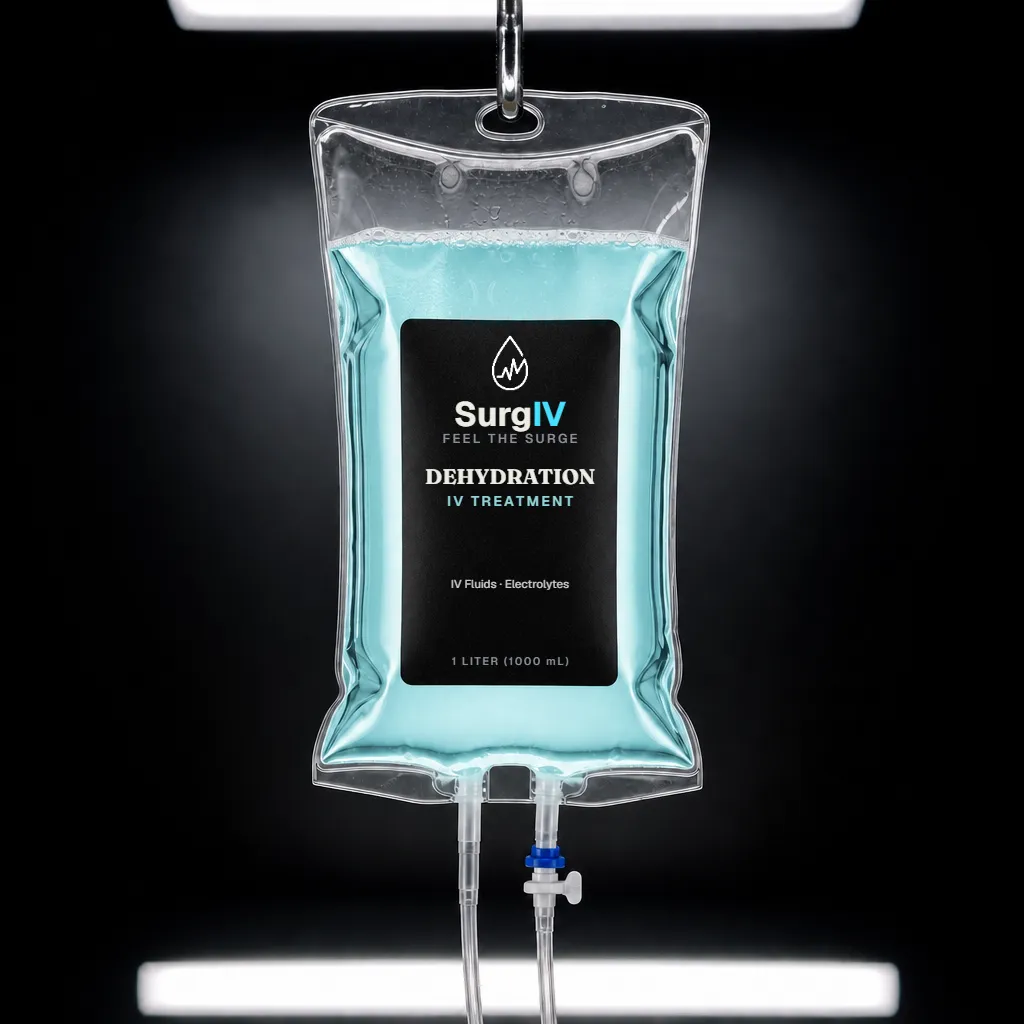
The arrival reset
Dehydration $199
Twelve hours of I-95, settled in one sitting — yours, finally comfortable.
IV Fluids · Electrolytes
Miguel, return leg
The drive home ran the new constitution: two-hour stops ("we made GOOD ENOUGH time"), the cooler stocked with electrolyte bottles, driver swap at Savannah, unfold walk on arrival, drip the next morning before the laundry mountain. Back to work Monday: functional, unhummed. His revised doctrine, issued to the extended family group chat planning Thanksgiving: "We stop every two hours. Grandpa's 'straight-through' record is retired with honors. The van drinks water now."
This article is for general education and is not medical advice. IV therapy at SurgIV is administered by registered nurses under physician-written protocols, with a health screening before your first visit. Talk to your doctor about what is right for you.