
The moment of clarity arrived for a client we'll call Tyler, 29, gym regular and sales rep, in a Publix checkout line: three neon tallboys on the belt — his standard daily haul — and the cashier's innocent observation: "These are on BOGO if you want six." Six. Tyler looked at the cans, did the math he'd been avoiding (roughly 800mg of caffeine and 60 grams of sugar, daily, for three years), felt his resting heart rate answer the question, and left with sparkling water and a decision.
The neon cycle has an exit. Here's the map — because it's harder than quitting coffee, for reasons worth understanding first.
The double habit (why the cans grip harder)
Energy drinks train two dependence loops simultaneously: the caffeine loop — at doses coffee rarely reaches (160–300mg per can; Tyler's three-a-day ran double the commonly-cited 400mg daily ceiling), building the full adenosine blockade at altitude; and the sugar loop — each can's glucose spike buying an hour of lift and scheduling a crash that the next can answers, the spike-crash cycle run on rails. The result is the tallboy treadmill's signature: cans that stopped 'working' (tolerance at that altitude is total — you're drinking to reach normal), crash windows shrinking between doses, sleep quietly wrecked by the afternoon can's half-life, and — the symptom that finally sends people to us or their doctor — the heart's opinions: palpitations and racing during ordinary meetings. (The boundary, stated plainly: palpitations that persist after quitting, or any chest pain or fainting ever, are doctor territory — evaluation, not a smaller can.)
Three years, three cans a day, and the cans had long stopped providing energy. They were providing absence-of-withdrawal, at $6.50 a day.
The exit protocol
Taper via known doses — the transition trick: swap cans for coffee or tea at measured caffeine (a 100mg cup replaces a 200mg can, then steps down), because tapering works only when you know the numbers, and the cans' numbers were the problem; break the sugar loop separately — protein-forward snacks flatten the arc the cans were riding; sugar-free versions of the cans keep the caffeine altitude and the ritual grip, making them a half-exit at best; replace the ritual physically — the hand wants a cold can at 10 AM and 2 PM; give it one (sparkling water, cold-brew tea) because unfilled rituals refill themselves; run the withdrawal playbook for the step-downs — hydration with electrolytes (the cans were also a fluid habit), movement, sleep protection, ibuprofen for peak days; and rebuild the floor — the Energy Boost's actual inputs (full hydration, the B-vitamin payroll the cans printed on their labels at token doses) supporting the baseline while natural energy comes back online. Tyler's bridge: weekly sessions for the first month, "so quitting fuel didn't feel like quitting energy."
The other side
Tyler's ninety-day report, delivered with convert's zeal: resting heart rate down double digits, sleep "an actual activity now," the 2 PM crash extinct, gym performance up (the cans' cost to sleep had been taxing training the whole time) — and total caffeine now a single morning coffee that, at the renormalized baseline, "hits like the old triple-can stack." The checkout-line math, finalized: $200 a month in cans, retired; one monthly session, adopted; heart's opinions, withdrawn. The neon cycle always advertised energy. The exit actually delivers it.
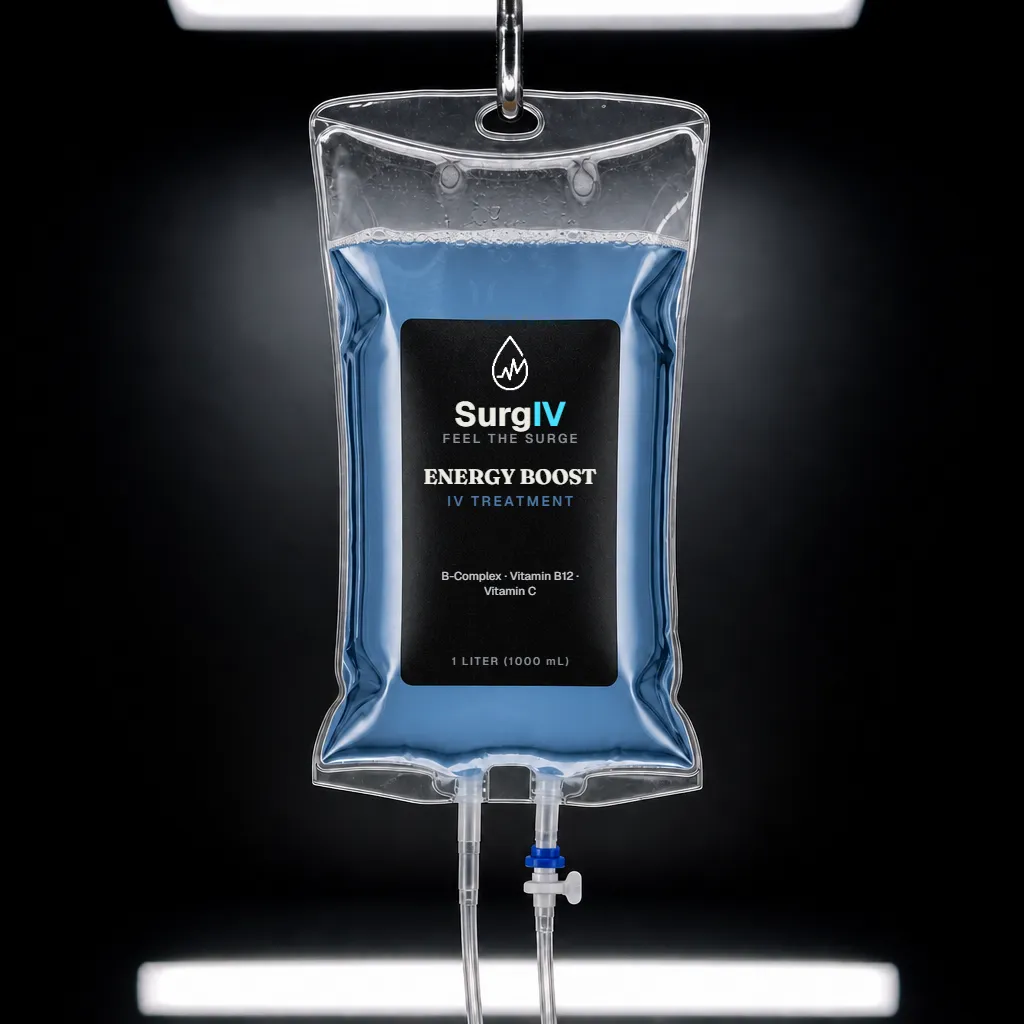
Fill the gap properly
Energy Boost $249
The actual inputs — hydration and B vitamins — the cans were cosplaying.
B-Complex · Vitamin B12 · Vitamin C
This article is for general education and is not medical advice. IV therapy at SurgIV is administered by registered nurses under physician-written protocols, with a health screening before your first visit. Talk to your doctor about what is right for you.