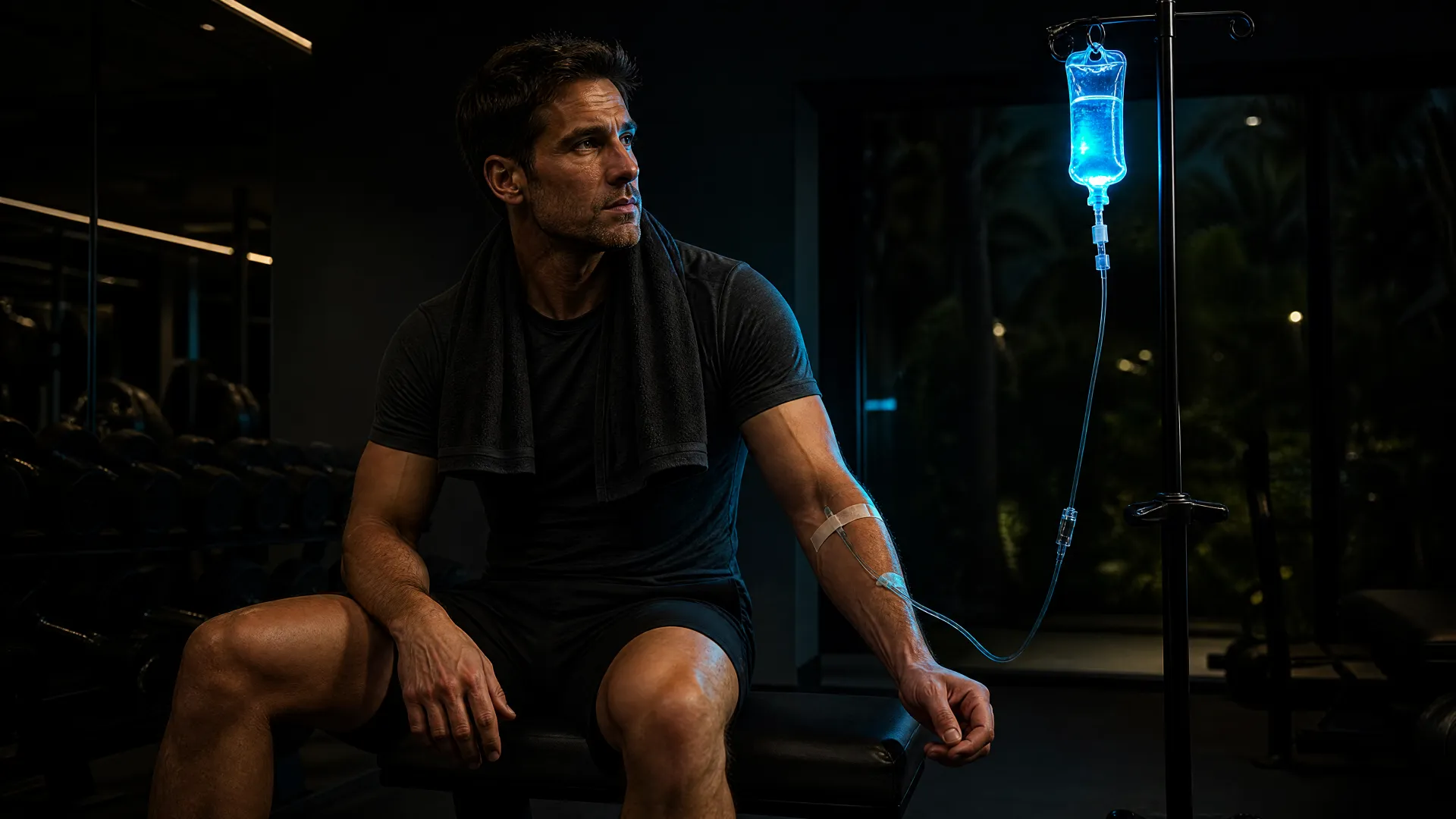
At his annual physical, a member we'll call Walt, 66, encountered a new instrument: his forward-thinking physician handed him a dynamometer — the squeeze-measuring device — and asked for his best grip. Walt, a retired contractor with forearms that opened paint cans for forty years, posted a number that made the doctor look up. "Mr. Walt," she said, consulting the age charts, "statistically speaking, this is one of the best test results in your entire file." Walt's response, now family legend: "The HANDSHAKE is the test? I've been fasting for the bloodwork for nothing?"
The absurd-sounding, robust science
Walt's doctor wasn't improvising. Grip strength has emerged as one of the strangest and sturdiest findings in longevity research: large multi-country studies (the PURE study most famously, spanning hundreds of thousands of participants) keep finding that grip strength predicts cardiovascular events and all-cause mortality with remarkable power — in some analyses outperforming blood pressure as a predictor. The absurdity dissolves once you see the mechanism: nobody dies of weak hands; the hand is a reporting station for the whole machine. Grip tracks total-body muscle mass, neuromuscular health, and the general systemic reserve that determines fall resistance, surgical recovery, metabolic function — the entire retirement account of aging, read through a squeeze. It's the biomarker version of judging a ship by its handshake with the dock: crude, and weirdly accurate.
"The handshake is the test?" — yes, Walt, and it's a better one than most of the fasting panel.
The teaching-to-the-test trap
The finding's popular misreading — and the supplement-adjacent industry has already productized it — is that one should therefore train grip: the gadget grippers, the wrist rollers, the grip-specific programs. Mostly missing the point: since grip is a proxy, squeezing gadgets improves your score without improving what the score measures — the biomarker equivalent of teaching to the test. (Walt's contractor forearms predicted well because they were attached to a contractor's body, built by four decades of carrying, pulling and climbing.) The honest prescription is the whole-machine playbook the proxy reports on: deadlifts, rows, carries, hangs — the pulls and hinges that build grip incidentally while building everything it stands for, per the anti-theft program. Home testing without a dynamometer: the dead-hang (30+ seconds solid, 60+ strong for most adults — trend it monthly), heavy farmer's walks, and daily life's honest jar test.
The marker follows the machine
The training stack that moves the number by moving its referent: two-to-three weekly strength sessions anchored on pulls and carries, protein at the over-40 targets, power trained on purpose, and recovery run as half the program — the Peak Performance layer supporting the sessions that build the reserve the handshake reports. And the meta-lesson Walt's physical teaches, worth keeping from this whole biomarker genre: the best predictors (grip, VO2max, capability measures) are the ones that are also directly trainable — unlike the methylation clocks, the handshake improves this month, with barbells, at any age the literature has tested.
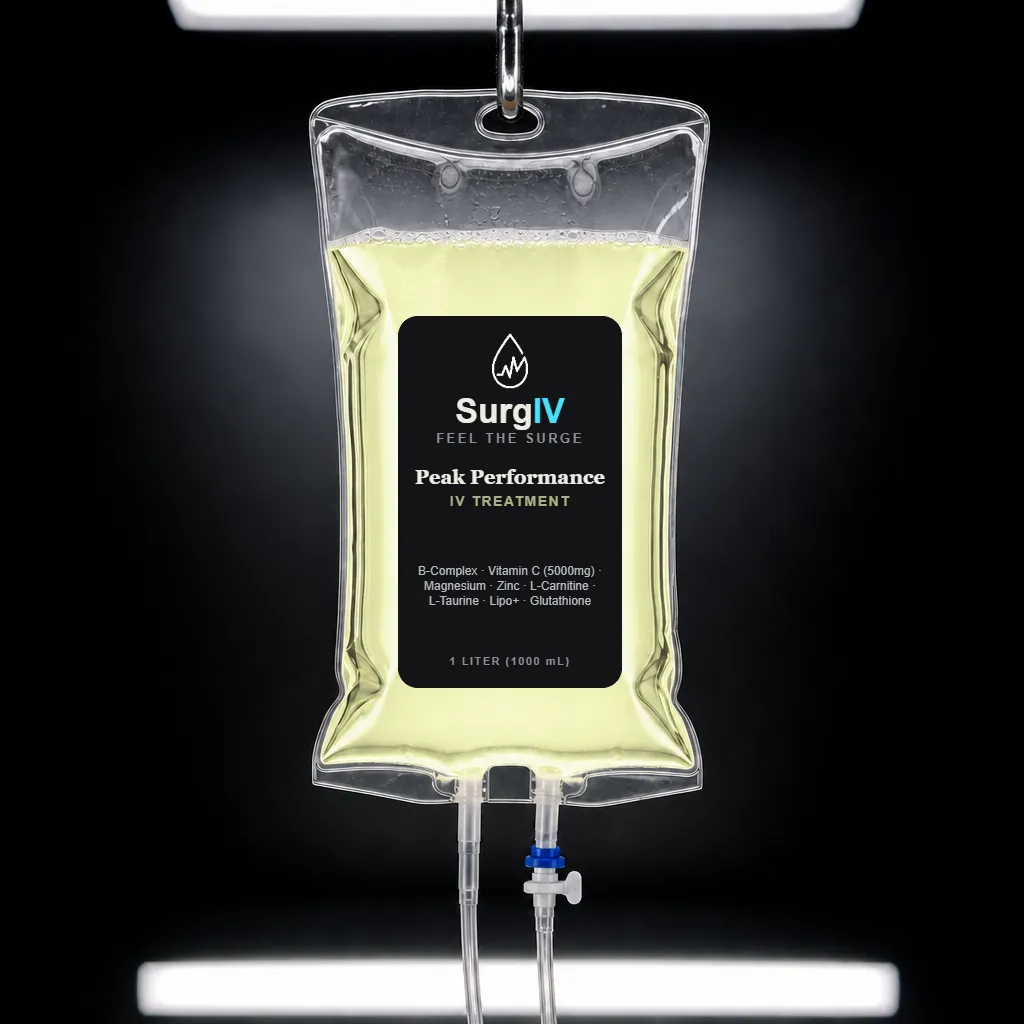
Support the training behind the marker
Peak Performance $499
Recovery for the strength work that actually moves the number.
IV Bag: B-Complex · Vitamin C (5000mg) · Zinc · Magnesium · L-Carnitine · L-Taurine · Lipo+ + more
Walt, re-tested
This year's physical: grip up four kilos (the gym membership his result inspired — "if the handshake is the test, I'm STUDYING"), dead-hang at 70 seconds, and a new tradition of greeting his physician with theatrical squeeze warnings. Her chart note, which she read to him aloud: "Patient continues to outperform his decade. Patient is aware. Patient will not let anyone forget it." The handshake predicts. Train what it's reporting on.
This article is for general education and is not medical advice. IV therapy at SurgIV is administered by registered nurses under physician-written protocols, with a health screening before your first visit. Talk to your doctor about what is right for you.