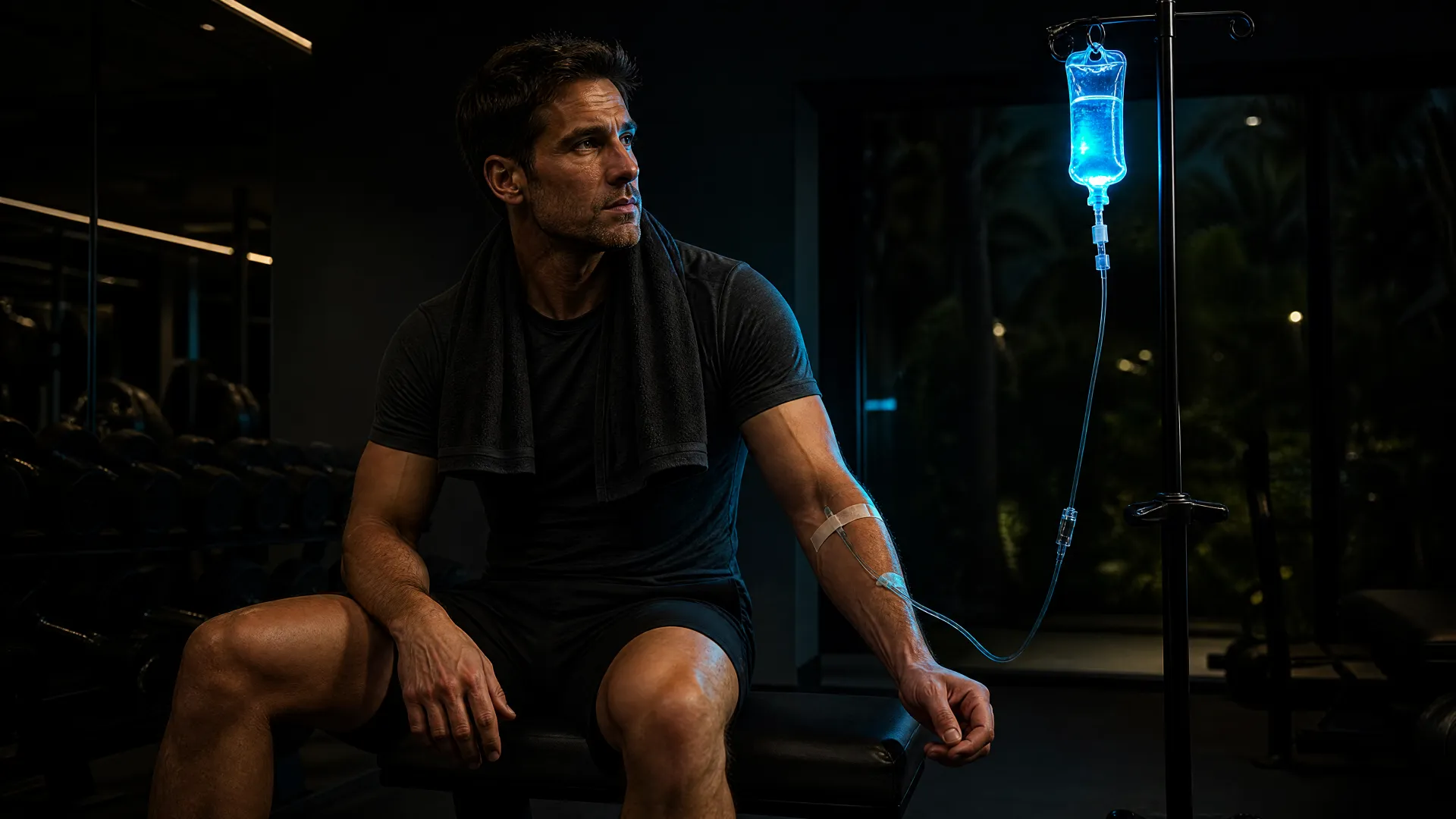
The theft began, for a client we'll call Steven, on a Tuesday he can date precisely: age 52, lifting his 40-pound granddaughter to his shoulders at the Palm Beach Zoo — a move he'd performed with her mother a thousand times, three decades prior — and feeling, for the first time, negotiation in the lift. Not failure. Negotiation. "And I remember thinking," he told our nurse, "when was I robbed? Because something was definitely taken, and I never heard a window break."
The crime has a name — sarcopenia, age-related muscle loss — and Steven's forensics are accurate: it is the slowest, quietest heist in human biology. The primer on what's being taken, why it matters more than almost anyone realizes, and the extremely well-proven counter-move.
The heist's arithmetic
The untrained adult loses roughly 3–8% of muscle mass per decade from the 30s onward, with the curve steepening after 60 — and muscle power (the fast, forceful stuff: catching yourself on a stumble, rising from a low chair, the granddaughter lift) declines even faster than raw strength. One imperceptible percent a year: no broken window, no single Tuesday to point to — until the negotiations begin. And here's why the stakes outrank vanity by miles: muscle is the retirement account of aging. The research keeps finding that strength and muscle mass predict late-life independence, fall risk, metabolic health, surgical outcomes, even mortality — because muscle is the reserve every crisis draws against and the machine every capability runs on. The healthspan project's single most fundable account.
"When was I robbed? I never heard a window break." — sarcopenia, experienced at the Palm Beach Zoo
The counter-move (boring, proven, undefeated)
Now the good news, and it's some of the best-evidenced news in all of health science: resistance training rewrites the curve at every age ever studied. Trials on beginners in their 70s, 80s and 90s show significant muscle and strength gains — the rebuilding machinery answers for life; it just needs to be asked. The working prescription from the literature: two-to-three strength sessions weekly hitting the big movements, with the over-40 amendments — protein raised, not lowered (aging muscle develops "anabolic resistance," so the consensus runs 1.2–1.6g/kg daily, spread across meals — protein under-eating is the heist's quiet accomplice); power trained on purpose (moving moderate loads fast, since power leaves first); and recovery treated as half the program — because the actual limiting factor after 40 is rarely willingness. It's the widening recovery window that turns three weekly sessions into two, then one, then a memory.
Defending the bottleneck
That recovery bottleneck is where the supply-side support earns its place in the anti-theft portfolio: sleep as the non-negotiable (the rebuild runs on it), the protein math honored daily, hydration as the medium of all repair — and the Peak Performance layer for the training that's doing the actual fighting: aminos for the rebuild, magnesium for the recovery, the full hydration the repair chemistry runs in. Steven's protocol — three lifting sessions, protein tracked "like a second granddaughter," biweekly recovery sessions — is eighteen months old now. The zoo lift, retested regularly by an enthusiastic 41-pound auditor: no negotiation.
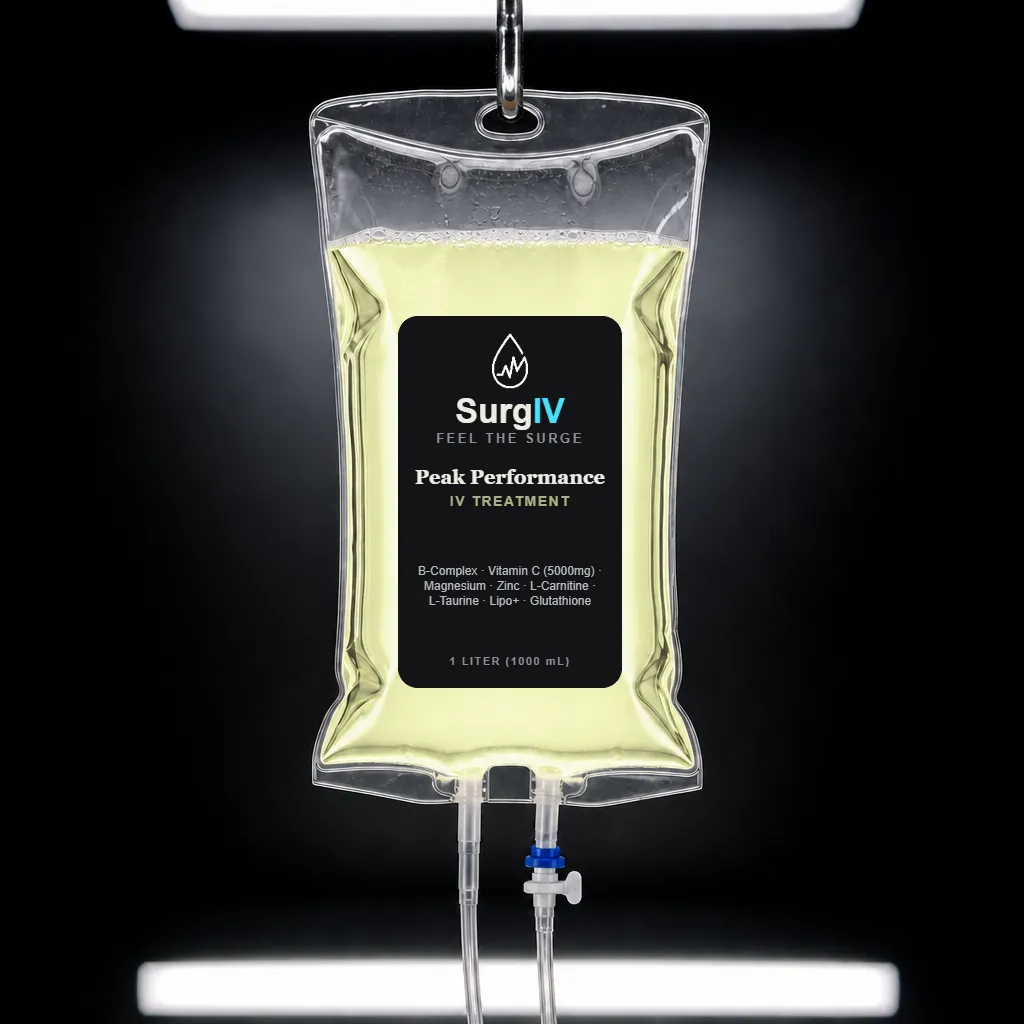
Support the rebuilding crew
Peak Performance $499
Aminos, hydration and recovery support — for the training that keeps the account funded.
IV Bag: B-Complex · Vitamin C (5000mg) · Zinc · Magnesium · L-Carnitine · L-Taurine · Lipo+ + more
The heist, interrupted
Sarcopenia's whole strategy is your inattention — one percent, silently, forever. The counter-strategy fits on an index card: lift twice a week, eat your protein, sleep, recover deliberately, start regardless of your age because the literature has demolished 'too late.' Steven keeps his version taped inside the garage gym his negotiating Tuesday built: "They rob everyone. They don't rob the ones who notice." Notice. The account takes deposits at any age.
This article is for general education and is not medical advice. IV therapy at SurgIV is administered by registered nurses under physician-written protocols, with a health screening before your first visit. Talk to your doctor about what is right for you.