
7:10 PM, Thursday, a lit field in Wellington. A man we'll call Marcus — 36, former high school slot receiver, current father of two with a standing desk — runs a corner route at what his brain believes is his old speed. The route works. The catch happens. The plant leg files an incident report that will reach him at 5:50 AM. Friday morning, walking downstairs sideways like a crab, he delivers the rec-league athlete's eternal soliloquy to his coffee: "It's FLAG. There's no CONTACT. Nobody even TOUCHED me. Why do I feel like I lost a fight?"
The contact was never the hard part
Here's flag football's open secret: removing the tackling removed the rest, not the risk. Flag runs nearly continuous — no huddle-grind clock, no pile-ups to breathe through — making it arguably the highest sprint load in rec sports: every route a maximal acceleration from standstill, every flag pull a violent brake, every cut a full-speed plant that loads knees, ankles and hips in ways straight-line running never approaches. Marcus's incident report is textbook: the muscles that decelerate — hamstrings loading eccentrically, adductors catching cuts — absorb the highest forces in the sport, and they are precisely the hardware a standing-desk decade hasn't trained. Non-contact injury is the norm across sports at every level. The pads were never protecting anyone from physics.
Tackle football hits you with a linebacker. Flag football hits you with your own deceleration. Only one of those took the pads off.
The 7 PM furnace clause
And the schedule adds Florida's surcharge: half the year, kickoff at 7 means 85-plus degrees at full humidity — sprint-sport output in conditions college programs build acclimatization protocols around, funded by a water bottle at halftime. The sweat bill is varsity-sized; the hydration habit is intramural. That gap — run twice weekly through a season — is where the night cramps, the flat Fridays, and the fourth-quarter hamstrings actually come from.
Staying in the league
The 35+ retention protocol: a genuine dynamic warm-up — sprint sports demand it most of any category; the jog-and-arm-circles ritual doesn't prepare a corner route; in-week maintenance — hamstring and hip strength on non-game days, because the league is your test, not your training, and bodies that only sprint on Thursdays break on Thursdays; the hydration ledger — pre-game electrolytes, halftime discipline, the two-currency repayment after; and for tournament weekends — four games in a Saturday, the sport's true meat grinder — a between-days reset so Sunday's bracket runs on Sunday's legs. The soccer leagues learned it first; flag's sprint math is steeper.
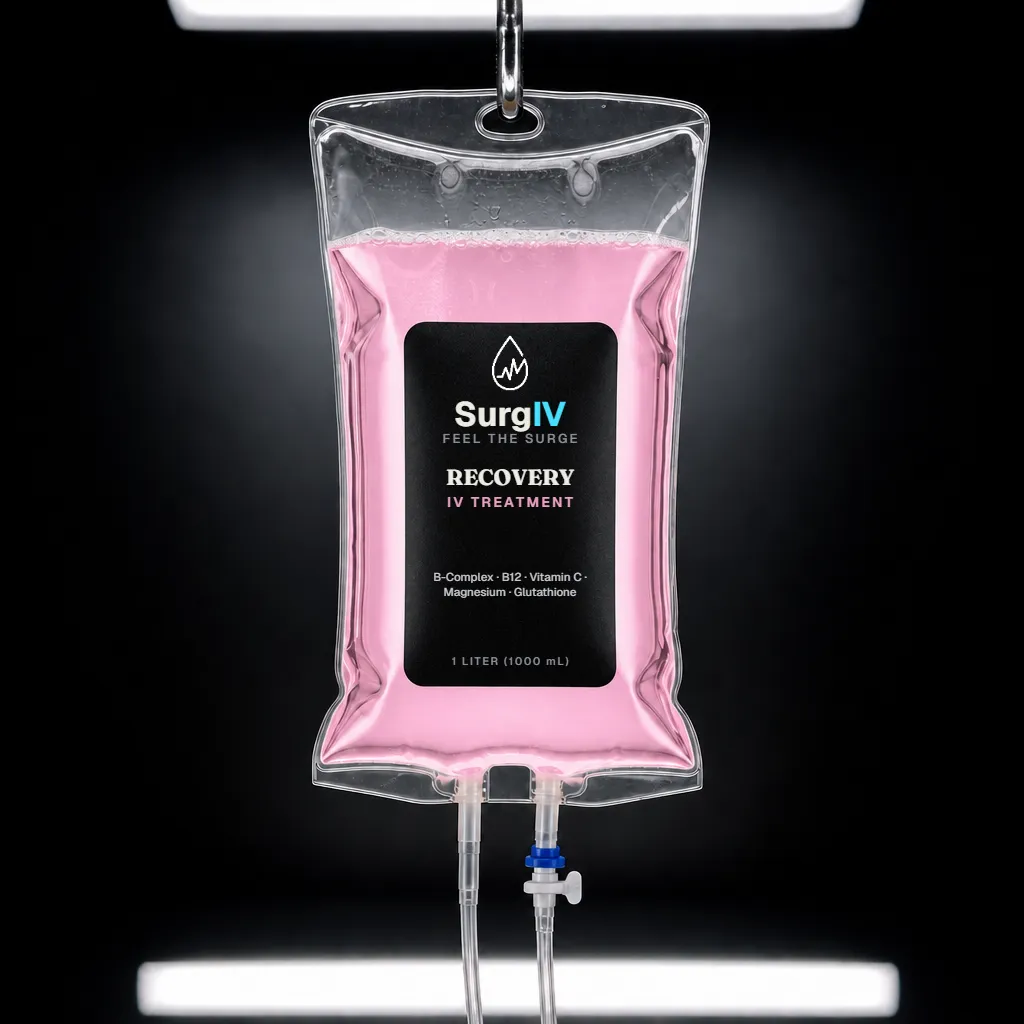
League-night infrastructure
Recovery $299
Fluids and minerals for the highest sprint load in rec sports.
B-Complex · B12 · Vitamin C · Magnesium · Glutathione
Marcus, week twelve
Warm-up adopted (the team mocked it until the team copied it), Tuesday hamstring work instituted, electrolytes in the gear bag, one recovery drip after the October tournament. Week twelve — historically his season's IR week — found him running the same corner route, catch made, plant leg silent. His sideline summary, delivered to a limping opponent: "The flag doesn't save your hamstrings. The Tuesday work does. It's still football — you just tackle yourself now."
This article is for general education and is not medical advice. IV therapy at SurgIV is administered by registered nurses under physician-written protocols, with a health screening before your first visit. Talk to your doctor about what is right for you.