The question arrives at minute fifty of nearly every athlete's first session, asked with the specific energy of someone already mentally packing a gym bag. A client we'll call Jake, 33, CrossFit devotee, asked his version while literally eyeing his lifters by the door: "So when this bag's done... can I train? Like, today? Is that allowed? Am I going to leak?"
The nurse's answer — "you're not a punctured water balloon, Jake" — deserves preservation, and so does the full version, because the IV-and-training timing question has genuinely useful strategy inside it.
The short answer: yes, and you won't leak
For healthy adults after standard wellness formulas, there's no required rest window — training the same day is common, and the physiology behind the leak worry dissolves on inspection: the liter you received joined your circulation during the session — distributed into blood volume and tissues, exactly where hydration lives. The vitamins absorbed at 100% on delivery. A workout afterward spends resources the normal way; it no more "undoes" the IV than it undoes breakfast. You're simply training from a full account instead of your usual Tuesday deficit — which, Jake reported after testing it that same evening, feels "borderline unfair."
"Am I going to leak?" — the most common post-drip training question, and the most cheerfully wrong mental model in the business
The real question: before or after?
The strategy layer is timing the drip against the training's purpose:
- Before (the full-tank play): for the big performance day — the tournament, the long brick, the max-effort session — the day-before timing is the gold standard: hydration fully integrated, nutrients aboard, nothing new on game day. Morning-of works for afternoon sessions; the liter needs a little time to settle in, and pre-training bathroom logistics are real.
- After (the rebuild play): for the brutal session already done — the metcon week, the long run, the Thursday-night wars — the post-training drip puts fluids, aminos and minerals into the system precisely while the repair shift is hiring. This is the anchor pattern most of our athlete members run: the week's hardest session, then the resupply.
- The bracket (big weekends): tournament formats get both — the day-before top-up and the between-days or post-event rebuild, per the competition playbooks.
The short caution list (honestly short)
The genuine considerations: the arm — if the insertion site is tender, give it a few hours before heavy direct loading (barbell work, hanging); most people feel nothing and lift freely. The NAD⁺ scheduling note — those sessions run long and some people prefer training first rather than after a 90-minute drip. The heat-stacking note — hot yoga or sauna immediately post-liter feels odd to some (harmless, just noted). And the universal rule that outranks all timing strategy: off-feeling days are rest days, drip or no drip. That's the whole list — no bans, no leak risk, no waiting period. The bag funds the training; the training is why you got the bag.
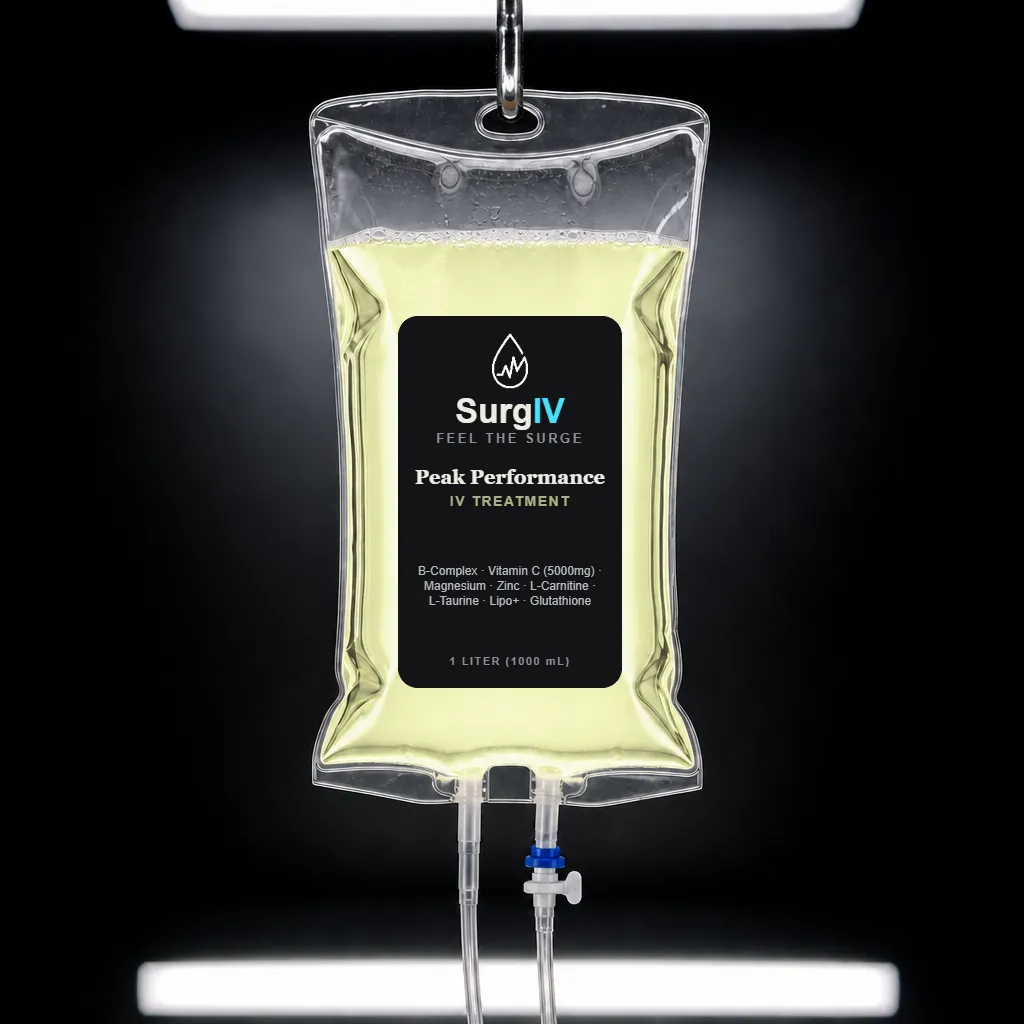
Built to bracket training
Peak Performance $499
The athlete's formula — timed before big sessions or after brutal ones, your call.
IV Bag: B-Complex · Vitamin C (5000mg) · Zinc · Magnesium · L-Carnitine · L-Taurine · Lipo+ + more
Jake's protocol, one year in
Current configuration: Peak Performance every other Thursday after the week's heaviest block, occasionally flipped to Wednesday-before when a competition looms — and a standing bet with his nurse about whether he'll ask the leak question again ("once a year, tradition now"). His gym-bag review stands as the definitive answer to the whole genre: "Turns out the drip isn't instead of training. It's ammunition for it." Correct, Jake. Rack your plates.
This article is for general education and is not medical advice. IV therapy at SurgIV is administered by registered nurses under physician-written protocols, with a health screening before your first visit. Talk to your doctor about what is right for you.