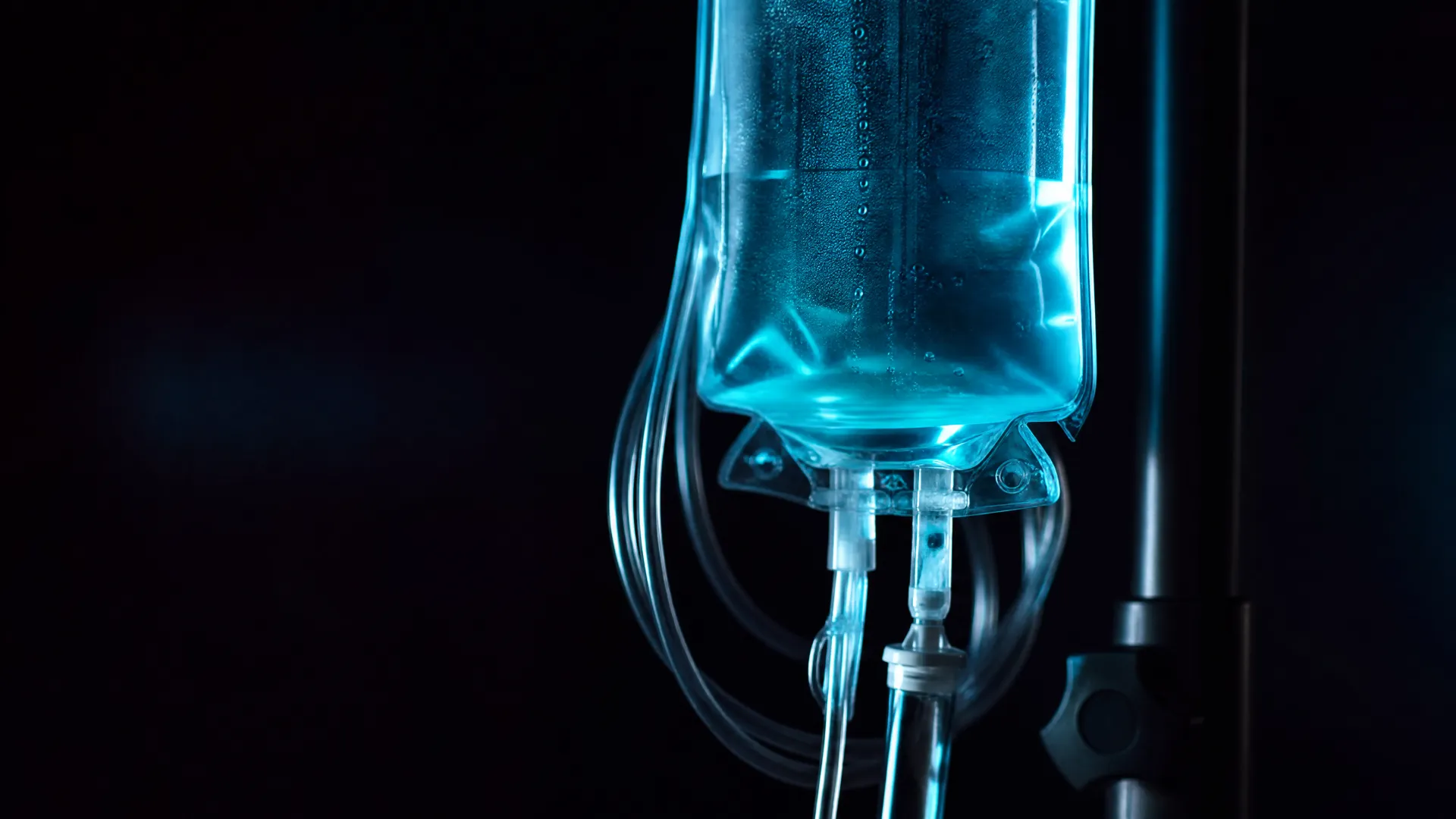
There's a question our nurses get at parties — usually delivered with a skeptical eyebrow, usually by someone's brother-in-law: "Okay but what does it actually DO?" And it's a fair question, because the industry has answered it terribly from both directions: the hype wing promises cellular miracles, the dismissive wing mutters "expensive placebo," and the honest mechanical answer — which is more persuasive than either — rarely gets airtime. Here it is.
The one-sentence answer
IV therapy puts fluids and nutrients directly into your bloodstream, skipping digestion entirely — which means full doses, delivered fast, regardless of what your stomach thinks about it. That's it. That's the technology. It's been hospital medicine for a century; the wellness version applies the same delivery route to hydration and nutrient repletion in healthy adults. Everything true about IV therapy hangs off that one mechanical fact — and everything false about it comes from pretending it does something else.
What the mechanism buys you, concretely
- Speed. Your gut absorbs fluid at roughly half a liter to a liter per hour — the rate wall. An IV restores a full liter to circulation within the session. When you're multi-liters down with somewhere to be (the hangover, the heat crash, the illness aftermath), that speed difference is the entire product.
- Completeness. Oral nutrients pay the absorption toll — vitamin C's transporters saturate at small doses, glutathione gets dismantled as food, B12's pathway breaks for millions. IV delivery makes the label dose and the blood dose the same number for the first time.
- Independence. The route works when the gut doesn't — nausea, stomach bugs, seasickness, the morning after. The cruelest recovery trap ('the cure needs the door the illness locked') simply doesn't apply.
The honest pitch is boring: it's a delivery route. It happens to be the best one ever invented, and your body's front door happens to be slow, taxed, and occasionally barricaded.
What it does NOT do (the paragraph that builds trust)
No cures. No reversed aging. No 'detox' beyond what your liver and kidneys were already doing competently. No substitute for sleep, and no license for a lifestyle that out-spends any drip. The felt effects — the un-wilting, the clearer head, the days-to-weeks of steadier energy — are supply effects: a depleted system running like a supplied one. If your system wasn't depleted, the effect is modest, and an honest provider says so before taking your money. (Ours are trained to; it's policy.)
So who's it actually for?
Map the mechanism to life and the use cases draw themselves: the depleted-on-a-deadline (hangovers, bugs, heat, travel), the athletically drained (where the rebuild bill outruns the kitchen), the poorly-absorbing (B12's broken pathway, the C and glutathione ceilings), and the maintenance crowd running monthly rhythms against a lifestyle that drains faster than diet refills. The brother-in-law at the party, upon hearing all this, usually says some version of "huh — that's less magical and more reasonable than I expected." Correct on both counts. That's the product.
The plain-English starter
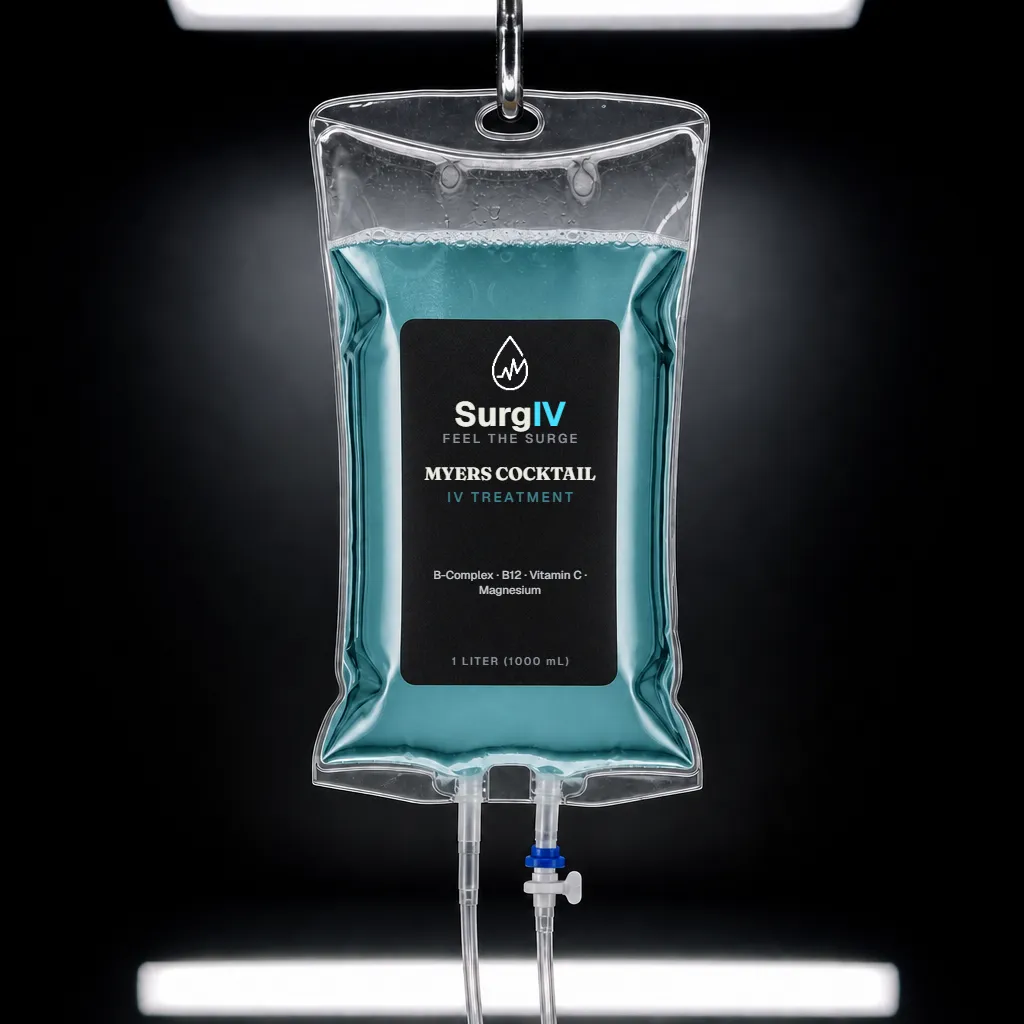
Myers Cocktail $249
The classic balanced formula — everything this article describes, in one bag.
B-Complex · B12 · Vitamin C · Magnesium
The eyebrow, lowered
What does IV therapy actually do? It delivers. Fully, fast, and past every bottleneck your body's front door imposes. The rest — which formula, how often, whether it's worth it for you — is just application math. And the application math, unlike the industry's fog, checks out on a napkin.
This article is for general education and is not medical advice. IV therapy at SurgIV is administered by registered nurses under physician-written protocols, with a health screening before your first visit. Talk to your doctor about what is right for you.