6:45 AM, a kitchen in Jupiter. A man we'll call Brooks — the chest-freezer Brooks, whose wellness arsenal now includes a ring, a strap, and opinions — stares at his phone with the expression of a man reading a bad performance review. Recovery: 31%. Red. His body's own testimony: honestly, fine. Slept well, feels good, legs fresh. But the ring has spoken, and Brooks — a man who once trained through actual influenza because "it was on the calendar" — is now considering canceling a workout he wants, on the word of an algorithm that can't see him. His wife, over coffee: "Who's in charge here, you or the jewelry?"
What the number is made of
The score deserves demystifying before it deserves obedience: recovery scores blend mostly three signals — heart rate variability (beat-to-beat variation, a genuine window into autonomic nervous-system state), resting heart rate, and sleep duration and staging estimates — into a proprietary recipe. The signals are legitimate physiology. The blend is opaque marketing. And the staging layer specifically is an estimate: wrist and finger sensors infer sleep stages respectably for trends and roughly for any single night — the lab-grade certainty the percentage implies isn't there.
The wearable is an excellent historian and a mediocre prophet. Trust its trends completely and its Tuesdays loosely.
Where it shines and where it slips
The genuine wins: alcohol's sleep damage rendered brutally visible (whole cohorts of users drink less purely from seeing the morning graph — the most effective moderation tool since the hangover itself); illness often flagged a day early via HRV dips; chronic under-recovery patterns — the class-culture spiral, the decade-mismatch — surfaced in trend lines no memory would assemble. As a mirror for behavior, the jewelry earns its subscription. The slips: single-night precision treated as gospel; day-to-day noise read as signal; orthosomnia — the documented phenomenon of sleeping worse because you're performing for the ring; and context blindness — the score cannot distinguish the hard workout you planned from the stressor you didn't, or a red day that needs rest from one that needs a liter of fluids.
The red-day protocol
The mature relationship, in three moves: cross-examine — the score is one witness; how you actually feel is another; when they agree, believe them; when they conflict, investigate rather than obey. Downshift, don't zero — a genuine red day wants easy movement, not the couch. Audit the inputs — the score is downstream of physiology, so move the physiology: the late pour, the short window, the accumulating strain, and the input most often overlooked because no wearable measures it — hydration and mineral status, which shift HRV and resting heart rate and are among the fastest levers to move, by glass or, when the deficit has compounded, by the direct route. The ring reports the weather. You still run the farm.
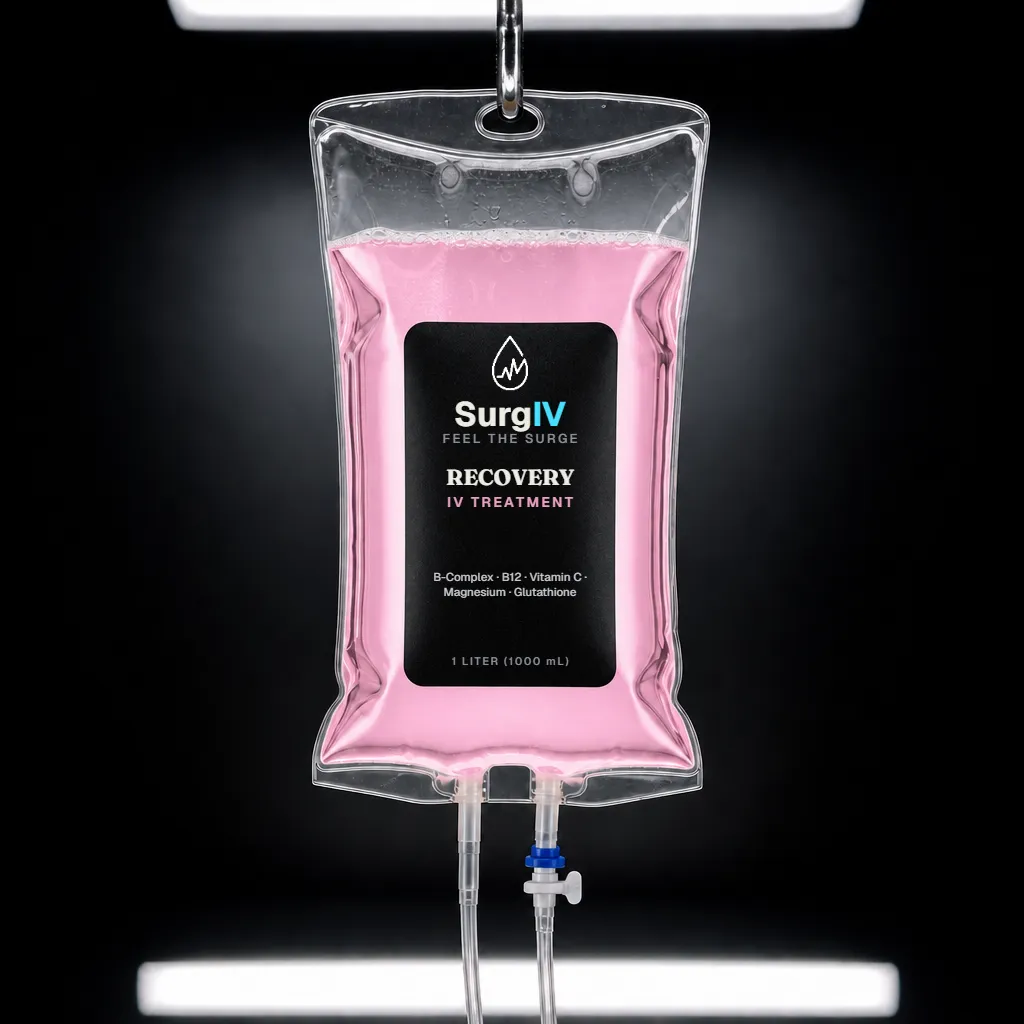
Move the inputs
Recovery $299
The score follows the physiology. Fund the physiology.
B-Complex · B12 · Vitamin C · Magnesium · Glutathione
Brooks, jurisdiction restored
He trained that day — cross-examined first, felt genuinely fine, sent it — and the next morning's score sheepishly read 74%. The new house policy, ratified over coffee: trends obeyed, Tuesdays interrogated, and red days answered with the input audit before the surrender. His summary, delivered to the strap itself: "You're the bookkeeper, not the boss. Great records. Noted. Squats at six."
This article is for general education and is not medical advice. IV therapy at SurgIV is administered by registered nurses under physician-written protocols, with a health screening before your first visit. Talk to your doctor about what is right for you.