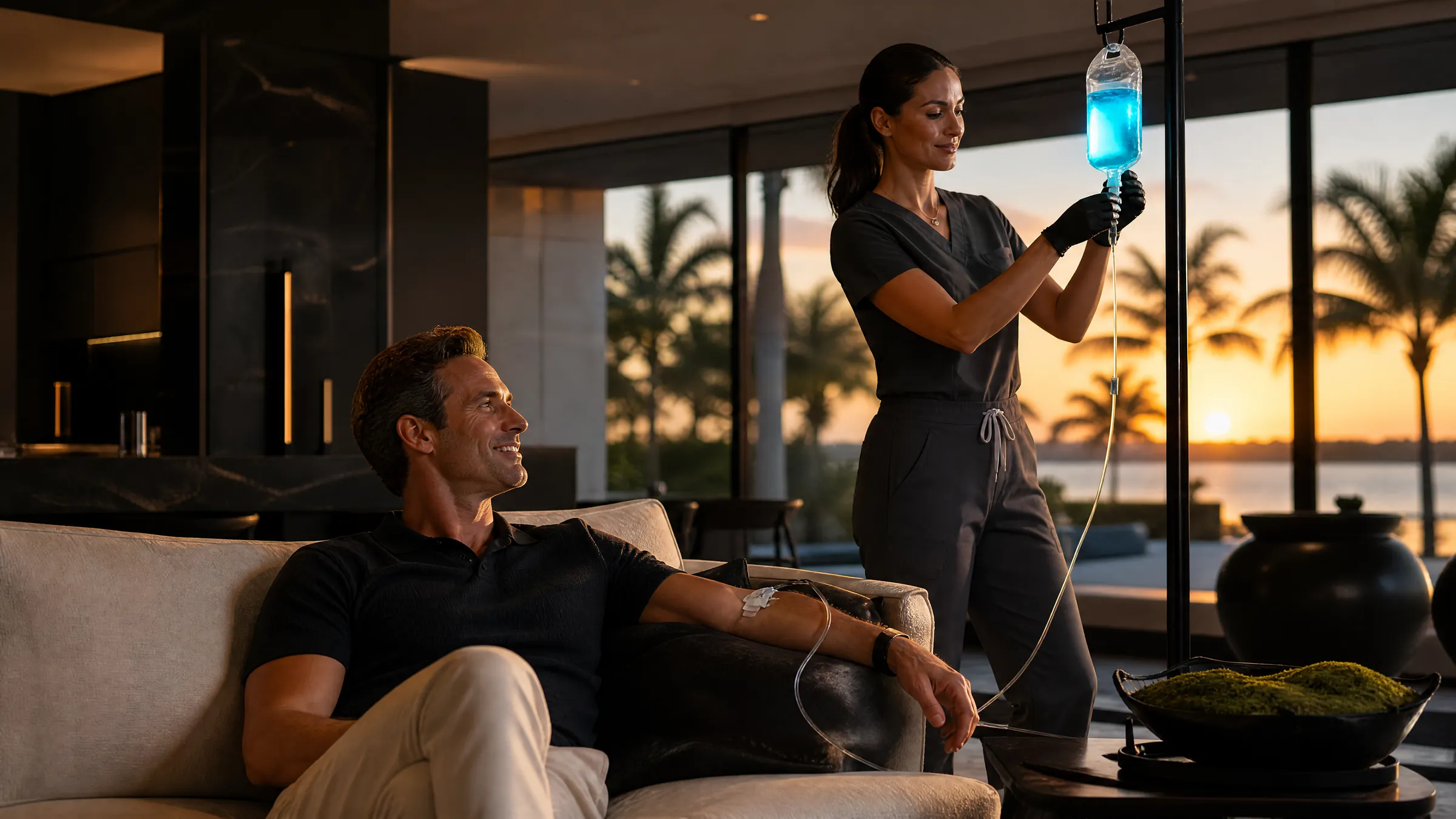
4:50 PM, Sunday, field six of a travel-ball complex in Wellington. A mother we'll call Bethany — the showings-marathon realtor, today in her other full-time role — is watching her daughter's fourth game of the weekend from a canopy she assembled at 6:40 AM. Weekend totals: two 5:30 alarms, nine sideline hours Saturday, eight today, one hotel bed of legendary mediocrity, and a cooler packed with precision — for eleven twelve-year-olds. Bethany's personal intake today: one iced coffee and most of a water bottle, warm. As the tournament reaches its championship inning, she stands to cheer and the field does a small, polite spin. "Whoa," says Bethany, sitting back down. The sideline has invoiced her.
The sideline is an exposure event
Here's the accounting nobody runs for the parents: the athletes rotate, substitute, and get shade-break protocols per the youth heat-safety playbook — the sideline doesn't rotate. Parents log six to ten stationary hours in direct Florida sun, on radiant turf or bleacher aluminum, frequently accumulating more total exposure than their players — while drinking less, because the cooler math always favors the kids. Add the tournament sleep pattern — 5:30 alarms, hotel beds, late team dinners, the Sunday-night drive — and a travel weekend runs the parents on five-hour nights bracketing full sun days. Bethany's polite field-spin is the standard Sunday presentation, and it never makes the team chat because the parents' box score is never kept.
The team has a hydration protocol, a shade rule, and a trainer. The sideline has an iced coffee and denial.
The parent's own kit
The fix is admitting the sideline is an athletic event and packing accordingly: a personal water supply with electrolytes — bottles labeled with the parent's name, a packet per game-day, packed with the same rigor as the team cooler; real food — the snack-bar nacho economy is the blood-sugar rollercoaster with a concession-stand markup; the canopy as health equipment — brought, deployed, actually sat under; the hat; and the discipline the athletes have coached into them: drinking on schedule, not on thirst, because thirst under-reports at exactly these exposures. The parents who run this kit finish tournament Sundays upright. The iced-coffee contingent finds the field spinning.
The season-scale settlement
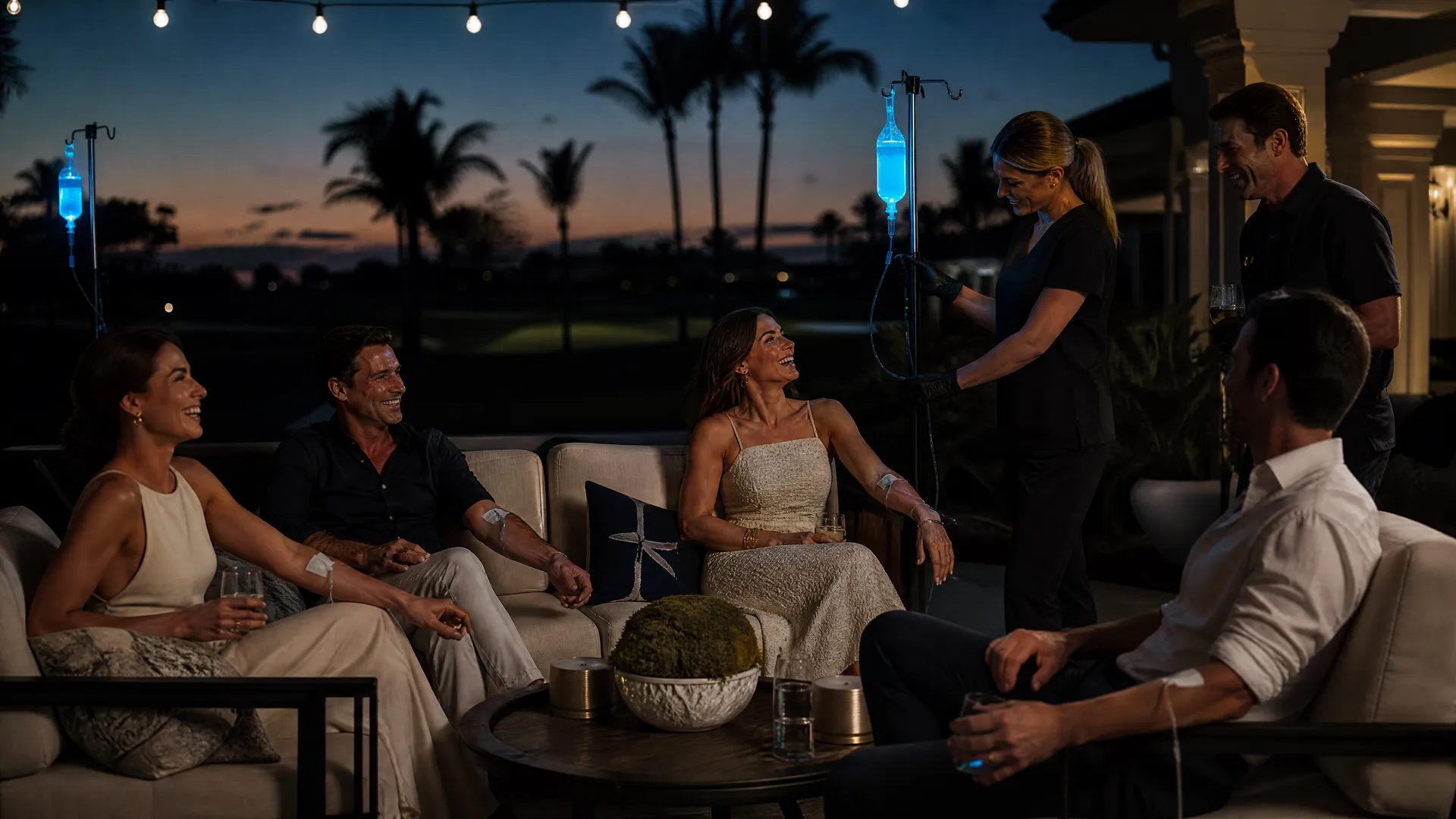
Sunday night: electrolytes and a real dinner after the drive, the early night against tomorrow's ordinary alarm. The season: a twelve-weekend travel calendar is a cumulative exposure event — the same compounding math as any weekend-warrior schedule, run in a folding chair — and the county's tournament-circuit parents have started booking accordingly: the parent's own session during the brutal stretches, Sunday evenings after the multi-weekend runs, occasionally as a sideline-parents group booking that has been described as "the best team party of the season, and nobody had to bring orange slices."
The parent's turn
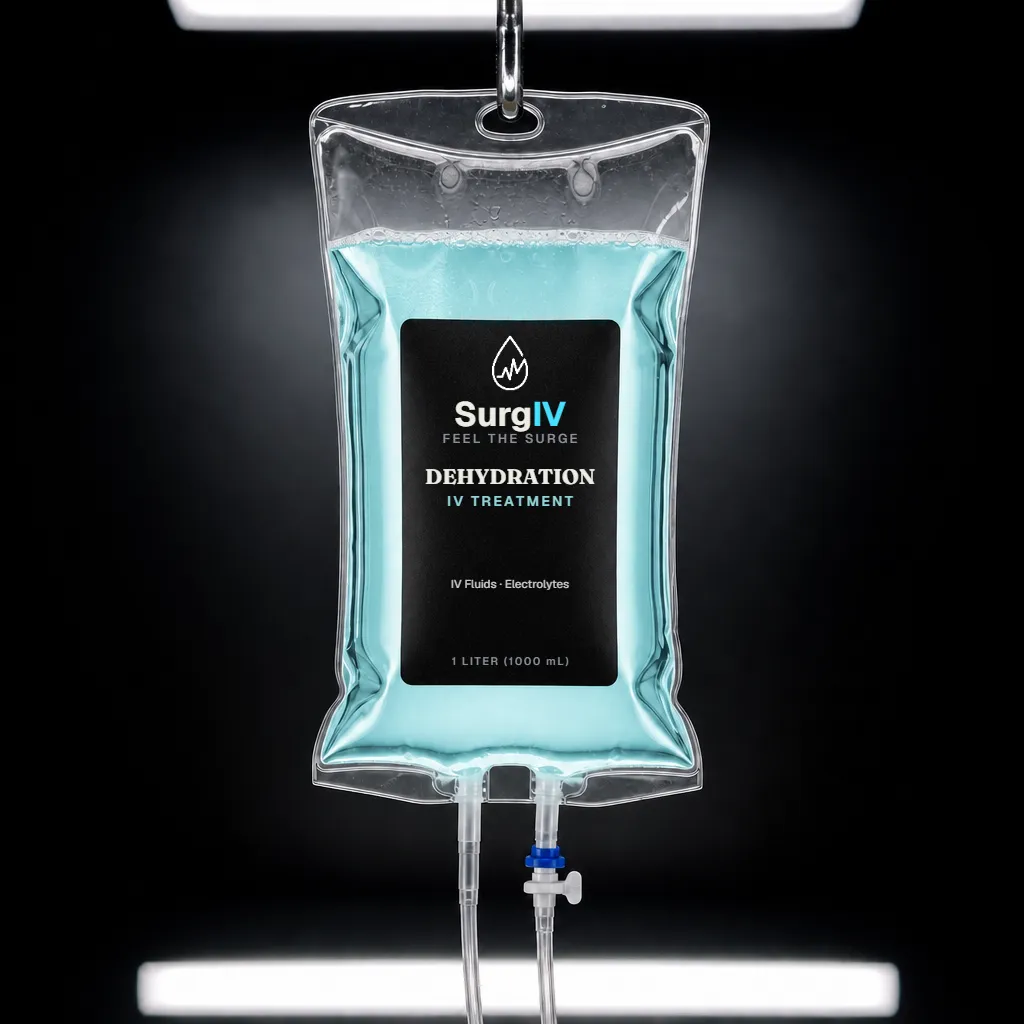
Dehydration $199
You hydrate the whole team. Sunday night, someone hydrates you.
IV Fluids · Electrolytes
Bethany, championship weekend
The kit got built that Monday: labeled bottles, packets, a cooler compartment with her actual name on it ("revolutionary"). Championship weekend — three days, seven games — ran on the full protocol, plus a Sunday-evening drip after the trophy photos. Monday's showings proceeded without a single field-spin. Her sideline doctrine, now taped inside the team canopy: "Hydrate the parent that hydrates the team. We're in the tournament too — we just play all nine innings, every game, standing up."
This article is for general education and is not medical advice. IV therapy at SurgIV is administered by registered nurses under physician-written protocols, with a health screening before your first visit. Talk to your doctor about what is right for you.