
10:40 PM, a bedroom in Jupiter. A man we'll call Phil, 52, lies in the dark performing what his wife has named "the cricket routine": left leg shifts, right leg stretches, both legs out of the covers, back in, flip, repeat. Inside Phil's calves: a sensation he's spent months failing to describe — "like soda under the skin," he finally offers. "Like my legs are bored. They want to WALK somewhere and I'm not invited." Relief comes only with movement; stillness reboots the fizz. His wife, from her side, with love: "Fix the crickets or sleep in the yard."
Naming the thing
Phil's soda-legs have a name: restless legs syndrome — an urge to move that arrives at rest, peaks in the evening, improves with motion, and rebounds with stillness. True RLS is a recognized neurological condition with real diagnostic criteria; around its edges lives a larger crowd of milder "restless evenings" sharing its triggers without the full syndrome. The distinction matters because the first move for genuine, persistent RLS isn't a supplement or a stretch — it's a lab order.
Of every symptom in this catalog, restless legs has the clearest first step: check the iron before anything else. It's the rare wellness story where the answer starts with a blood draw.
The iron question
The strongest finding in RLS research: brain iron availability affects the dopamine signaling the syndrome runs on, and low ferritin — your iron stores, a different number than basic hemoglobin — is the first thing guidelines tell physicians to check. When ferritin runs low, medically-supervised repletion meaningfully improves symptoms for a large subset of sufferers. Two boundaries, stated hard: this is doctor-and-lab territory — never supplement iron blind (excess iron is genuinely harmful, and it's deliberately absent from wellness IVs for exactly that reason); and persistent RLS deserves the actual diagnosis, because prescription options exist beyond minerals. Phil's first booking should be his physician. Ours comes later, if at all.
The everyday supporting cast
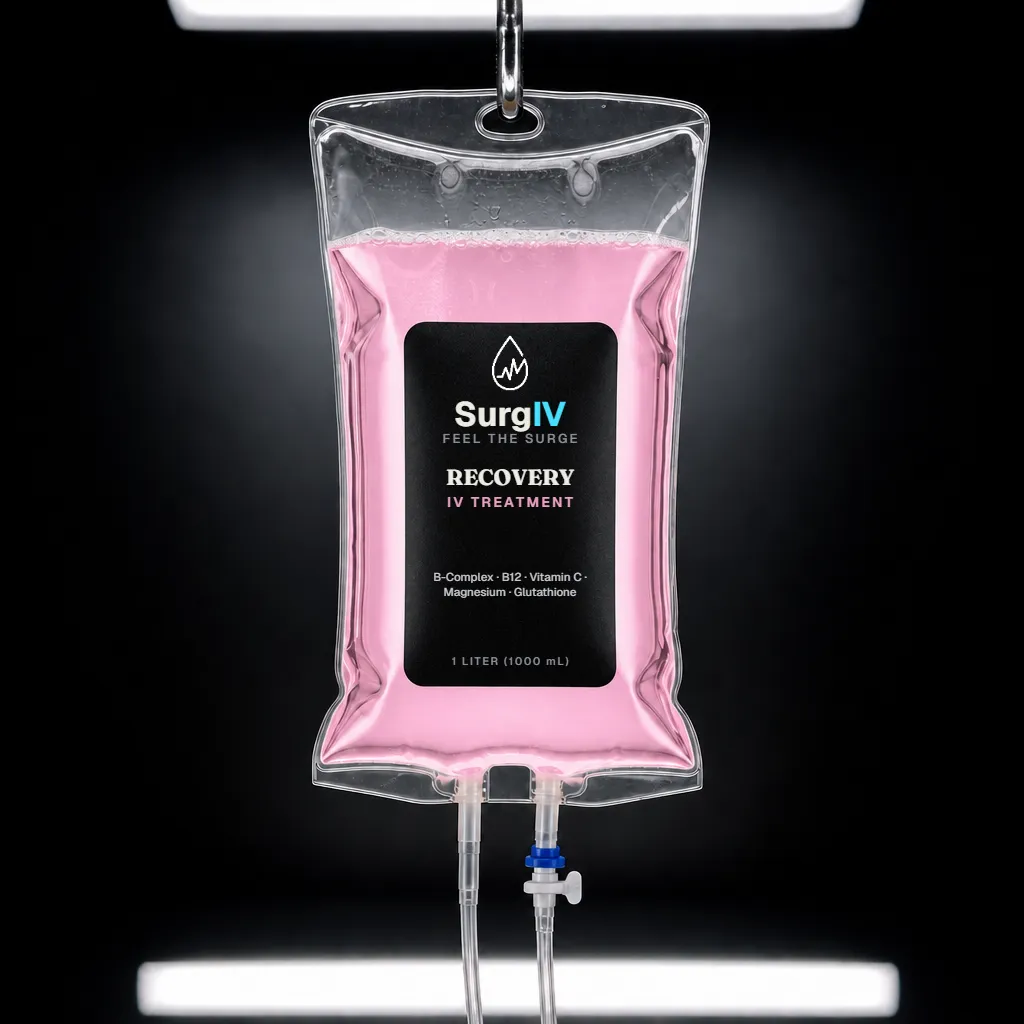
Around the iron question sits the territory this blog can honestly serve: magnesium — softer evidence than iron's, but it damps the nerve-and-muscle excitability restless evenings run on, it's chronically depleted in sweat-heavy, wine-adjacent Florida lives, and it particularly helps the crowd whose restlessness blurs into cramps and twitches; the trigger audit — evening caffeine and alcohol (both poke the dopamine-and-sleep machinery), sedentary days ending in still evenings, dehydration; and timing — a walk after dinner beats one at noon for evening symptoms. For the depleted-everyday version, fluids-plus-magnesium — the Recovery formula's lane — restocks the supporting cast in one evening sitting.
The supporting cast
Recovery $299
Magnesium and hydration for the everyday version — the iron question belongs to your doctor.
B-Complex · B12 · Vitamin C · Magnesium · Glutathione
Phil, crickets managed
Ferritin: 18 — low, exactly as the literature suspected. Physician-supervised iron over three months, evening wine moved to weekends, magnesium restocked, and the soda went flat — most nights, which his wife has ratified as sufficient. Phil's contribution to the neighborhood group chat, where three other men his age immediately recognized themselves: "The fizzy legs are a real thing, it has a name, and the first fix is a $40 lab. Go ask for a ferritin. Tell them the crickets sent you."
This article is for general education and is not medical advice. IV therapy at SurgIV is administered by registered nurses under physician-written protocols, with a health screening before your first visit. Talk to your doctor about what is right for you.