
3:30 AM, a glider chair in Palm Beach Gardens, week five. A woman we'll call Erin, 33, is nursing her son and experiencing the phenomenon no one adequately warned her about — not the sleep deprivation, she was briefed on that — but the thirst: a sudden, oceanic, drink-a-lake-immediately thirst that arrives the exact second the baby latches, every time, like a bill collector with a key to the house. Her water bottle is nine feet away on the dresser. Nine feet. It may as well be in Orlando. Erin, to the dark nursery, with feeling: "WHY does this happen every single time?"
The math nobody hands you at discharge
Because, Erin, you're running a beverage factory off your own reservoir. Milk is roughly 87% water, and established production ships 750 milliliters to a liter a day — sourced entirely from your body's supply. The guidance numbers follow: around 16 cups of total daily fluid for nursing mothers, versus 11-12 otherwise — a standing surcharge of a liter-plus, every day, for months. The latch-triggered thirst is the enforcement mechanism: oxytocin release during letdown appears to fire the thirst signal on purpose, the body invoicing in real time. It is not a quirk. It is payroll.
The thirst arrives with the latch because the body bills at the moment of production. It's not a bug in new motherhood. It's the invoice system working perfectly.
Who pays when the account runs low
Here's the part worth internalizing: the body protects the milk before it protects you. Mild dehydration rarely dents supply — production is guarded fiercely — but the guarding has a cost center, and it's Erin: the headaches, the crushing afternoon fatigue layered onto the sleep deprivation, constipation, the fog. Add that milk exports electrolytes too — sodium and potassium ride out in every ounce — and the plain-water-only approach runs the same dilution gap every heavy-output state hits. The postpartum depletion story is this math compounded across months; hydration is its most fixable line item.
The protocol, glider-tested
The station rule: a large bottle at every nursing location — glider, bed, couch, car — filled on a schedule, drunk during feeds when the invoice arrives (the nine-feet problem is solved by logistics, not willpower). Electrolytes in the rotation: salted food, occasional electrolyte drinks (mind the sugary ones), potassium at meals. Caffeine within the usual nursing guidance. And for the depleted stretches — cluster-feeding weeks, a hot summer, illness on top — the IV question, governed by this page's one absolute rule: ask your OB or midwife first, every time. Standard hydration fluids are widely considered nursing-compatible, and reputable services screen for nursing status and welcome provider coordination — but your provider rules, full stop, and the same OB-first framing applies here as in pregnancy. Any operator who doesn't ask the question is answering a different one about themselves.
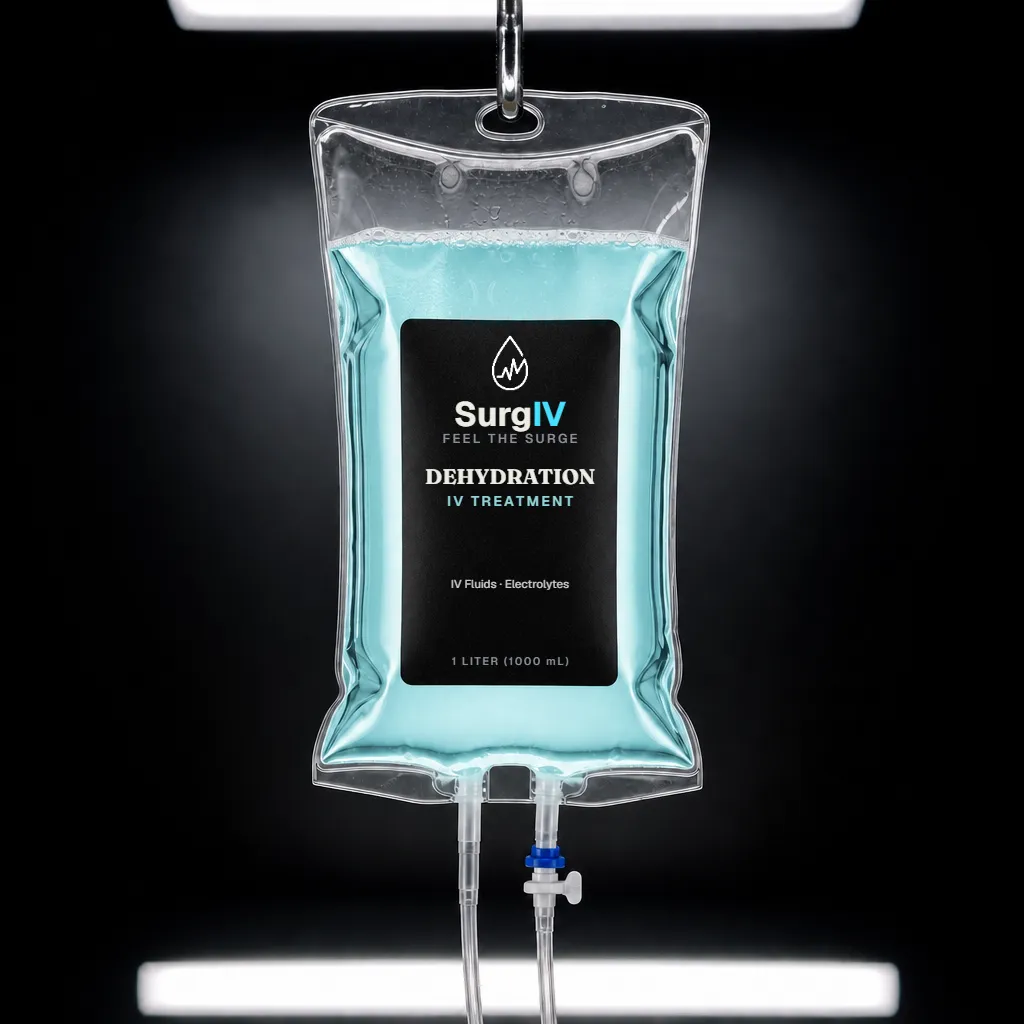
OB-cleared support
Dehydration $199
With your provider's blessing — fluids restored while someone else holds the baby.
IV Fluids · Electrolytes
Erin, stations deployed
Four bottles now live at four posts, filled each evening by her husband — "his half of the factory," per the house constitution — with an electrolyte packet in the 3 AM one. The Orlando problem is solved; the headaches largely retired; one OB-cleared drip during a brutal cluster-feed week while grandma held the baby. Her advice, posted to the new-moms group at 3:41 AM with one thumb: "The thirst is payroll. Fund every station before bed. You're not drinking for two — you're drinking for one and SHIPPING for two."
This article is for general education and is not medical advice. IV therapy at SurgIV is administered by registered nurses under physician-written protocols, with a health screening before your first visit. Talk to your doctor about what is right for you.