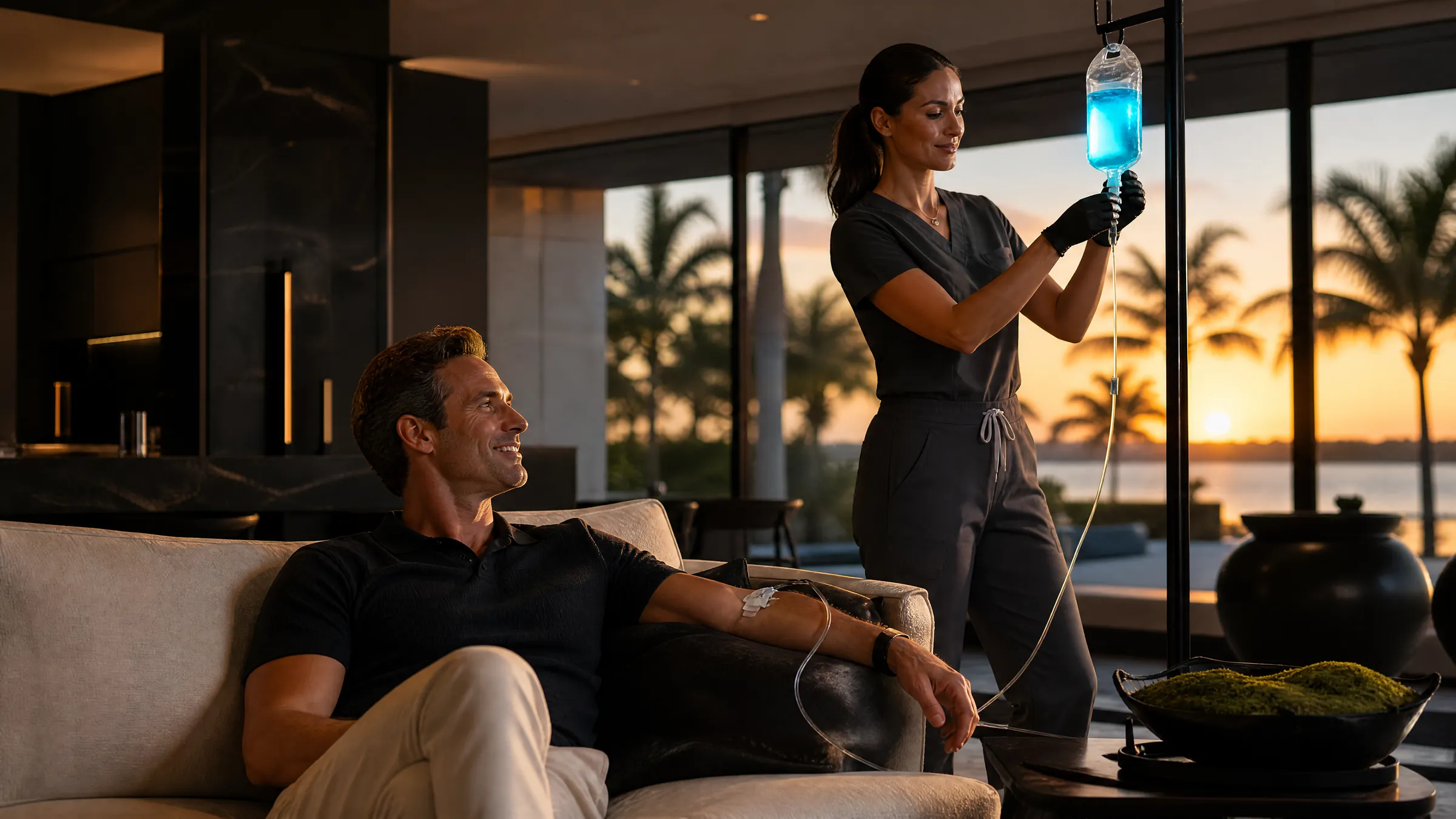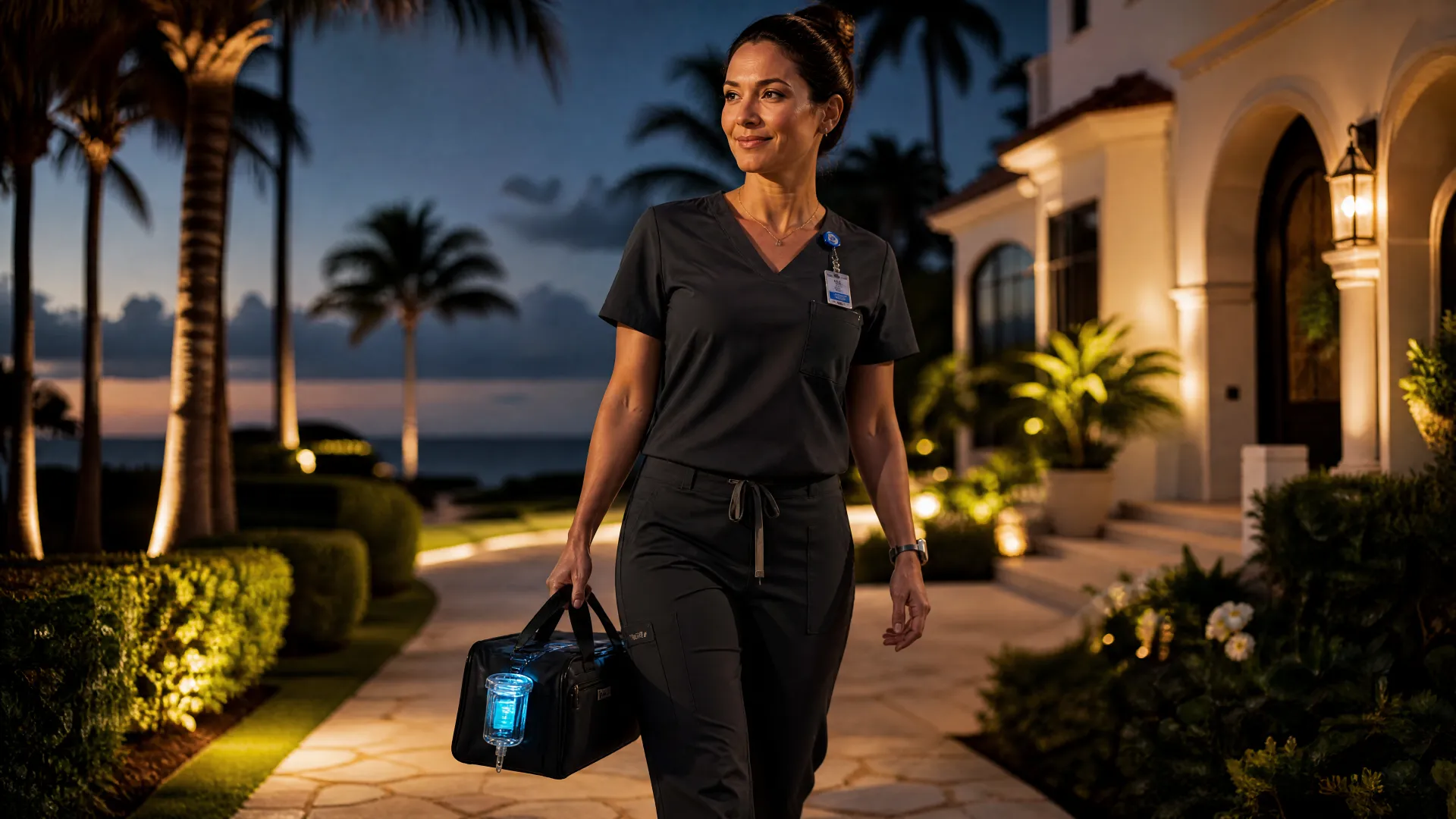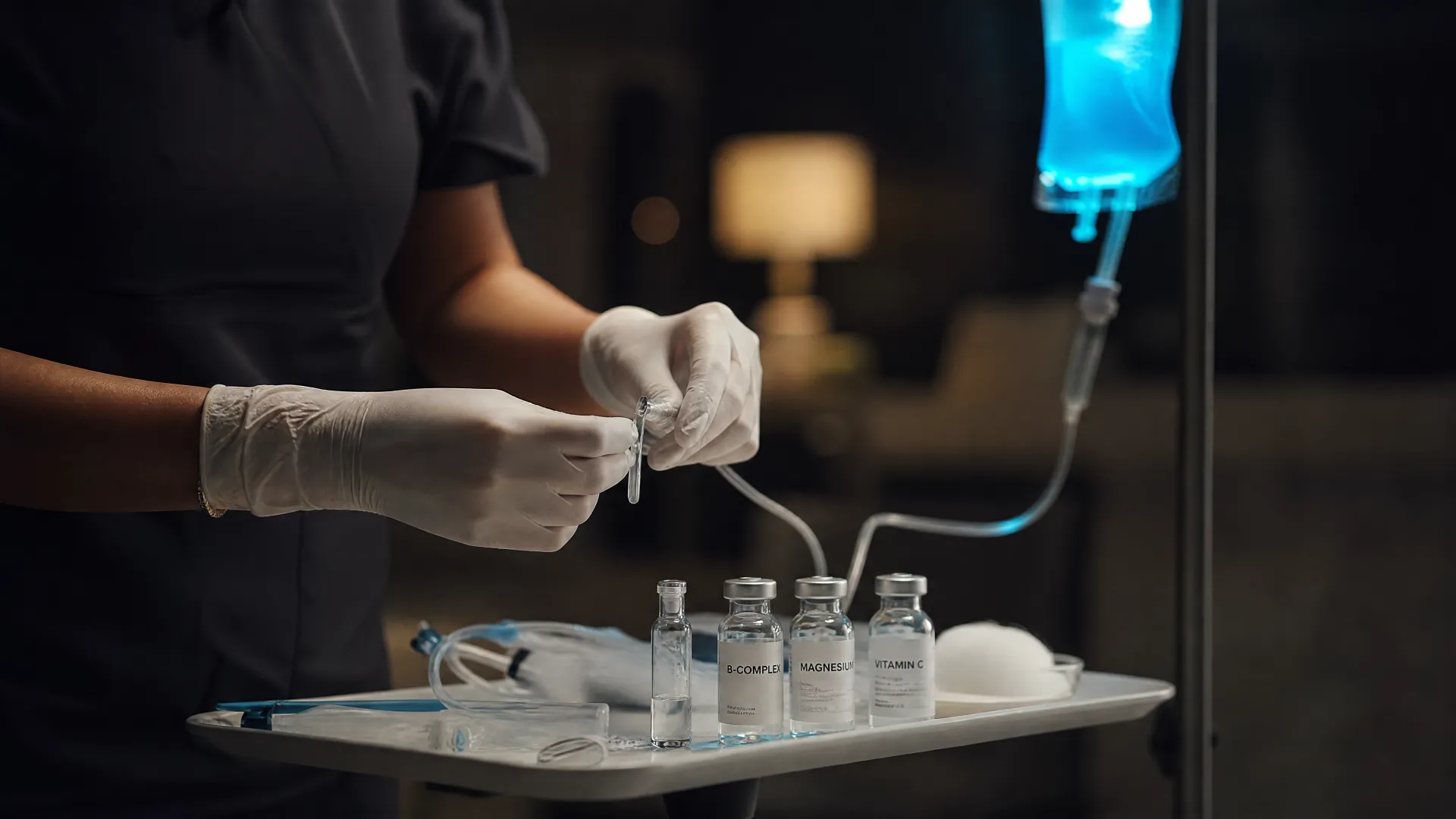
There's a specific moment in every mobile IV session — after the setup, before the placement, while the nurse is prepping the site — when the questions come out. Something about the pause invites honesty: people ask what they wouldn't type into a search bar, in a lower voice, often prefaced with "this is probably a dumb question." (It never is.) Here's what our nurses actually hear, in rough order of frequency, answered the way they answer it in the room — which is to say, without the marketing voice.
"Is this going to hurt?"
Number one by a wide margin, asked by executives and athletes and grandmothers in identical tones. The honest answer: a two-second pinch, typically rated 2–3 out of 10, reliably smaller than the week of anticipation preceding it. After that, the correct sensation is nothing — the needle leaves immediately and what remains is a soft plastic thread thinner than a charger cable. The follow-up question, always: "Can I bend my arm?" Yes. People take calls, hold babies, and fall asleep.
"Do I actually need this — or is it expensive water?"
The one asked most quietly, usually with a nervous laugh, and it's the best question on this list. The straight answer our nurses give: for genuine depletion, the fluids and nutrients do real, measurable work — the heat day, the illness, the hangover, the hard training block. For someone well-hydrated, well-fed and sleeping fine, a drip is a nice-to-have, not a need — and a provider who can't say that second half out loud shouldn't be trusted with the first. This is also why we decline sessions, and why the skeptic's article exists on our own site.
"This is probably a dumb question" has preceded some of the sharpest questions in the company's history. The people who ask the most get the most out of the hour.
"Will I feel it working?"
Varies honestly, and honest variance is the answer: hangover and dehydration clients frequently feel meaningful change during the session — fluids and anti-nausea medication work fast, and the nausea usually lifts within minutes. Wellness and vitamin drips more commonly show up over the following day, as the restocked systems get used. Anyone promising a universal instant transformation is selling. The second-most-common version — "how long will it last?" — has its own full answer, and it starts with "it depends on what you were short of."
The rest of the top ten
"Can I drink after?" — yes, with timing logic. "Should I have eaten?" — yes, please, always. "Will I get a bruise?" — maybe, small, harmless. "Can my husband get one too?" — constantly, and yes. "Is this what they gave me in the hospital?" — same route, same fluid family, different formula and purpose. "Do you do this all day?" — yes, and here's what that's like. And the one our nurses genuinely wish more people asked: "What are you screening for, and when would you say no?" — because the answer reveals whether there's real clinical judgment behind the service, and ours light up when it comes.
Ask us anything
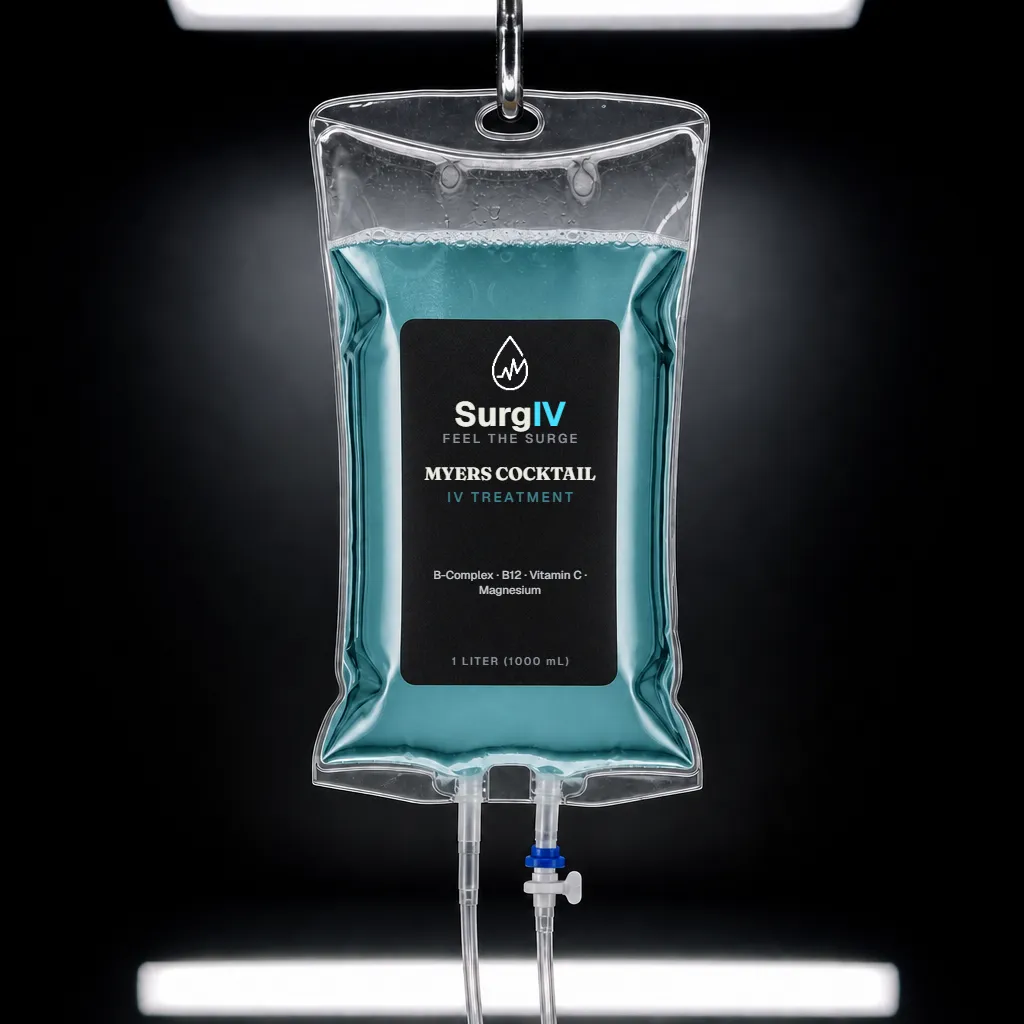
Myers Cocktail $249
The questions are the best part of the job. Bring all of them.
B-Complex · B12 · Vitamin C · Magnesium
The standing invitation
The doorway pause is the best part of the job. Bring the questions you'd whisper — about the needle, the necessity, the price, the evidence. A provider whose answers survive being asked directly is the only kind worth letting into your living room.
This article is for general education and is not medical advice. IV therapy at SurgIV is administered by registered nurses under physician-written protocols, with a health screening before your first visit. Talk to your doctor about what is right for you.