
At her 28-week appointment, a client we'll call Jenna — first pregnancy, Delray, an August due date because Florida enjoys comedy — mentioned to her OB that she'd been dizzy on standing, headachy by 3, and having more Braxton Hicks in the evenings. The OB asked one question: "Walk me through what you drank yesterday." Jenna counted. A coffee (half-allowed, fully treasured), most of one tumbler of water, a La Croix. The OB's response has since become the way Jenna explains pregnancy to friends: "You're running a construction site with a water main built for a house."
The math that changed
Pregnancy re-engineers your fluid economy on a scale nobody quite warns you about. Your blood volume expands by up to 50% — you're literally manufacturing liters of new plasma, which is mostly water. Amniotic fluid isn't a standing pond; it turns over continuously and needs constant supply. The placenta runs on perfusion — flow, which runs on volume. Add the standard Florida tax, a raised body temperature, and — in the cruelest design flaw — first-trimester nausea that sabotages intake exactly when demand starts climbing. The guidelines say 8–12 cups a day; the reality says the target moves with trimester, season and symptoms, and yesterday's La Croix census wasn't close.
"You're running a construction site with a water main built for a house." — Jenna's OB, and now this article
Why it shows up the way it does
The symptoms Jenna reported are the textbook trio. Dizziness on standing: the expanded-but-underfilled blood volume version of the head-rush — more plumbing, same water. The afternoon headache: the standard deficit signature, amplified. And the one that matters most: Braxton Hicks that increase with dehydration — fluid status and uterine irritability are connected, which is why "drink water and lie down" is the first instruction every OB nurse gives for evening contractions, and why contractions-plus-dehydration-signs earns a same-day call to the practice, every time, no toughing it out.
Staying ahead of the main
The working protocol OBs actually recommend: schedule over thirst (pregnancy thirst signaling lags even worse than usual — a bottle with time markers beats intentions), electrolytes in the rotation (especially in summer; the expanded volume needs the minerals to hold it), cold and small beats big and warm when nausea's negotiating, and front-load the day — because third-trimester bladder logistics make evening hydration a diplomatic matter. When intake genuinely can't keep up — persistent vomiting, illness, a brutal heat stretch — that's a medical conversation, and here's our lane, stated plainly: OB first, always. IV fluids are everyday obstetric medicine, and with your OB's guidance, supervised hydration support at home (screened, coordinated, physician-protocol) can spare you a triage-room afternoon. Hyperemesis-level illness belongs with your OB or the hospital, full stop — our nurses are trained to say exactly that.
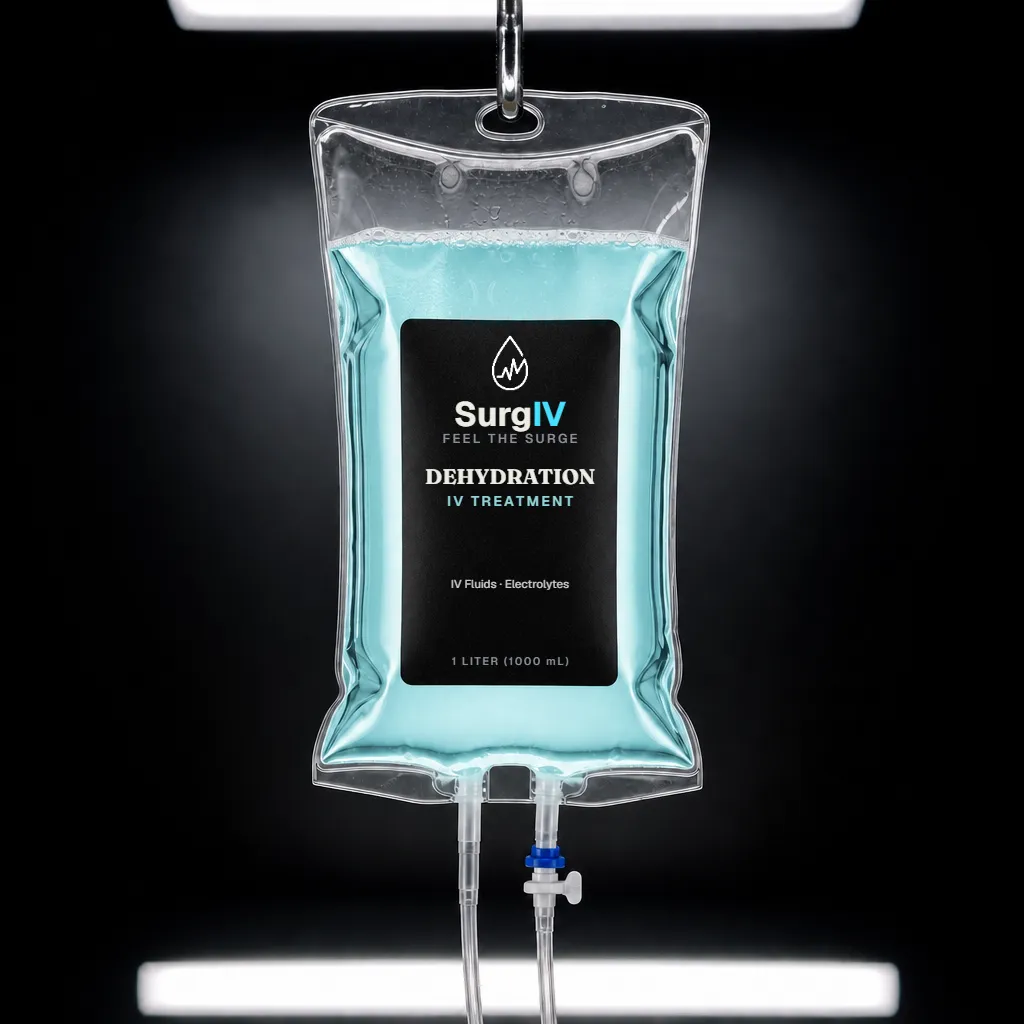
OB-first, always
Dehydration $199
With your OB's guidance — fluid support at home when drinking isn't keeping up.
IV Fluids · Electrolytes
Jenna, at 36 weeks
Jenna finished her August third trimester with a marked water bottle, an electrolyte habit, and — twice, during the brutal weeks, with her OB's blessing on file — a liter at home on the couch with her feet up. The Braxton Hicks calmed with the fluid math, as they usually do. Her line at the baby shower: "Turns out the baby comes with a utilities bill. Pay it daily." The construction site delivered — one healthy 7-pound resident, right on schedule.
This article is for general education and is not medical advice. IV therapy at SurgIV is administered by registered nurses under physician-written protocols, with a health screening before your first visit. Talk to your doctor about what is right for you.