
4:15 PM, a kitchen table in Wellington, homework hour. A woman we'll call Monique — the red-light-panel Monique — is helping her ninth-grader with a biology worksheet when the kid reads aloud, flatly: "The mitochondria is the powerhouse of the cell." He writes it down. Moves on. Monique, who has spent $1,200 on a device advertising "mitochondrial support" and has read that sentence a thousand times without once knowing what it means, stops him: "Wait. What does that actually MEAN? Powerhouse of what? Doing what?" The kid shrugs — it's on the test, not in his life. It is, however, very much in hers.
The refinery, plainly
Here's the version nobody puts on the worksheet. You cannot spend food. Calories are raw material — crude oil, useless in the tank. What your cells actually spend is a molecule called ATP, and mitochondria are the refineries that convert food and oxygen into it, continuously, in nearly every cell you own. Contract a muscle: ATP. Fire a neuron: ATP. Build a protein, pump a heart, form a memory: ATP, ATP, ATP. You produce and spend roughly your own body weight in it daily — not because you store that much, but because it's recycled constantly, at furious speed. The full currency explainer goes deeper; the headline is this: "tired" is very often a refinery-throughput story, not a fuel-supply one. Monique's problem was never that she wasn't eating.
Food is crude oil. ATP is gasoline. Mitochondria are the refineries — and by 50, you own fewer of them and they're running older equipment.
Why the decades matter
Mitochondrial function declines with age on three fronts: fewer mitochondria (especially in muscle that isn't trained), less efficient ones (accumulated oxidative wear on the machinery), and less NAD⁺ — the coenzyme the entire energy assembly line depends on, declining steadily from your 30s. The felt translation is the most common complaint in this catalog: same food, same sleep, less available energy. Not a fuel shortage — a refining-capacity shortage.
What actually helps (and what just claims to)
The evidence-backed list is annoyingly unglamorous: exercise — the single best mitochondrial intervention known; endurance work literally builds more mitochondria (that's what Zone 2 training is famous for), and strength work maintains the tissue that houses them. Sleep. Adequate protein and micronutrients — B vitamins are direct cofactors in the energy pathways, which is why they're in every energy formula worth its label. And NAD⁺ and its precursors, holding the most direct mechanistic case of anything in the supplement world — the IV route supplying the coenzyme itself, precursors supplying the raw material. The honest test for everything else claiming "mitochondrial support": does it supply a known cofactor, or build capacity? If neither — and most don't — it's a word on a label, sold to people who read the worksheet sentence and never got the explanation.
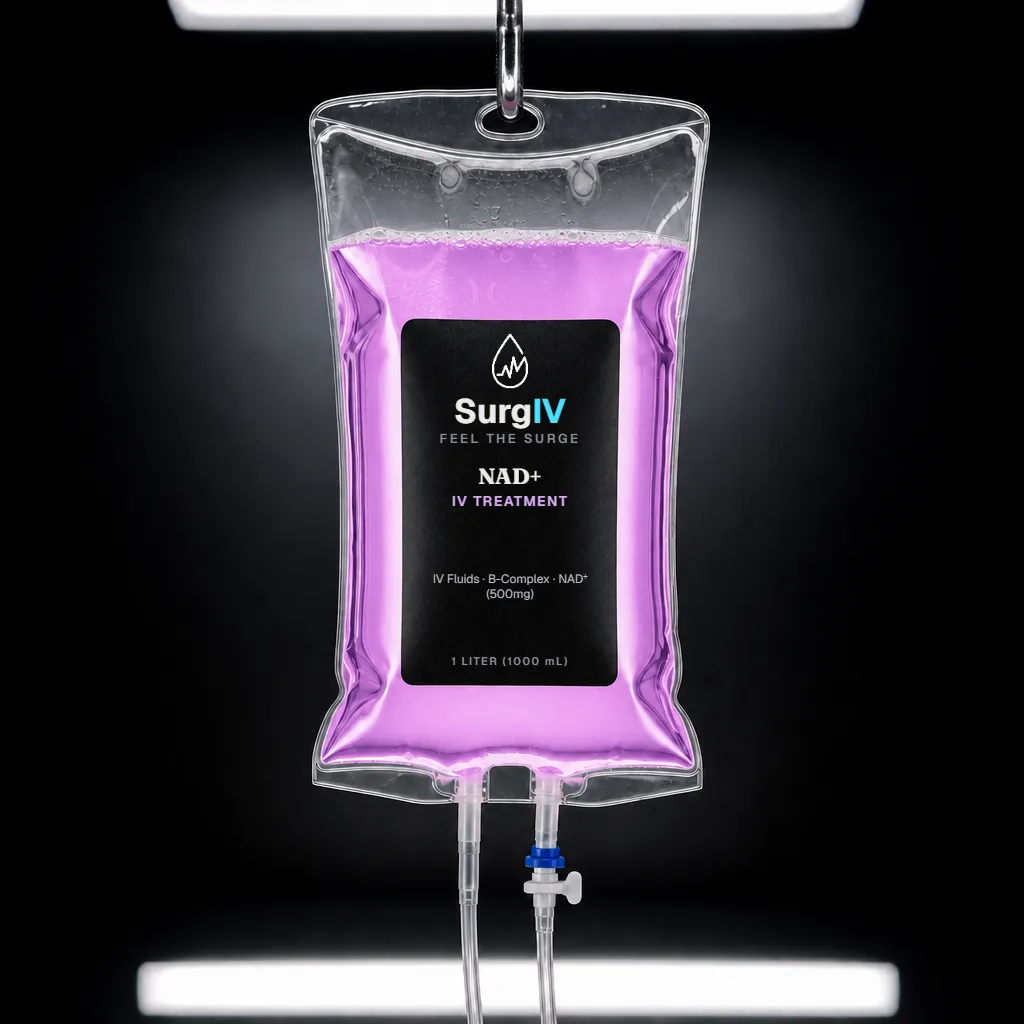
Supply the plants
NAD+ $749
NAD⁺ is the coenzyme the whole assembly line runs on. Restock it directly.
IV Fluids · B-Complex · + 3 IM Shots: B12 · D3 · CoQ10
Monique, worksheet upgraded
She gave her son the refinery version; he used it in an essay and got a comment from the teacher. She used it on herself: training restarted, the panel kept for skin, quarterly NAD⁺ for the coenzyme. Her review, delivered at the same kitchen table a season later: "Twenty years of reading 'powerhouse of the cell' and nobody said 'you can't spend food.' That one sentence rearranged my whole gym schedule."
This article is for general education and is not medical advice. IV therapy at SurgIV is administered by registered nurses under physician-written protocols, with a health screening before your first visit. Talk to your doctor about what is right for you.