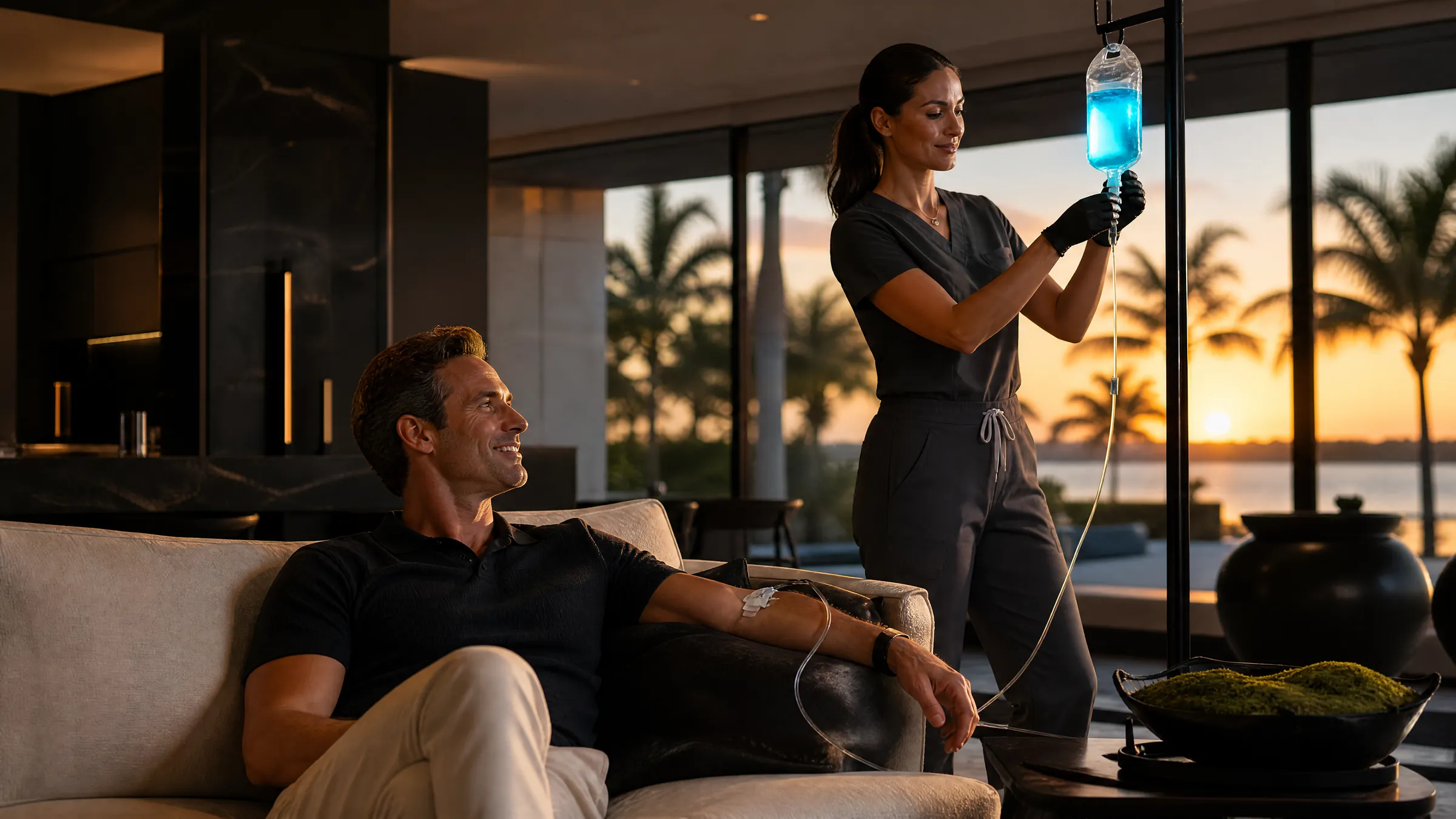
4:40 PM, a darkened bedroom in Boca — blackout curtains, phone at minimum brightness, an ice pack in its third rotation. A woman we'll call Jenna, 36, is riding out hour six of a migraine she felt coming at lunch, doing what migraine veterans do in the dark: the trigger autopsy. Sleep: normal. Wine: none. Cycle: no. Stress: standard. Then the timeline check that changes the investigation: a pool morning with the kids, two iced coffees, and — she counts twice — maybe one actual glass of water since breakfast, on a 91-degree Saturday. Jenna has run this autopsy for years. She has never once put hydration on the suspect board.
The evidence for the suspect
It belongs on the board: dehydration is among the most consistently self-reported migraine triggers — roughly a third of sufferers name it — and the intervention data, while modest in scale, points the same direction: in trial settings, migraineurs who added about 1.5 liters of daily water logged meaningfully fewer and shorter episodes. The proposed mechanisms converge plausibly: mild dehydration measurably shrinks brain-fluid volume (your brain floats; the fluid level matters), shifts blood viscosity and cerebral flow, and concentrates the electrolyte bath neurons fire in. None of this makes migraine "a hydration problem" — it's a neurological condition with a committee of triggers. But of that committee, dehydration is the rare member you can actually fire.
You can't control the weather, your genes, or your hormones. You can control the water. Migraine management is largely the art of managing what's reachable.
The magnesium subplot
The second reachable member: magnesium, which turns up repeatedly in migraine research — lower levels in sufferers, repletion protocols in actual hospital migraine care. It's also precisely the mineral a Florida pool morning sweats away, which is why hot-climate migraine lives often improve with electrolyte attention rather than plain water alone. Jenna's Saturday, reconstructed: heat, sweat, caffeine's mild diuretic nudge, near-zero intake — a triple withdrawal from exactly the two accounts her nervous system audits. The sun-headache mechanism and the migraine trigger aren't the same condition, but they share a bank.
The honest protocol
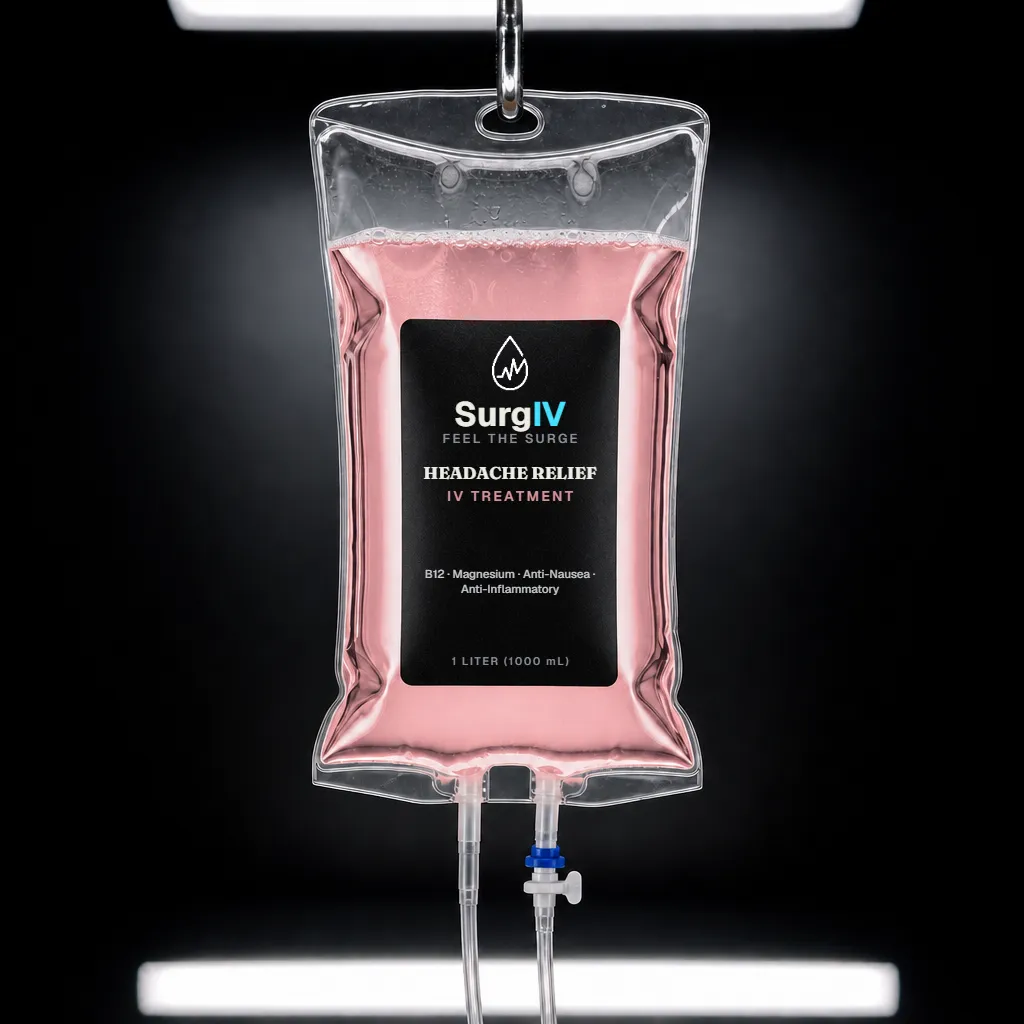
Boundaries first, plainly: migraines belong under a physician's care — the diagnosis, the abortives, the preventives are medical territory, and any IV company claiming cures has disqualified itself. The honest adjuncts: prevention — deliberate daily fluids with electrolytes in the hot months (the 1.5L evidence is cheap to act on); trigger response — at the first prodrome on a suspect day, aggressive oral rehydration; the deep-deficit days — when the trigger hit hard or nausea has closed the oral route, the Headache Relief formula delivers the fluids, magnesium, and anti-inflammatory support intravenously — trigger management at clinical speed, alongside (never instead of) your neurologist's plan.
The hydration lever
Headache Relief $299
Fluids, magnesium, and anti-inflammatory support — the controllable trigger, controlled.
B12 · Magnesium · Anti-Nausea · Anti-Inflammatory
Jenna, suspect board updated
She ran the experiment her neurologist endorsed: electrolyte water as a summer default, a liter flag on pool days, the drip for the two deep-deficit weekends the season delivered. Four months in: episodes down from monthly-ish to two total — not cured, she's careful to say, managed. Her autopsy board's new permanent first line, shared with her migraine support group: "Check the water BEFORE the wine. The boring suspect did it more often than the interesting ones."
This article is for general education and is not medical advice. IV therapy at SurgIV is administered by registered nurses under physician-written protocols, with a health screening before your first visit. Talk to your doctor about what is right for you.