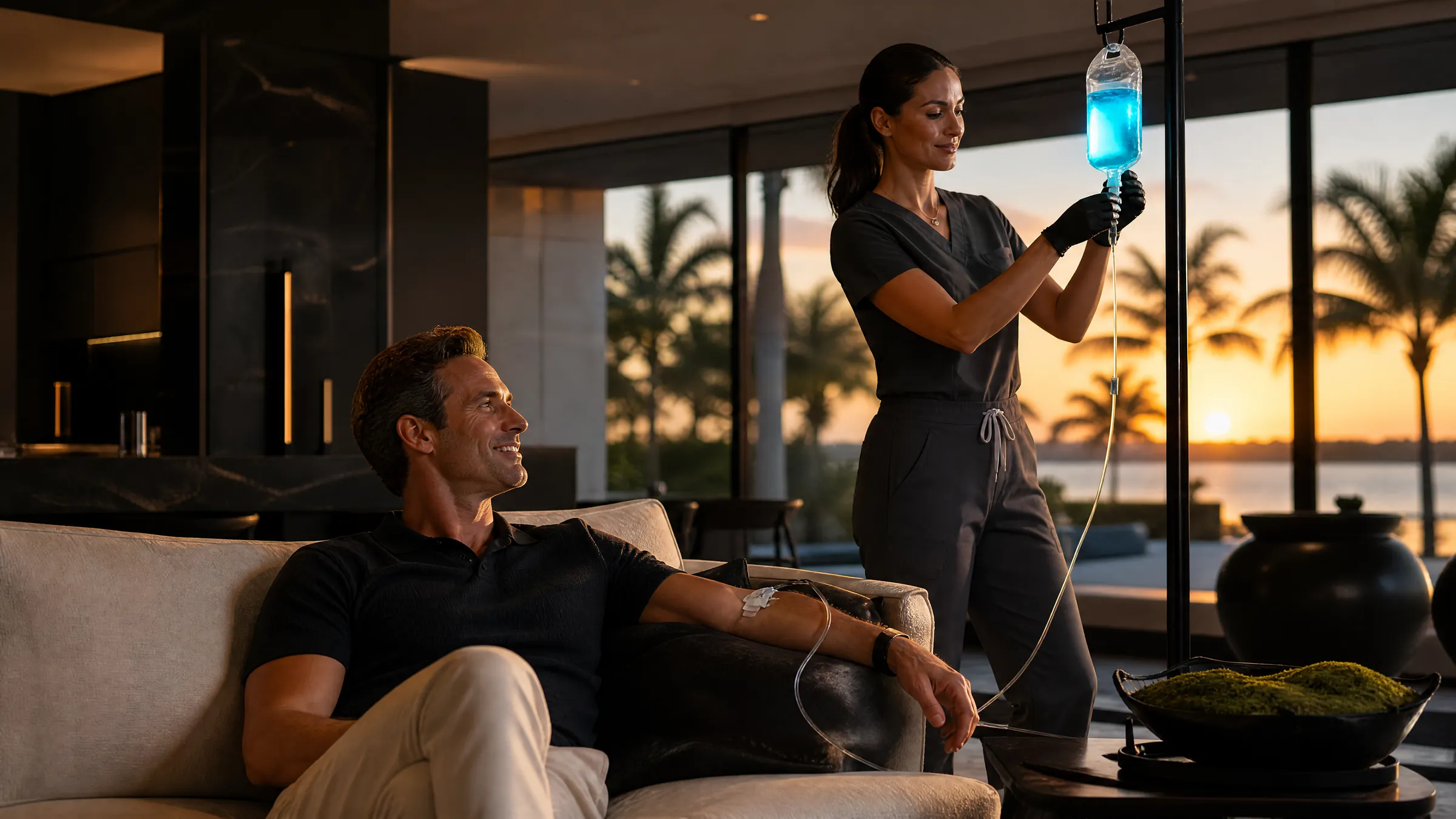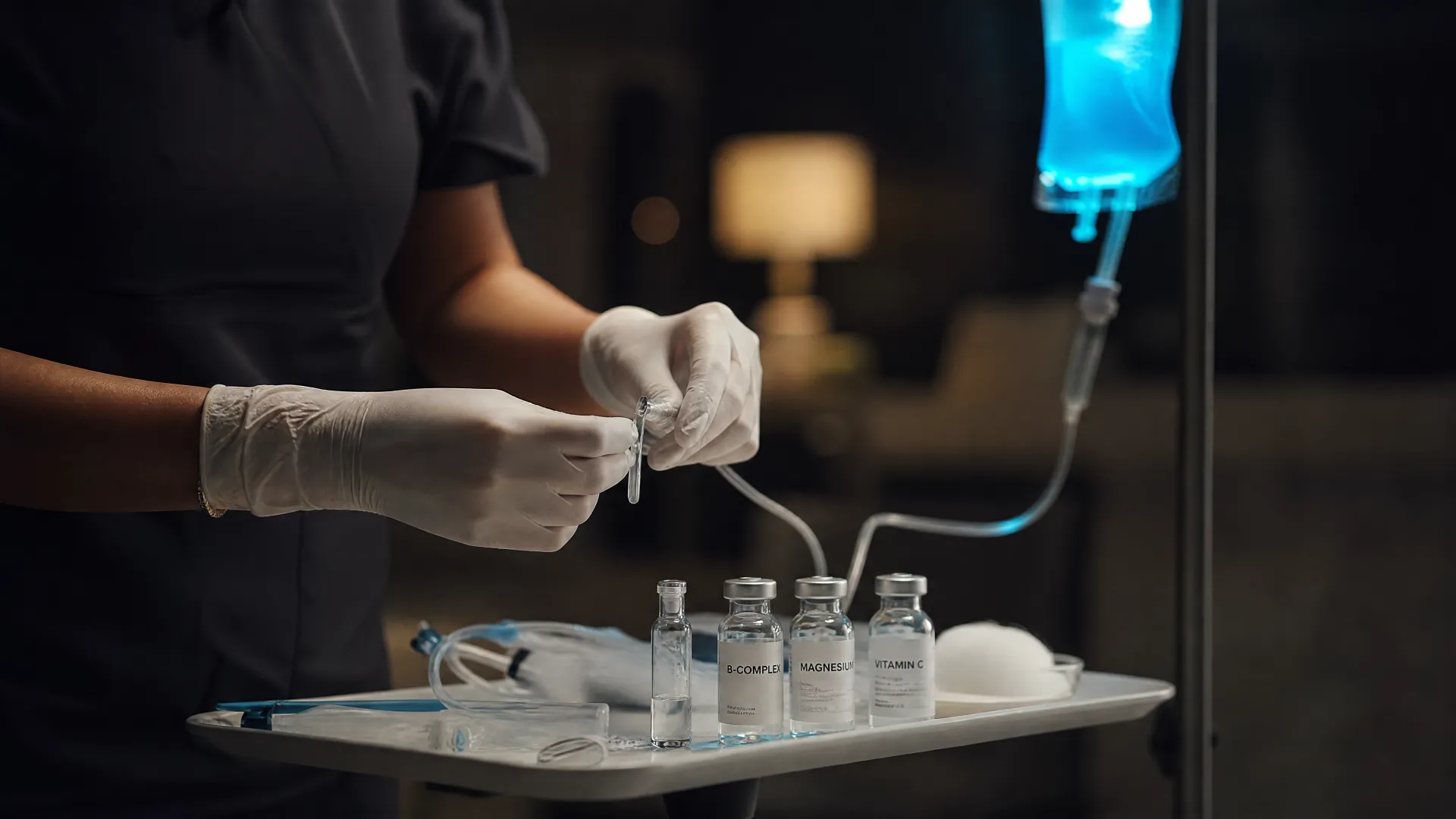
The question that produces this article gets asked in med spa treatment rooms across Palm Beach County weekly, usually mid-appointment, usually like this: a client we'll call Elise, 44, reclined for her quarterly maintenance at a Delray practice, asks her injector — a woman she trusts with her face — the vetting question: "What do you think about those IV drips? My tennis group does them. Is it legit or is it goop?"
And the injector — clinically trained, standards-conscious, and possessing zero desire to build a drip operation — gives the answer most practices give: a diplomatic shrug. Which is a service moment surrendered twice: Elise books somewhere unvetted anyway, and the practice that owns her trust owns none of the answer. The partnership model exists to fix exactly this.
Why the shrug is expensive
Aesthetic clients are the wellness economy's most engaged demographic — they research, they protocol, they ask their trusted practitioners about everything adjacent. When the IV question meets the shrug, the client doesn't drop the interest; she takes it to Google, where the county's full quality spectrum awaits, unvetted. The practice loses the guidance moment, the potential protocol pairing, and — if Elise lands somewhere with token doses and no screening — some transferred reputational risk when 'the drip thing' disappoints. Meanwhile the in-house alternative fails its own math: building IV services means RN staffing against unpredictable demand, medical direction for an off-core modality, compounding relationships, and a buildout for a service whose biggest use cases (the morning-after, the recovery rescue) happen at the client's home, not in a treatment room. The shrug is expensive; the buildout is worse.
"Is it legit or is it goop?" — the question your most engaged clients are already asking someone. The partnership decides who.
The partnership architecture
The model running at practices across the county: the vetted answer — the practice's answer to Elise becomes a referral to a provider they've credentialed (our package: physician direction, RN-only administration, published doses, screening protocols, insurance — the same standards checklist any clinical practice runs); the protocol pairing — the natural service alignment, especially the pre-event stack: the practice's treatments working the surface, the Beauty IV's hydration-C-glutathione layer supplying from the bloodstream side — a complete countdown protocol neither party offers alone, and brides book it as one package; the reverse flow — our members ask about aesthetics constantly (the wellness-engaged demographic runs both directions), and partnered practices become our standing answer; and the structure options — from simple mutual referral to formal programs with co-branded event offerings (wedding-season packages being the proven winner). The practice's operational load: one vetting conversation and a card at the front desk.
The partnership model
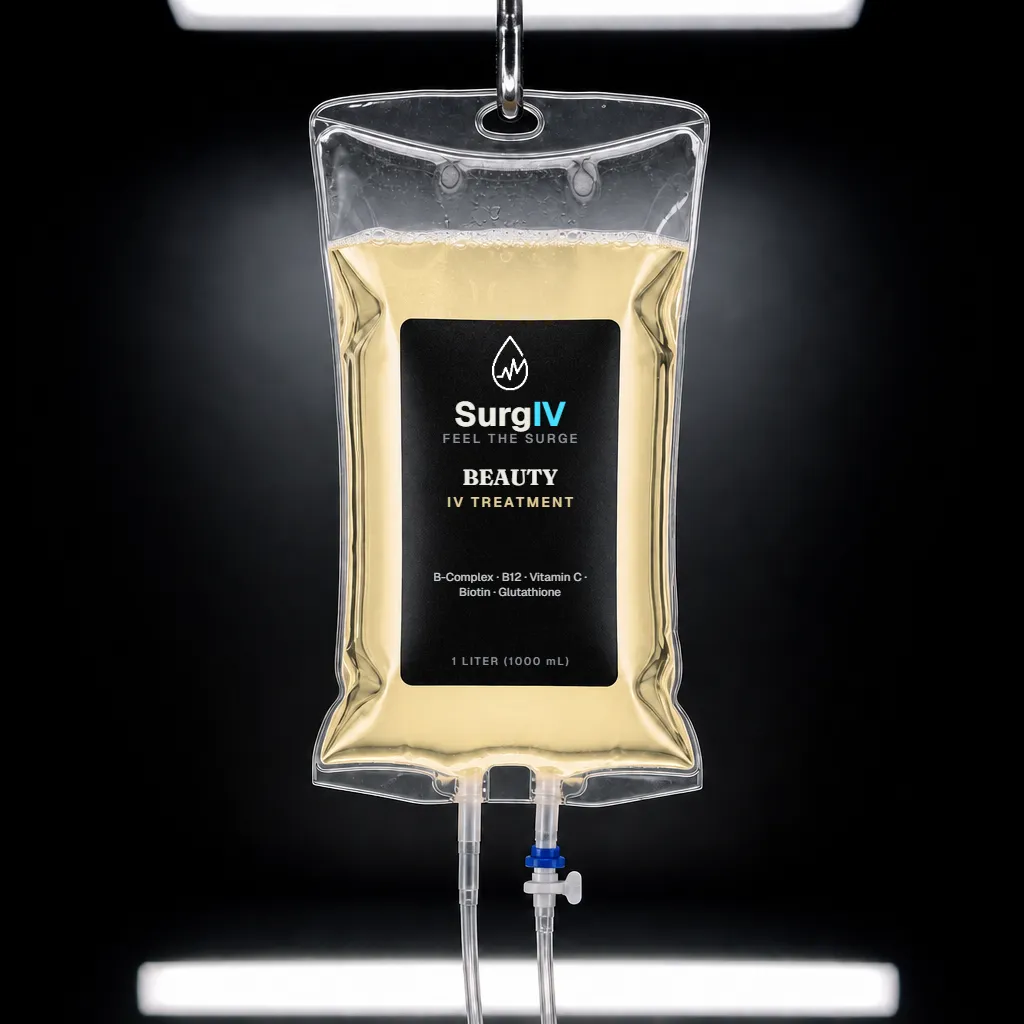
Beauty $299
Your clients, our clinical operation, shared standards — the menu completed without the buildout.
B-Complex · B12 · Vitamin C · Biotin · Glutathione
Elise, answered
At the partnered version of that Delray practice, the injector's answer now runs: "Legit when it's done right — here's who we work with, and if you're prepping for your daughter's wedding, ask them about the countdown protocol; it pairs with what we're doing today." Elise booked the stack, the practice kept the guidance moment, and her tennis group — this is how the county actually works — has since produced four more clients for both sides. The menu was never incomplete because the practice lacked a drip suite. It was incomplete because the question lacked an answer. Now it has one.
This article is for general education and is not medical advice. IV therapy at SurgIV is administered by registered nurses under physician-written protocols, with a health screening before your first visit. Talk to your doctor about what is right for you.