
3:20 PM, a Publix aisle in Palm Beach Gardens. A man we'll call Doug, 44, is holding a box of Liquid I.V. packets in one hand and his phone in the other, mid-text to his wife: "found the IV stuff at Publix, $24, way cheaper than that $199 nurse thing you booked." Doug believes — genuinely, reasonably — that he has found the same product in powder form. The brand has one of the great names in consumer marketing, and Doug is standing inside its blast radius.
The disambiguation, kindly
Liquid I.V. is a drink mix. A good one — but the "I.V." is branding, not delivery route. It belongs to the oral rehydration family: sodium plus glucose in ratios that exploit the gut's co-transport mechanism, pulling water across the intestinal wall faster than plain water manages. That's real science (the same principle as the WHO's famous formula), and it makes the packets legitimately better than water for moderate jobs: the gym session, the mild Sunday morning, the daily-hydration routine. An actual IV is a different machine entirely: a licensed nurse, a vein, and a bag delivering fluids and clinical-dose nutrients directly to the bloodstream — no gut involved at any step. One is a better way to drink. The other doesn't drink at all.
The packet improves the gut's performance. The IV excuses the gut from the assignment. That's the entire difference — and on some days it's everything.
Where each one wins
The packet's territory: everyday and moderate depletion — post-workout, a hot yard afternoon, travel days, the routine maintenance an honest wellness budget should mostly consist of. Cheap, portable, effective within its ceiling. The bag's territory: everything above that ceiling — the morning where nausea vetoes drinking, the stomach bug where nothing stays down (the gut being the problem disqualifies gut-dependent solutions), the deep sweat deficits where oral pacing means hours of sipping versus 45 minutes of drip, and any formula involving actual vitamin doses — B-complex, clinical vitamin C, magnesium — that no packet can carry and no inflamed stomach will accept. Price tracks tier: $2 per packet, $199+ per bag, each fair for what it is.
The honest household policy
Keep both. Genuinely — this is the rare comparison where the answer is a shopping list: packets in the pantry for the Tuesdays, the real thing booked for the days that outrank Tuesday. What to retire is only the confusion: nobody should skip a needed drip because the packet shares its name, and nobody should book a nurse for a job a $2 sachet solves.
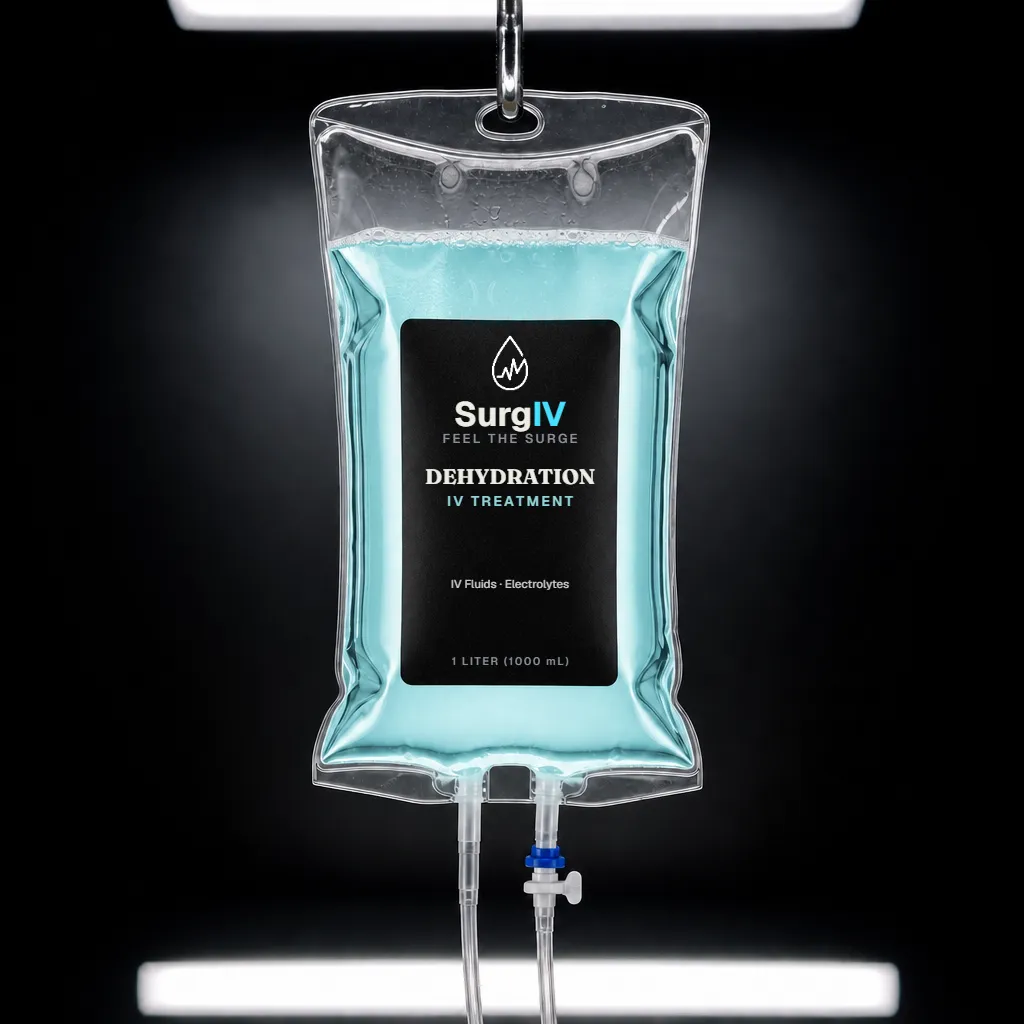
The one with an actual vein
Dehydration $199
When the packet's ceiling isn't enough — the real thing, at home.
IV Fluids · Electrolytes
Doug, aisle-corrected
His wife's reply, now framed in the family group chat: "That's a drink mix with a good agent, honey. Buy it anyway. But Saturday after the fishing tournament you'll want the one with an actual vein." Both purchases happened. Both were right. The name confusion, at least in one Palm Beach household, is officially settled.
This article is for general education and is not medical advice. IV therapy at SurgIV is administered by registered nurses under physician-written protocols, with a health screening before your first visit. Talk to your doctor about what is right for you.