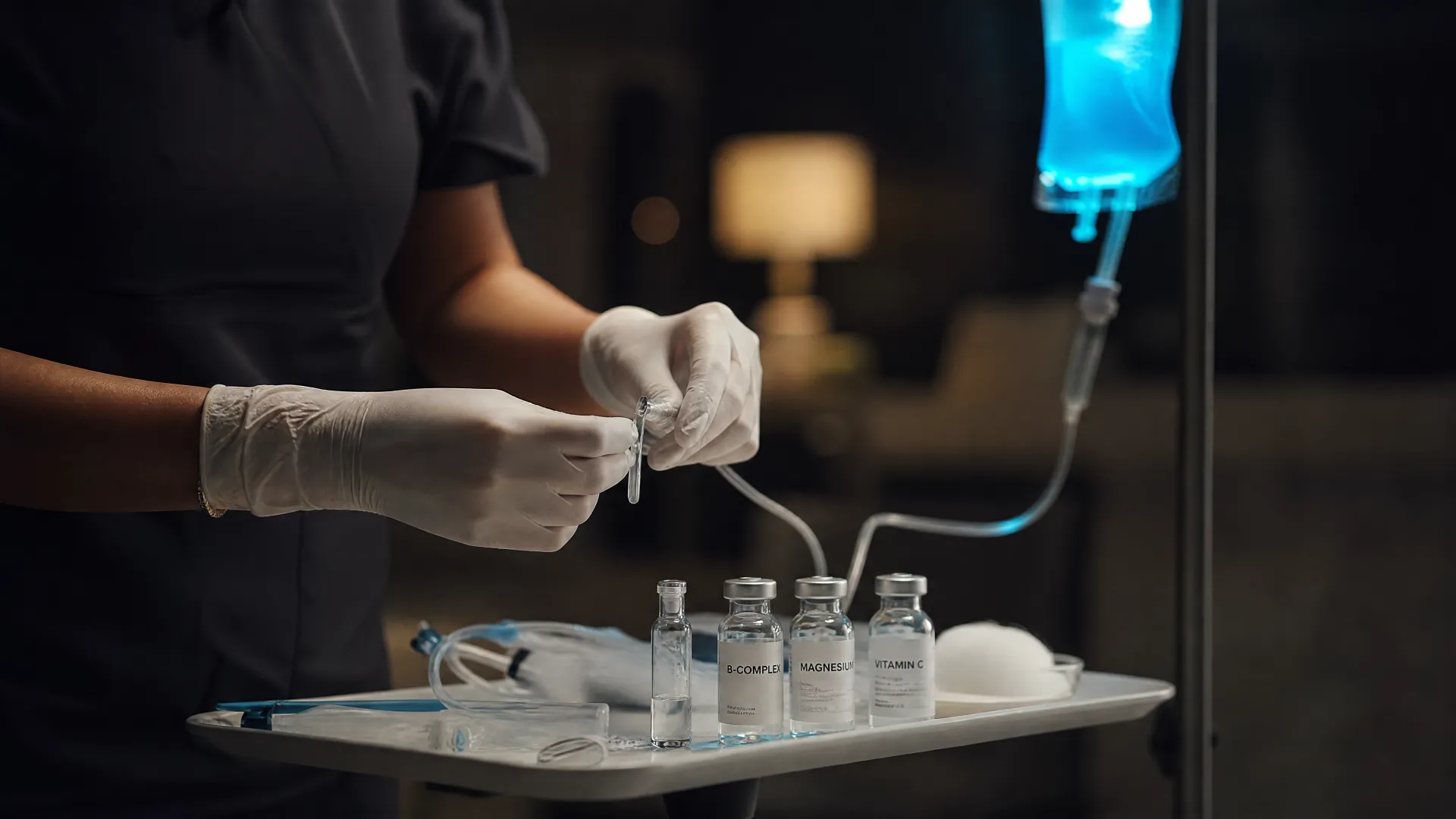
2:10 AM, a bathroom-adjacent hallway in Wellington, night two of the family stomach bug. A father we'll call Miguel is holding a measuring spoon, his phone propped against a glass, following instructions from a WHO webpage like it's a bomb defusal: "half a teaspoon of salt... six of sugar... one liter..." His wife, from the bedroom, weakly: "Are you COOKING at 2 AM?" Miguel, stirring: "I'm making the thing the internet says saved fifty million people." He is. It did. And this article owes that little packet its full respect before it says one word about IVs.
The sachet's honest glory
Oral rehydration solution is the quiet miracle of modern medicine. The formula — precise ratios of glucose and sodium in water — exploits a piece of gut machinery called the sodium-glucose co-transporter: the glucose isn't fuel, it's a key, and every glucose molecule absorbed drags sodium with it, and water follows the sodium. Discovered mid-century, deployed by the WHO in sachets costing pennies, credited with tens of millions of lives — mostly children with diarrheal disease. When Miguel stirs salt and sugar at 2 AM, he's operating real medicine, and for most household dehydration — including most stomach bugs, run with the tiny-sips protocol — ORS is the correct first move. This blog sells IVs and is telling you that plainly.
The sachet asks two things: a gut that absorbs, and a patient who can keep sipping. Its entire failure mode lives in those two requirements.
The handoff line
Medicine itself defines where the IV enters, and it's the same line hospitals use: escalate when the gut can't hold up its end. Persistent vomiting that returns every sip to sender; a gut too inflamed to absorb what stays; depletion deep enough that sipping-pace repair loses the race — dizziness, minimal dark urine, the head-rush on standing, lethargy. At that point the co-transporter is a locked door and intravenous delivery is the bypass: fluids and electrolytes at clinical concentration, straight to the bloodstream, plus — the part the sachet could never carry — anti-nausea medication that breaks the vomit-lose-repeat cycle itself. And above that sits the line we state in every illness article: confusion, no urination for many hours, a floppy or unresponsive child — emergency room, not home anything.
The household protocol, complete
Stock true ORS (Pedialyte, WHO-formula sachets — the adult aisle guide); run tiny frequent sips at the first sign of a bug; watch the 12-hour mark — nothing staying down past it, or dehydration signs arriving, is the escalation trigger for a home IV; and reserve the ER for the red-line symptoms above. That's the whole ladder: sachet, bag, hospital — each rung earning the next only when the one below fails.
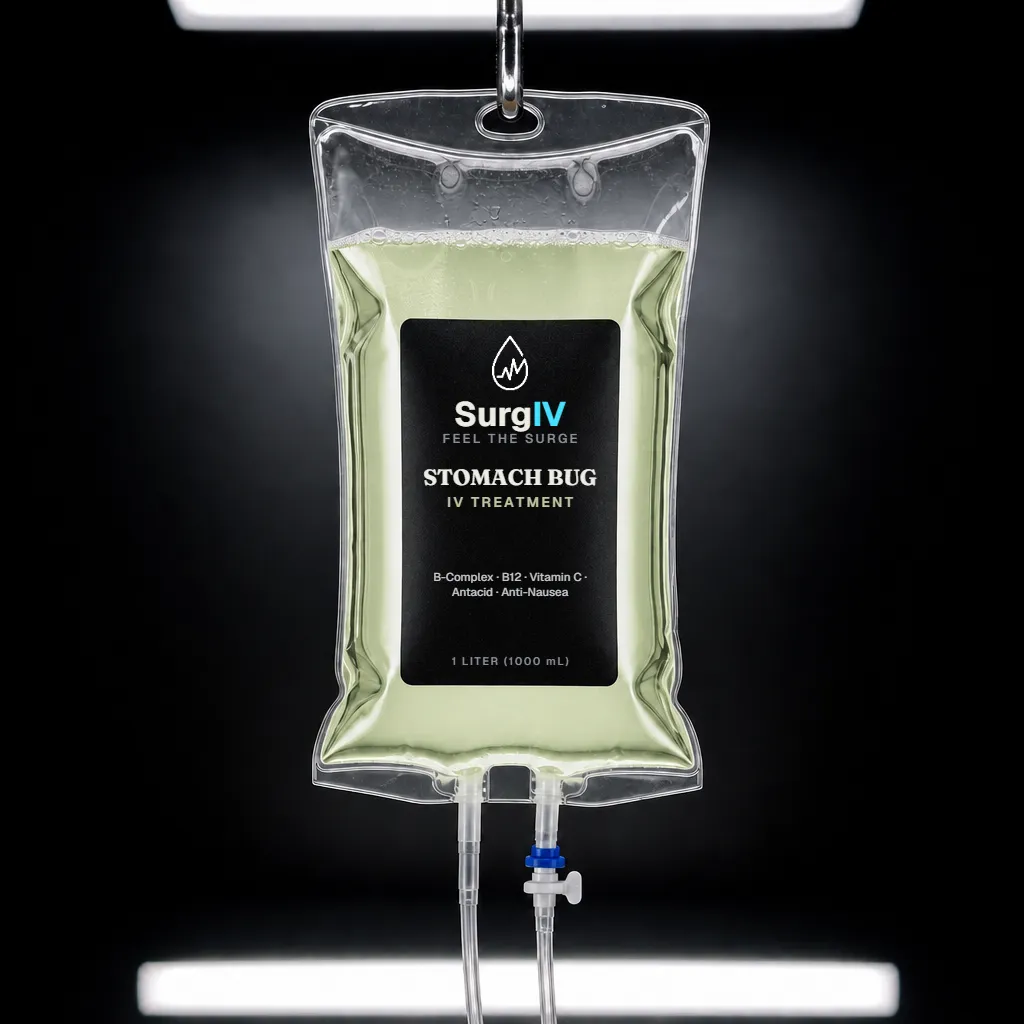
For when the gut is the problem
Stomach Bug $249
ORS needs a working stomach. This formula doesn't ask for one.
B-Complex · B12 · Vitamin C · Antacid · Anti-Nausea
Miguel, both rungs deep
The 2 AM solution worked for the kids — tiny sips, held down, crisis averted by teaspoon. His wife's gut, rung one's exception, vetoed everything through morning; the nurse arrived at 11, anti-nausea first, fluids after, upright by 2. Miguel's family-chat summary, now the extended clan's official protocol: "Salt and sugar first. It's real medicine. When it bounces, call the bag. Respect the sachet — know its limits." Fifty million lives agree with the first half. His wife endorses the second.
This article is for general education and is not medical advice. IV therapy at SurgIV is administered by registered nurses under physician-written protocols, with a health screening before your first visit. Talk to your doctor about what is right for you.