6:05 AM, a backyard in Jupiter. A man we'll call Brooks, 42, triathlete, is standing beside a chest freezer he converted himself — 42 degrees, his pride — while his training partner shivers through minute two inside it. Brooks checks his phone between coaching breaths ("Nose. Slow.") and finds the group chat mid-war: "cold plunge is all you need, IVs are a scam" versus "the plunge is a placebo you PAY to shiver in." Brooks, who does both, types and deletes three responses. The debate is wrong in a way that takes more than a text to fix.
The category error
Here's what the group chat missed: the plunge and the drip aren't competing answers to the same question — they're answers to opposite questions. Cold immersion is hormesis: a deliberate, controlled stressor. The freezing water adds nothing to your body — no molecule enters you — and that's not a flaw; it's the mechanism. The benefit IS your response: the norepinephrine surge (alertness, mood for hours), reduced perceived soreness, the trained composure of doing hard things at dawn. An IV is the inverse: zero challenge, pure delivery — fluids, electrolytes, the minerals training spends, restocked directly. One trains the system. The other supplies it. Asking which is better is asking whether a gym membership beats groceries.
The plunge is a workout for your stress response. The IV is groceries for your bloodstream. Nobody debates workouts versus groceries.
What the science says about each, honestly
The plunge's real wins: acute mood and alertness (robust), soreness perception (decent), inflammation modulation (plausible, modest). Its real caveat: hard cold immediately after lifting may blunt some of the hypertrophy signaling you just trained for — the adaptation-interference problem — so lifters separate plunge and barbell by hours. The IV's real wins: rapid, complete rehydration and micronutrient restoration when you're actually depleted — the Florida training tax, the two-a-day sweat bill, the appetite-crushed post-race evening. Its caveat: it restocks; it doesn't adapt you to anything. Neither tool does the other's job, which is exactly why the full recovery-stack rundown keeps reaching the same verdict: diagnose the gap. Depleted? Resupply. Stocked but sluggish? Stress. Serious about a Florida summer season? You'll meet both.
The stack, sequenced
Brooks's actual week, for the record: plunges most mornings (never within four hours after leg day), and a Recovery IV on the big-volume weekends when the sweat math outruns what his stomach wants to fix — the resupply landing on the days the stressor budget is already spent. The two tools don't just coexist; they cover each other's blind side.
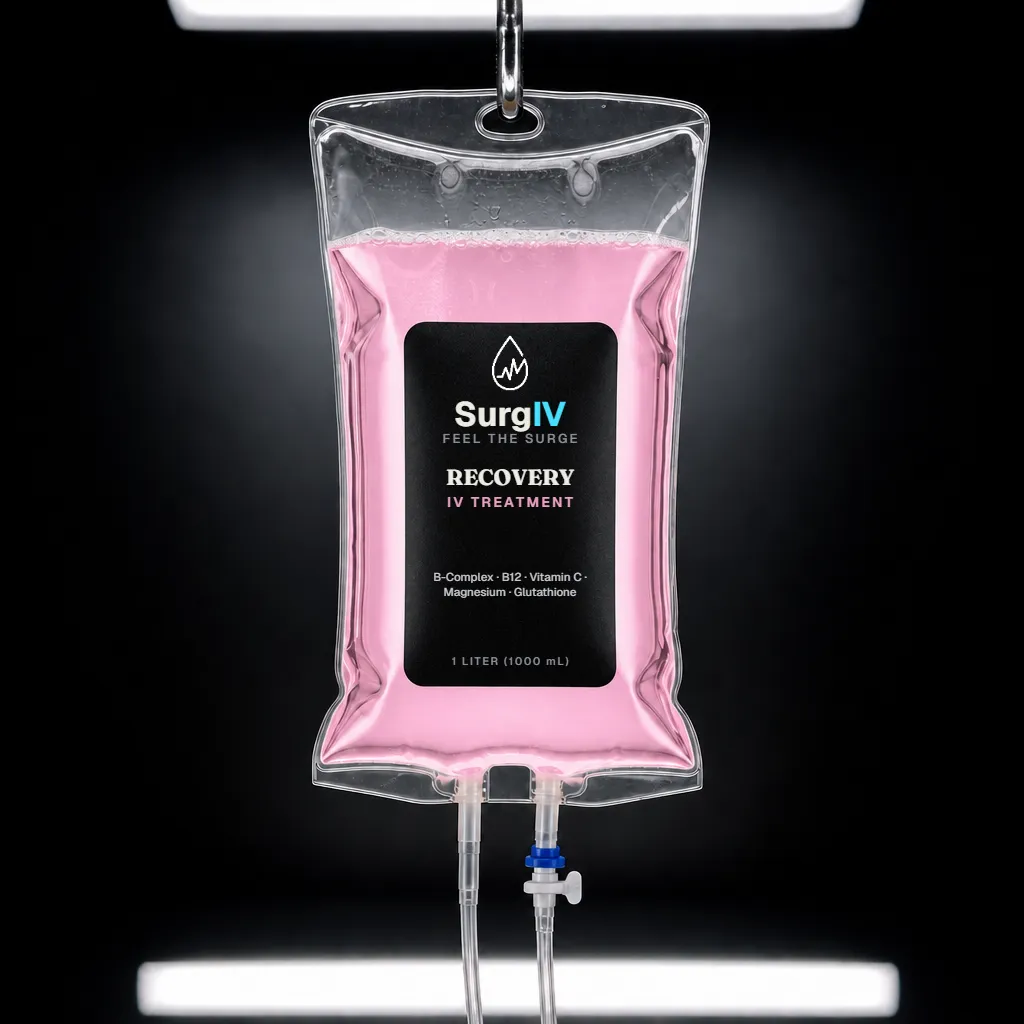
The resupply half
Recovery $299
The plunge builds resilience. This restocks what training actually spent.
B-Complex · B12 · Vitamin C · Magnesium · Glutathione
The group chat, settled
Brooks finally sent his answer, and it ended the war in one text: "The plunge doesn't put anything IN you. The IV doesn't make you TOUGHER. Now reread your own arguments." Silence, then: "...ok yeah." Different jobs. Same athlete. Both on the roster.
This article is for general education and is not medical advice. IV therapy at SurgIV is administered by registered nurses under physician-written protocols, with a health screening before your first visit. Talk to your doctor about what is right for you.