Gate C7, a western airport, 10:15 AM. A groomsman we'll call Sam, 33, is slumped against a charging pillar wearing sunglasses indoors and the thousand-yard stare of a man who gave his all for the groom. The bachelor party's final tally: three days, one legendary final night, four hours of sleep. Ahead: a five-hour flight home to PBI, in a middle seat, in what he does not yet know is scientifically the worst room on earth to be hungover.
The science, then the survival plan — because the cabin is coming for Sam, and someday for you.
Why the cabin is a hangover amplifier
Every mechanism of Sam's condition has a cabin feature waiting for it: his dehydration meets 8% humidity that extracts more fluid hourly through breath and skin (the cabin problem, applied to a pre-drained system); his headache meets pressure changes that aggravate exactly that plumbing; his fatigue meets cabin altitude's mild oxygen reduction, stacked on alcohol's lingering effects; and his nausea meets turbulence, which negotiates with unsettled stomachs from a position of strength. Five hours in the amplifier can convert a recovering Saturday hangover into a Sunday-Monday event — which is why the pre-flight hour matters more than any hour of the trip.
An airplane is a dehydration machine with assigned seating. Boarding it hungover is entering the amplifier voluntarily.
The boarding-gate protocol
Before security: real food, eaten with commitment — airport eggs are the trip's best investment; the shakes fly worse than you do. Past security: the biggest water available plus an electrolyte packet from your bag (veterans travel with them), sipped steadily from gate to gate; ibuprofen with the food; and the nausea plan settled before boarding — ginger chews, acupressure bands, or medication if you know your vulnerability, because managing nausea at altitude beats treating it there. Seat strategy: aisle if any influence remains — bathroom access and the psychological exit. In-air law: water at every cart pass, both offers — and the mile-high hair of the dog declined with prejudice: altitude amplifies alcohol, and the 'edge-taking' drink converts your recovery flight into a fresh incident at 36,000 feet. The nap, if it comes, is the cabin's one mercy; take it.
The landing move
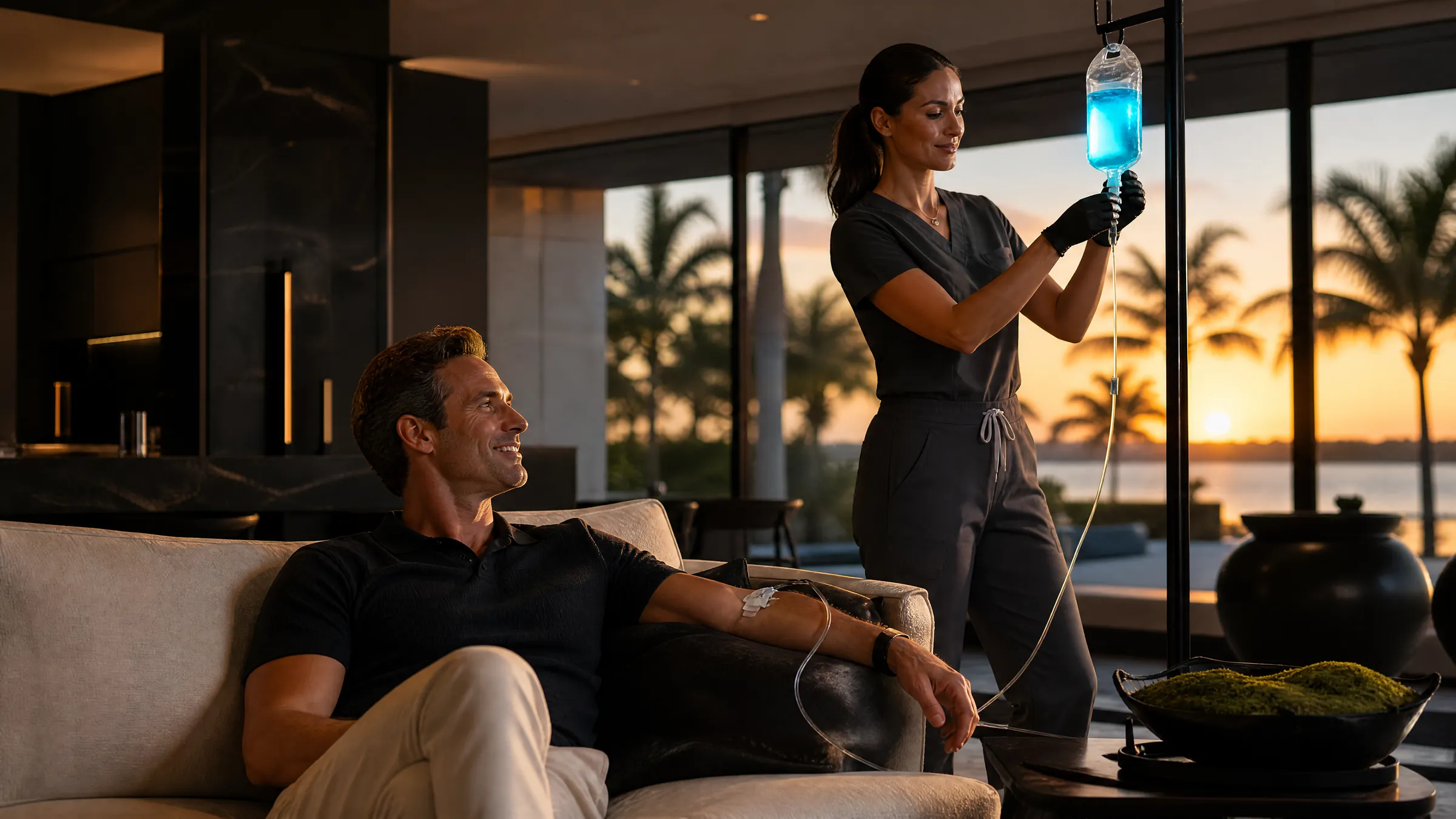
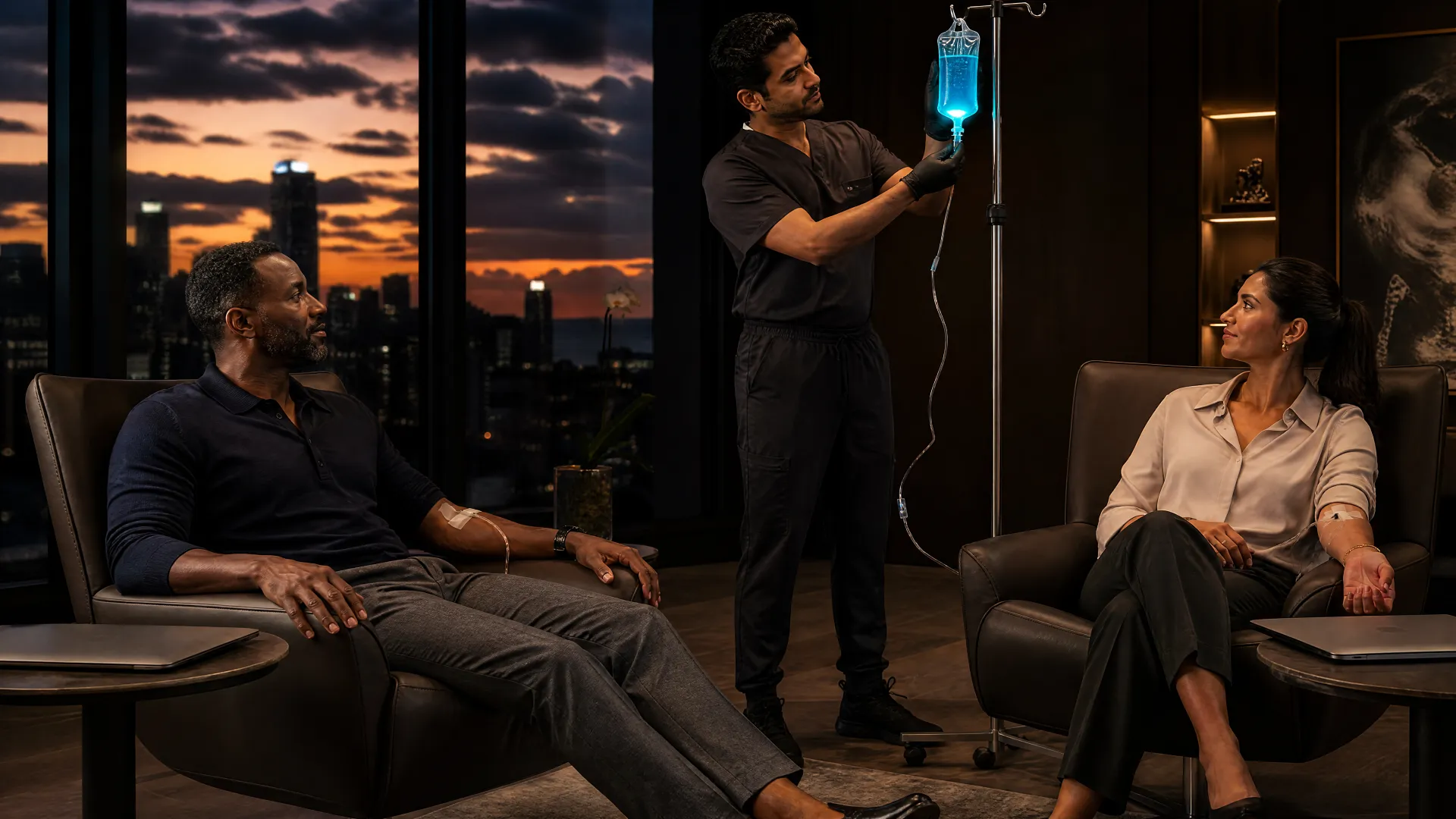
Here's the play that's made PBI arrivals a standing route for us: book the recovery from the departure gate. Timed to landing-plus-drive, a nurse arrives at your home roughly when you do — the full counter-formula undoing both the weekend and the amplifier in one session, before the evening. Sam's version, booked from pillar C7 at his sister's suggestion (a previous convert): touchdown 3:40, home 4:20, drip 4:45, and a Sunday dinner attended "as a family member instead of an exhibit." The trip's last day, refunded.
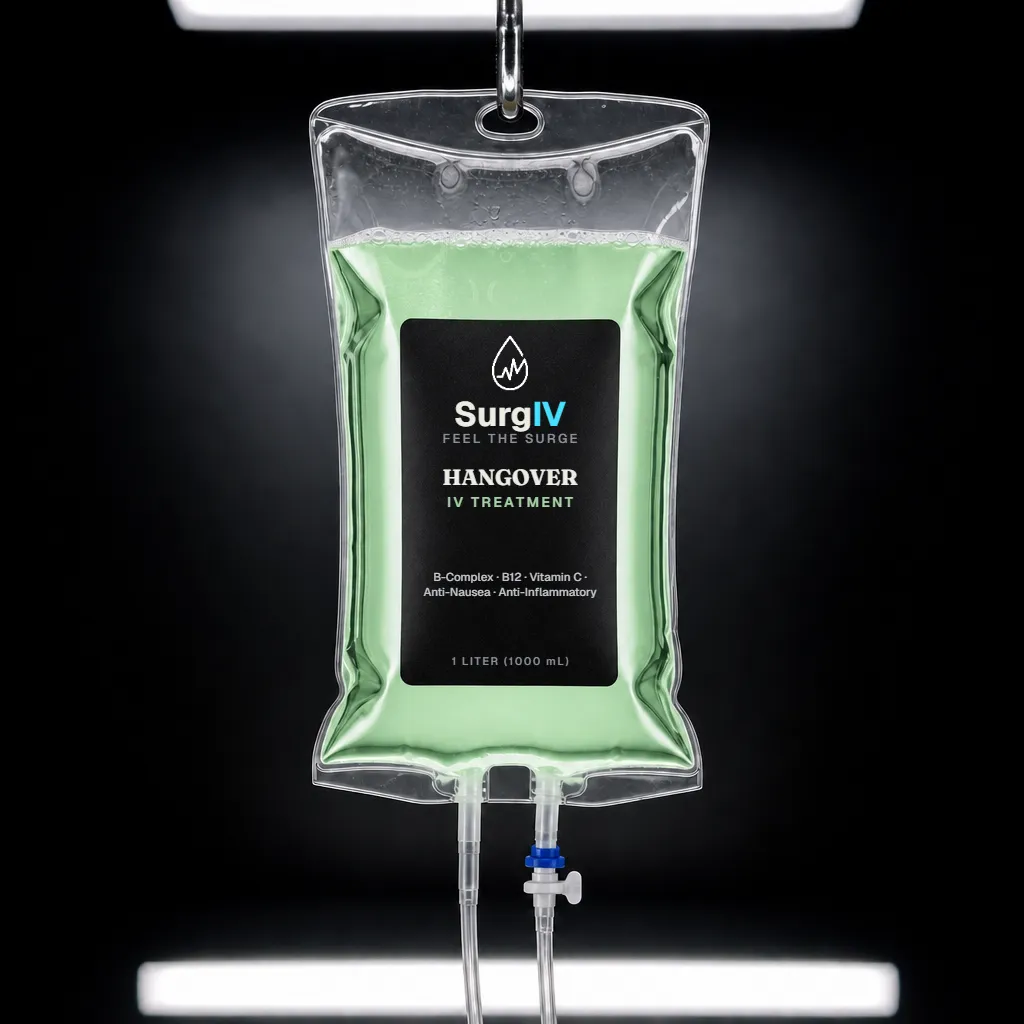
The landing save
Hangover $249
Book from the departure gate — a nurse meets you at home after touchdown.
B-Complex · B12 · Vitamin C · Anti-Nausea · Anti-Inflammatory
Sam's contribution to the group chat
Posted Monday, screenshot preserved by the groom: "Ranking of the weekend's decisions: 1) The gate booking. 2) Everything Friday. 47) Everything Saturday. The nurse thing isn't a flex, it's infrastructure. Next trip it's step one." It usually is, after the first amplifier ride. Fly informed.
This article is for general education and is not medical advice. IV therapy at SurgIV is administered by registered nurses under physician-written protocols, with a health screening before your first visit. Talk to your doctor about what is right for you.