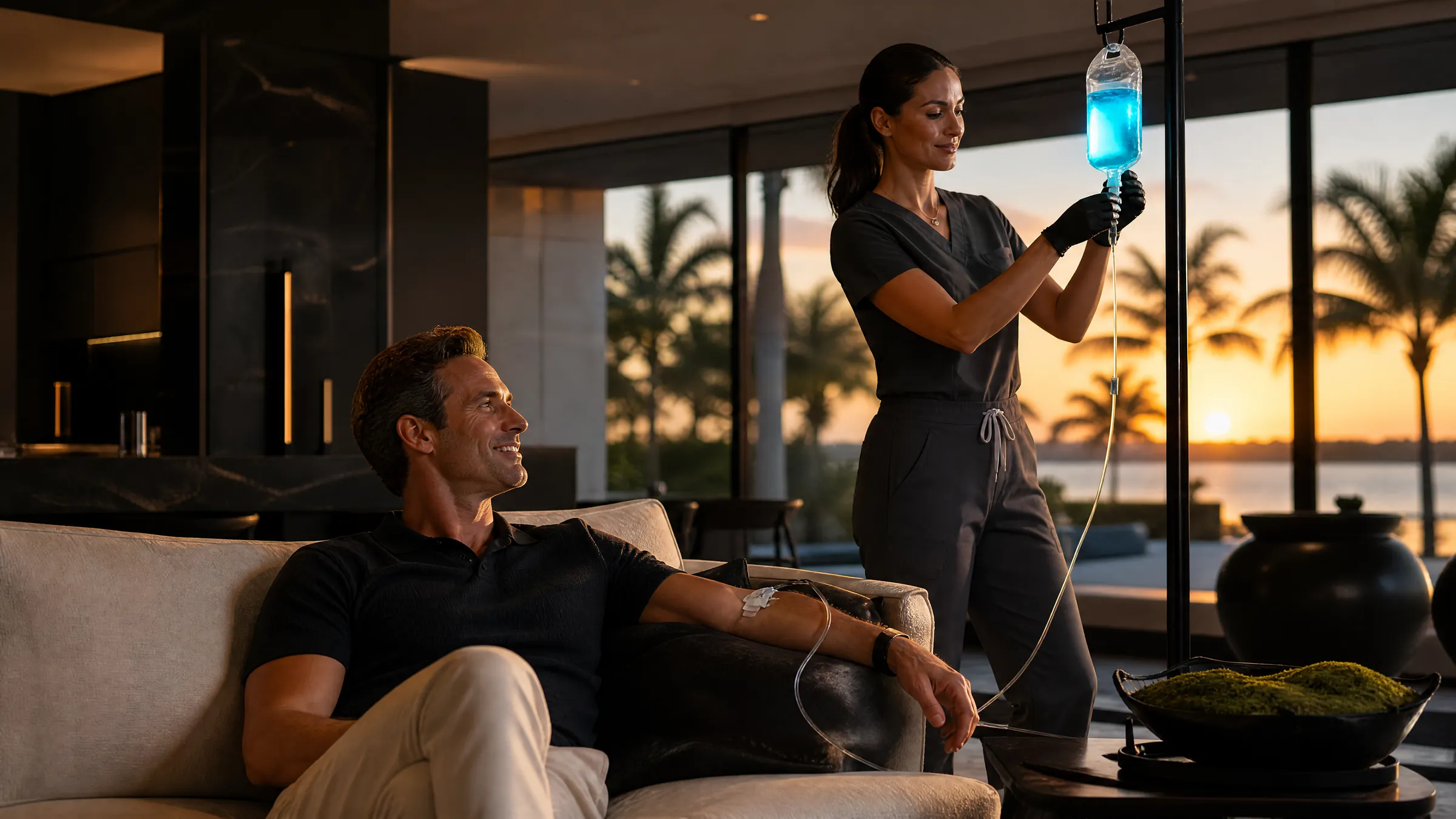
Engine 3's bay, a Palm Beach County station, 7:40 AM shift change. A firefighter-paramedic we'll call Diaz, 38, is finishing a 24 that included two structure calls — one of them a 2 AM kitchen fire worked in full gear in August's idea of nighttime cooling — plus five medical runs and roughly ninety minutes of sleep in three installments. He's drinking coffee that could patch asphalt and doing the shift-change math every firehouse knows: home by 8:30, kids to camp by 9, and somewhere in there, a body that just ran a marathon in a sauna wearing a furnace suit needs to become a dad.
This one's for the answer-the-call workforce — the firefighters, cops, paramedics and dispatchers whose job description is other people's worst moments, on a schedule set by chaos. The recovery manual, station edition.
The occupational ledger (heaviest in the county)
- The gear furnace. Structural firefighting gear — 50 to 70 pounds, sealed by design — is the most extreme heat environment in civilian work: interior operations drive core temps into ranges that would stop a football game, with sweat losses of 1–2 liters per hour inside the shell. The fire service's own rehab protocols (mandated cooling, fluids, vitals at scenes) exist because this physiology hospitalizes the unmanaged. Every August structure call is a heat event with a job attached.
- The tones cycle. Every call-out spikes adrenaline — 3 AM, mid-meal, mid-sleep — and every spike spends the stress accounts (B vitamins, magnesium, sleep architecture) on chaos's schedule. A 24-hour shift is the night-shift problem plus a slot machine of cortisol.
- The fragment sleep. Station sleep is real sleep the way airplane sleep is — horizontal hope, interrupted by design. The recovery debt compounds across a career, and the profession's health statistics carry the receipts.
- The carried load. Patients lifted, hose humped, gear worn — a physical shift underneath the emergency one, run on the fragments above.
The rehab sector exists at every fire scene because the job's physics are that serious. The question is who runs rehab for the rest of the career.
The off-day protocol
What the responders we serve have built around their rotations: the post-shift rehydration rule — the gear-furnace fluid debt gets settled the same day, electrolytes included, before the crash nap (dehydrated recovery sleep is shallow recovery sleep); the first-off-day anchor — the Recovery IV in the same slot our nurses use post-block: fluids for the accumulated debt, aminos for the carried load, magnesium for the tones-wrecked sleep — booked around rotations our dispatch has learned to read; the station group session — units booking together post-incident or mid-hydrant-season, which does for a crew what it does for every team on this blog; and the honest boundary, stated the way the job deserves: the physical ledger is our lane. The calls that stay with you belong to the peer-support programs, the counselors, the resources departments now provide — and using them is the same professionalism as wearing the gear. Maintenance for the body; the whole toolkit for the whole responder.
For the answer-the-call workforce
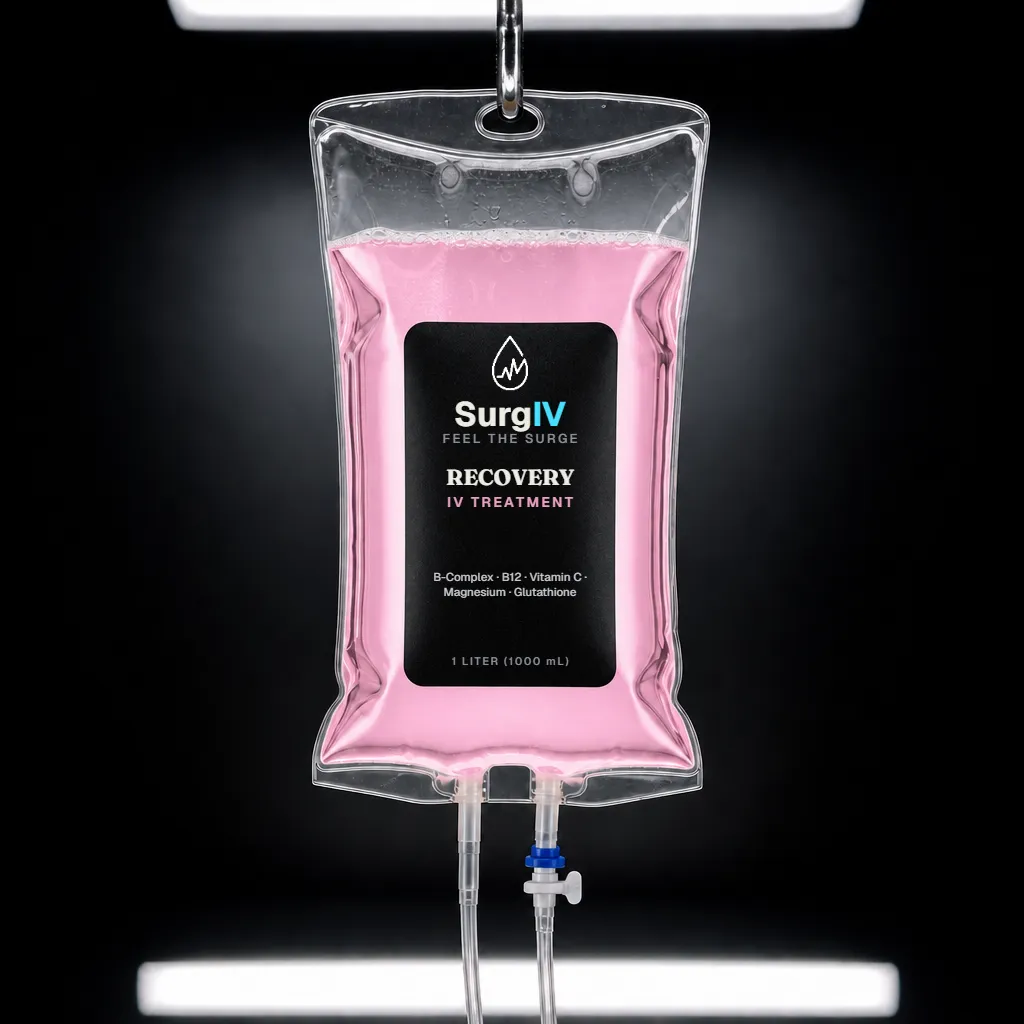
Recovery $299
Fluids, electrolytes and recovery support around shift schedules — first responder programs available.
B-Complex · B12 · Vitamin C · Magnesium · Glutathione
Diaz, off-day
His current system: post-shift electrolytes at the station ("the probie thinks it's a personality quirk; the probie will learn"), the Recovery session on off-day one while the kids are at camp, and the crew's standing post-incident group booking, initiated after last summer's warehouse fire. His summary, delivered in firehouse deadpan: "We rehab at every scene because the body's the equipment. Took me fifteen years to apply that logic past the scene tape." The county's covered because they answer. Somebody should show up for them too — that part, at least, schedules easily.
This article is for general education and is not medical advice. IV therapy at SurgIV is administered by registered nurses under physician-written protocols, with a health screening before your first visit. Talk to your doctor about what is right for you.