4:50 PM, day three of a five-day commercial shoot on a beach in Delray. The temperature at the sand is well past what the forecast promised, the grips have been rigging in direct sun since a 5 AM call, and the first AD is doing the math every production person in Florida does in August: can we get the last two setups before we lose the light, and is my key grip — who has not sat down since lunch and is looking gray — going to make it? Craft services put out water this morning. It is now 4:50 PM. This is the exact scenario production wellness exists for, and it isn't about the talent.
The crew problem nobody line-items
Production days are 12 to 14 hours by design, and Florida exteriors add an occupational exposure identical to any outdoor workforce — with one cruel difference: the schedule can't take shade breaks when the light is right. Camera and grip departments handle hot equipment in direct sun; everyone eats when craft services allows; hydration is whatever was set out that morning and warm by noon. The heat-safety ladder applies to film sets exactly as it does to job sites — the crew member who goes quiet, the one whose skin goes dry, the one making uncharacteristic mistakes at hour eleven — and the cost of ignoring it isn't just human, it's schedule: a down crew member at 4:50 PM costs the day's last two setups.
The call sheet plans for weather, light, and lunch. It rarely plans for the fact that everyone holding equipment has been in the sun since five.
How production bookings run
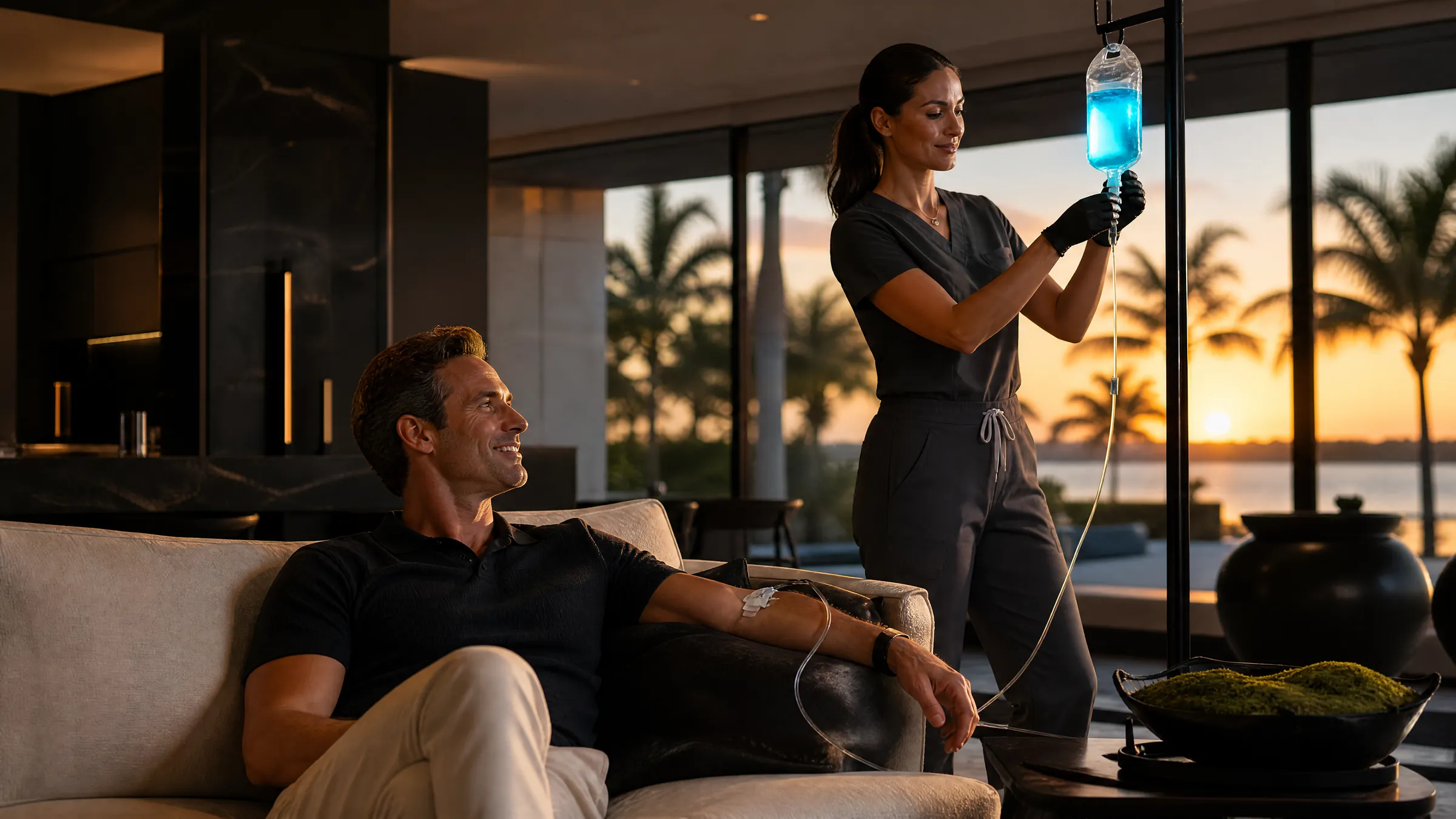
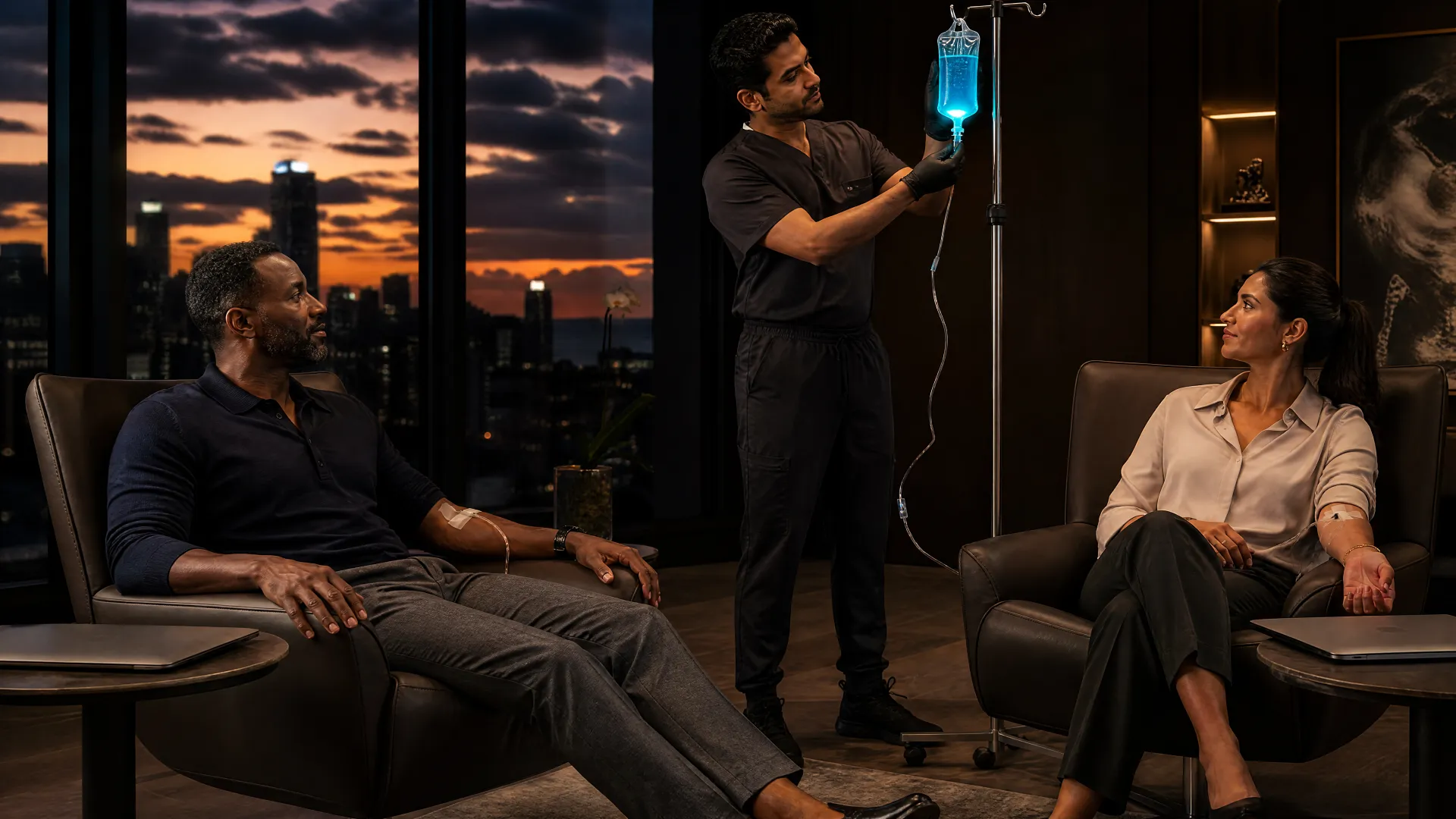
Built around call sheets, because production schedules move: sessions in trailers, base camp tents, hotel suites, or holding areas, staggered around setup windows so nobody leaves the floor at the wrong moment; multiple clients handled in sequence; discretion as standard — many productions prefer no visible branding on set at all, and we arrive looking like nothing in particular. Two booking patterns dominate: production coordinators arranging crew support for multi-day exteriors (increasingly a line item on summer shoots), and talent and glam teams booking day-before or morning-of sessions — where the honest framing matters most.
The talent conversation, honestly
What hydration genuinely does before camera: supports how skin and eyes look through a fourteen-hour day, and how a person feels at hour ten when the coverage is still going — the same defensible territory as event prep. What it doesn't do: replace the sleep nobody got, or transform anything. Any vendor pitching miracles to talent on your set is a liability to the production and to their own credibility — the honest version is the one that survives a set full of skeptical professionals, which every set is.
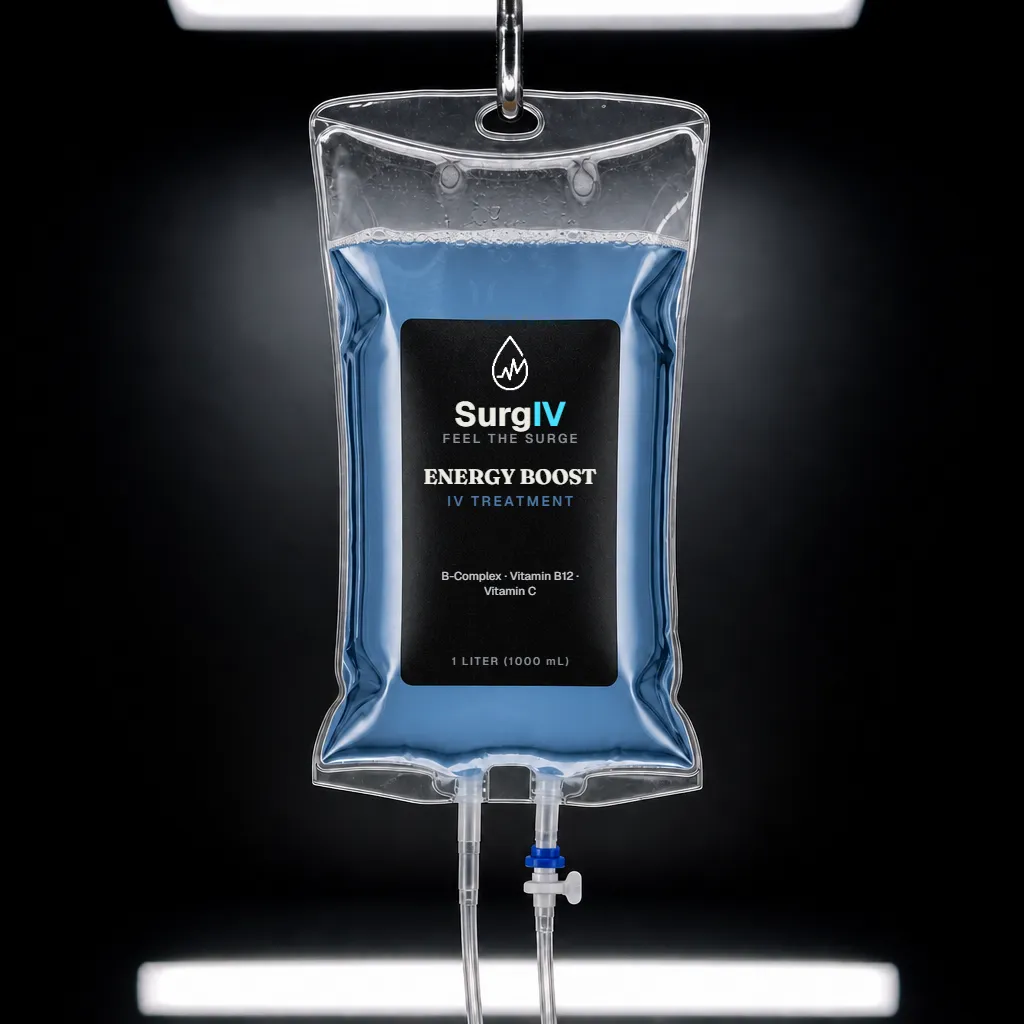
Production-ready
Energy Boost $249
Discreet, scheduled, insured — trailer, suite, or base camp.
B-Complex · Vitamin B12 · Vitamin C
Day five, last setup
The production added crew hydration to the call sheet for the final two days — sessions staggered at base camp through the afternoon, electrolytes stocked at craft services, shade tent enforced between setups. The key grip made it; so did the schedule. The first AD's note to the production office afterward, which is the only review that matters in this business: "We wrapped on time in August. Put it in the budget next year."
This article is for general education and is not medical advice. IV therapy at SurgIV is administered by registered nurses under physician-written protocols, with a health screening before your first visit. Talk to your doctor about what is right for you.