9:35 PM, tax-adjacent anxiety hour, a home office in Boca. A man we'll call Stan, 47, is holding an HSA debit card in one hand like a trivia answer he's not sure of. On screen: our booking page. In his head: a small courtroom. "It's HEALTH savings. An IV is... health. Right? But is it HEALTH-health or wellness-health? Is there a difference? There's definitely a difference. There's always a difference." Stan has discovered, at 9:35 PM, the exact gray zone where the IRS keeps wellness spending.
The straight answer
Stan's courtroom, adjourned: general-wellness IV therapy — the "I want to feel great this month" drip — is typically not HSA/FSA eligible on its own. IV therapy tied to a medical need, documented by a physician's Letter of Medical Necessity, frequently is. The line isn't the treatment; it's the paperwork behind the treatment. The IRS's standing rule for the whole category: expenses must treat or prevent a specific condition, not maintain general health. A hangover drip booked for brunch recovery reads as wellness. The same fluids recommended by your doctor for chronic migraine management, in writing, reads as medicine — and administrators approve exactly that kind of claim every day.
The IRS doesn't rule on the bag. It rules on the reason — and the reason lives in a one-page letter, not in the IV itself.
The Letter of Medical Necessity, demystified
An LMN is a short physician's note stating the condition and why the treatment addresses it — migraines, chronic dehydration, post-illness recovery, whatever your actual medical picture holds. The sequence that works: ask your doctor whether your situation supports one; ask your plan administrator what they require (each plan interprets the rules slightly differently, and their answer is the only one that counts); keep every itemized receipt — ours include provider details, service, and date, which is precisely what claims want. What you should not do is trust any IV company advertising "HSA-approved!" as a blanket feature — that's a red flag, because eligibility belongs to your administrator, and a wrong swipe surfaces at your audit, not the provider's marketing meeting.
The practical playbook
If you have a plausible medical anchor — recurring migraines, a chronic condition with dehydration in its orbit, physician-supervised recovery — pursue the LMN; the pre-tax discount is real money at these prices, roughly a 20–30% effective savings depending on your bracket. If you don't, pay out of pocket and skip the audit roulette; the value math stands on its own. And FSA holders, mind the calendar: use-it-or-lose-it means a legitimate LMN-backed claim in December is worth an evening of paperwork.
Itemized receipts, always
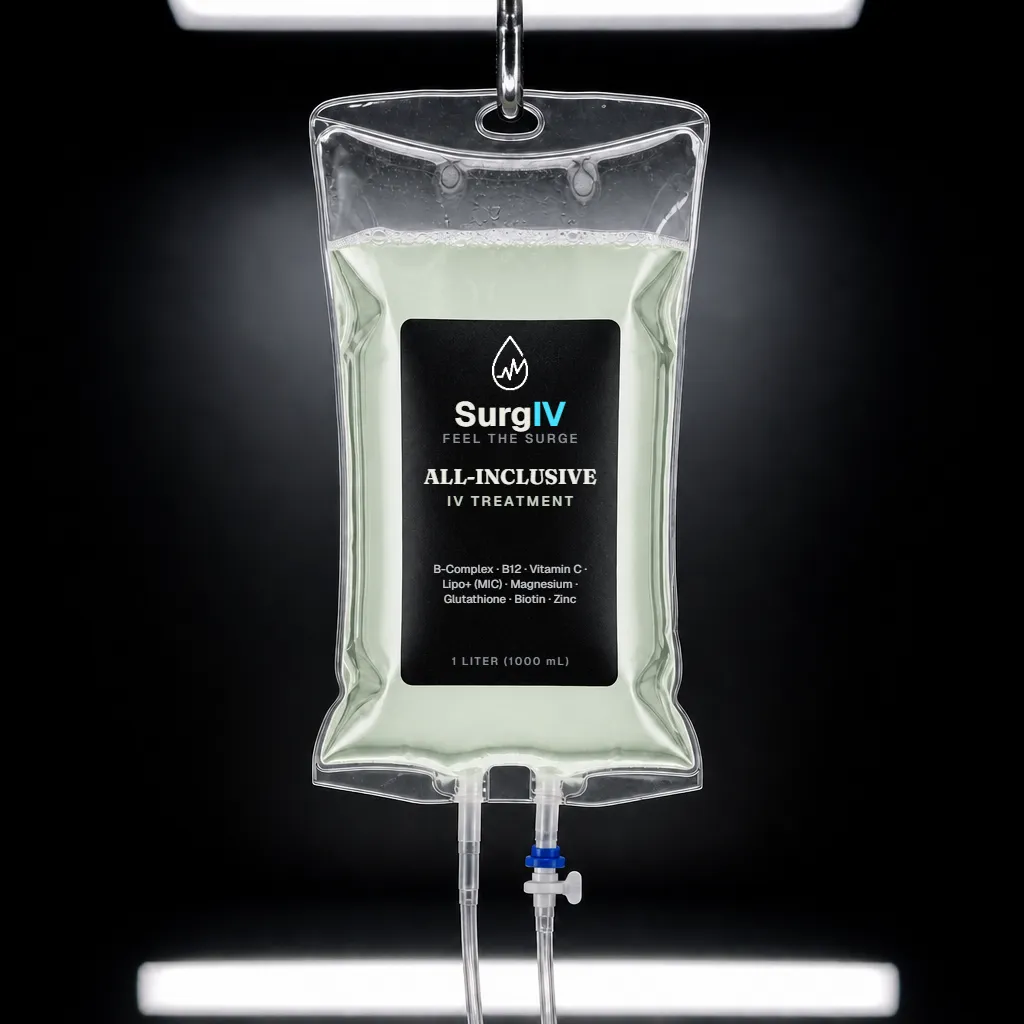
All-Inclusive $349
Every session comes with documentation your administrator can actually read.
B-Complex · B12 · Vitamin C · Lipo+ (MIC) · Magnesium · Glutathione · Biotin · Zinc
Stan, docket cleared
He asked his doctor (migraine history — the real kind, charted for years), got the letter in a week, and his administrator approved the claim path. His verdict, delivered with the satisfaction of a man who beat a gray zone fairly: "Turns out the answer was 'ask two people whose actual job it is' instead of cross-examining myself at 9 PM." That's the whole guide: the card might work, the letter decides, and the only promises worth trusting come from your plan — not a booking page.
This article is for general education and is not medical advice. IV therapy at SurgIV is administered by registered nurses under physician-written protocols, with a health screening before your first visit. Talk to your doctor about what is right for you.