
Day two, 2:40 PM, a home office in Jupiter. A marketing director we'll call Nadia, 39 — until Monday a five-cup professional — is experiencing what she will later describe as "a headache with its own zip code," accompanied by fatigue like wet cement and the focused rage of the newly decaffeinated. Her crime: quitting coffee, cold turkey, on a Monday, because a podcast suggested it. Her search, typed at 40% brightness: "caffeine withdrawal how long PLEASE."
The answer, the survival protocol, and the honest report from the other side.
What's actually happening in there
Years of daily caffeine reshaped your brain's adenosine system — the blocked fatigue-signal story — by adding extra receptors to route around the blockade. Remove the caffeine and those surplus receptors all fire at once: the accumulated tiredness signal, delivered in full, plus the headline symptom's mechanism — vascular rebound: caffeine constricted your brain's blood vessels daily for years; its absence lets them dilate past baseline, producing the marching-band headache that peaks days one and two. Add the secret third factor — coffee was also your hydration habit, so quitting quietly cut your fluid intake too — and Nadia's zip-code headache is fully explained: rebound dilation on a newly dehydrated system, wearing a fatigue overcoat.
The withdrawal isn't your body failing without coffee. It's your body finally delivering five years of mail the caffeine refused.
The timeline and the protocol
The map: onset 12–24 hours post-last-cup; peak misery days 1–2; substantial relief by days 3–5; fully renormalized within 2–9 days. Knowing day five exists is half the survival. The protocol: hydrate aggressively with electrolytes — replacing coffee's fluid volume and fighting the headache's dehydration multiplier is the single highest-impact move; ibuprofen for the peak days, guilt-free; keep moving — light exercise genuinely blunts the fatigue and mood symptoms; protect sleep — the renormalization runs on it, and better sleep is the whole prize anyway; and schedule mercy — the peak days deserve a cleared calendar, not a product launch (Nadia's Monday start was, she concedes, "podcast-brained"). The taper alternative: for the un-cleared calendar, cutting ~25% every few days (or half-caf swaps) dodges the zip-code headache entirely — slower divorce, amicable terms.
The other side (and the bridge to it)
The consistent post-withdrawal report: steadier baseline energy without the borrowing cycles, the 3 PM cliff largely gone, sleep visibly deeper — and caffeine, if reintroduced moderately, working properly again at doses that once did nothing. What the quiet also reveals: your true baseline. If post-withdrawal energy is still low at day ten, that's not the coffee's ghost — that's the depletion checklist's cue, and worth running. For the transition itself, the bridge our quitting clients use: the Energy Boost in week one — full hydration against the fluid-habit loss, B vitamins for the energy machinery doing its renormalization — withdrawal supported rather than white-knuckled. Nadia's day-four session was, per her review, "the armistice negotiation."
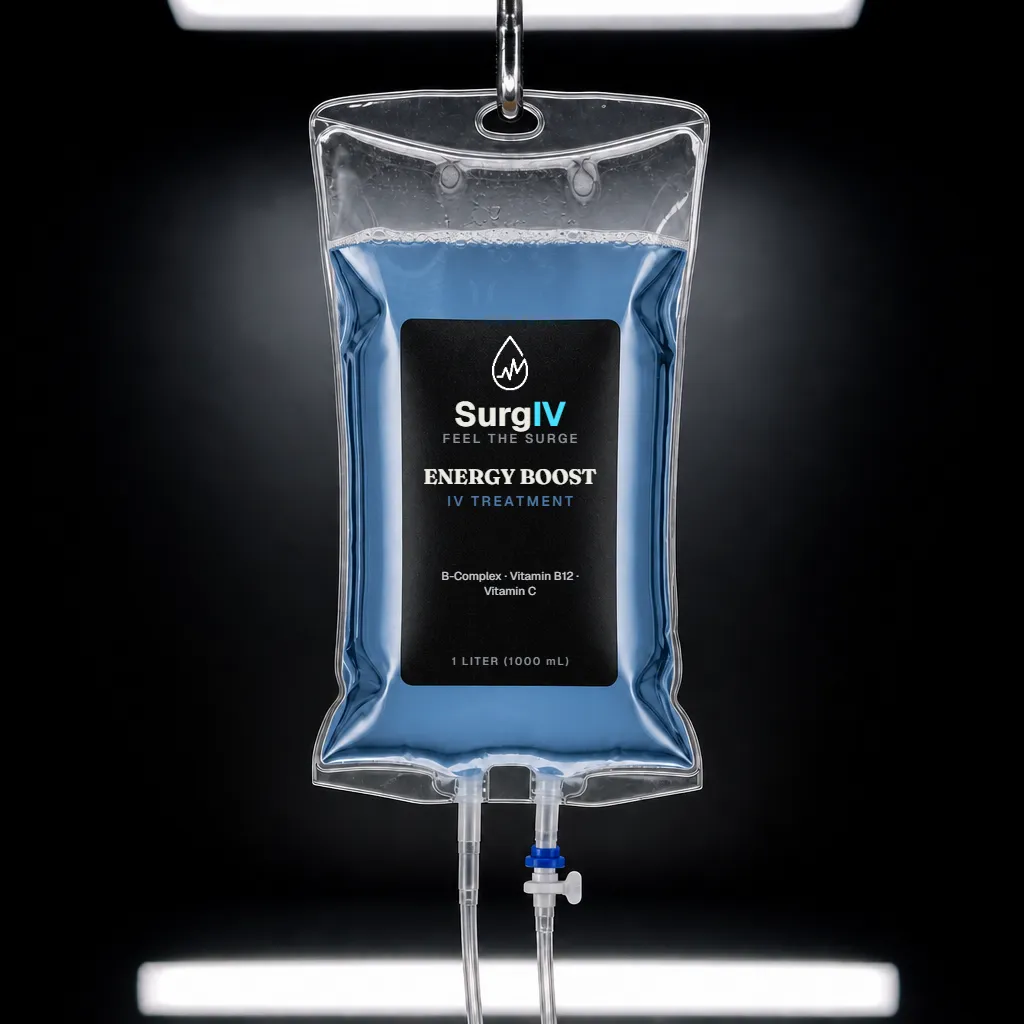
The transition bridge
Energy Boost $249
Hydration and B vitamins while your natural energy comes back online.
B-Complex · Vitamin B12 · Vitamin C
Nadia, day twelve
The report from the far side: "Sleeping like a person, no 3 PM cliff, and yesterday a single green tea hit like the old days' triple shot. The molecule and I are dating casually now. Terms: mornings only, and it doesn't get to own me." The divorce is survivable, county — days one and two are the war, day five the armistice, and the other side is quieter than you remember. Bring water.
This article is for general education and is not medical advice. IV therapy at SurgIV is administered by registered nurses under physician-written protocols, with a health screening before your first visit. Talk to your doctor about what is right for you.