
Mid-August, a Target in Boynton Beach, 4 PM. A mother of three we'll call Rachel is pushing a cart containing the entire school-supply list — the folders, the specific markers, the backpack negotiated over two weekends — when she passes the pharmacy aisle and stops. Stares at the cold-and-flu shelf. And says, out loud, to no one, with the fatalism of a veteran: "See you all in three weeks."
Every experienced parent knows what Rachel knows: the school-supply list is missing its most important section. September isn't back-to-school season. It's germ-merger season — and the households that survive it upright are the ones that treat August as training camp.
The merger, explained
Here's why the September wave is as predictable as the tides: your child spent summer in a small, familiar microbial bubble — your household's germs, the pool's, camp's. In three weeks, that bubble merges with 800 others in a building with shared air, shared lunch tables, and hand hygiene best described as aspirational. Every virus that quietly summered in one family now gets a classroom tour; by week three the class is a viral stock exchange, and by week four the trades come home. The domino pattern follows — kid, sibling, spouse, and finally you, the under-slept caretaker, catching the deluxe version. None of this is preventable. All of it is preparable.
The first day of school is a merger of 800 immune portfolios. Your family is now a shareholder in all of them.
The August training camp
What veteran households run in the three weeks before the bell:
- Sleep repatriation — start now. Summer bedtime drift is real, and an under-slept household enters the merger with weakened defenses across the board. Walking bedtimes back 15 minutes every few days beats the brutal first-week correction — for the kids' immunity and yours.
- The handwash treaty. One habit, disproportionate returns: real handwashing immediately on home arrival, every day, modeled by adults. During active outbreaks, separate hand towels — the shared bathroom towel is the household's most efficient virus distributor.
- The parental fortress. This is the strategic center: kids will get sick (it's developmentally inevitable and, pediatricians remind us, how immune systems train) — the variable you control is whether the household infrastructure falls with them. That means both parents entering September stocked: the Immune Boost pre-season session — high-dose vitamin C, zinc, full hydration — booked school week, before the first classroom souvenir arrives. The munitions logic: exposure is coming regardless; the question is whether your response launches from a full armory.
- The sick-day pact. Actually-sick kids stay home. It's the classroom social contract, and every family that honors it slows the exchange for everyone.
The in-season maintenance
Once the merger is live, the veteran rhythm: early-warning bookings at the first family throat-tickle (resupply while the fight starts, not after it's lost), the stomach-bug protocol bookmarked for the inevitable norovirus quarter, and the caretaker's rule — when a kid goes down, the night-shift parent books for themselves, because the week you're most needed is the week you're most drained. September through May is a campaign, not a battle; supply lines win campaigns.
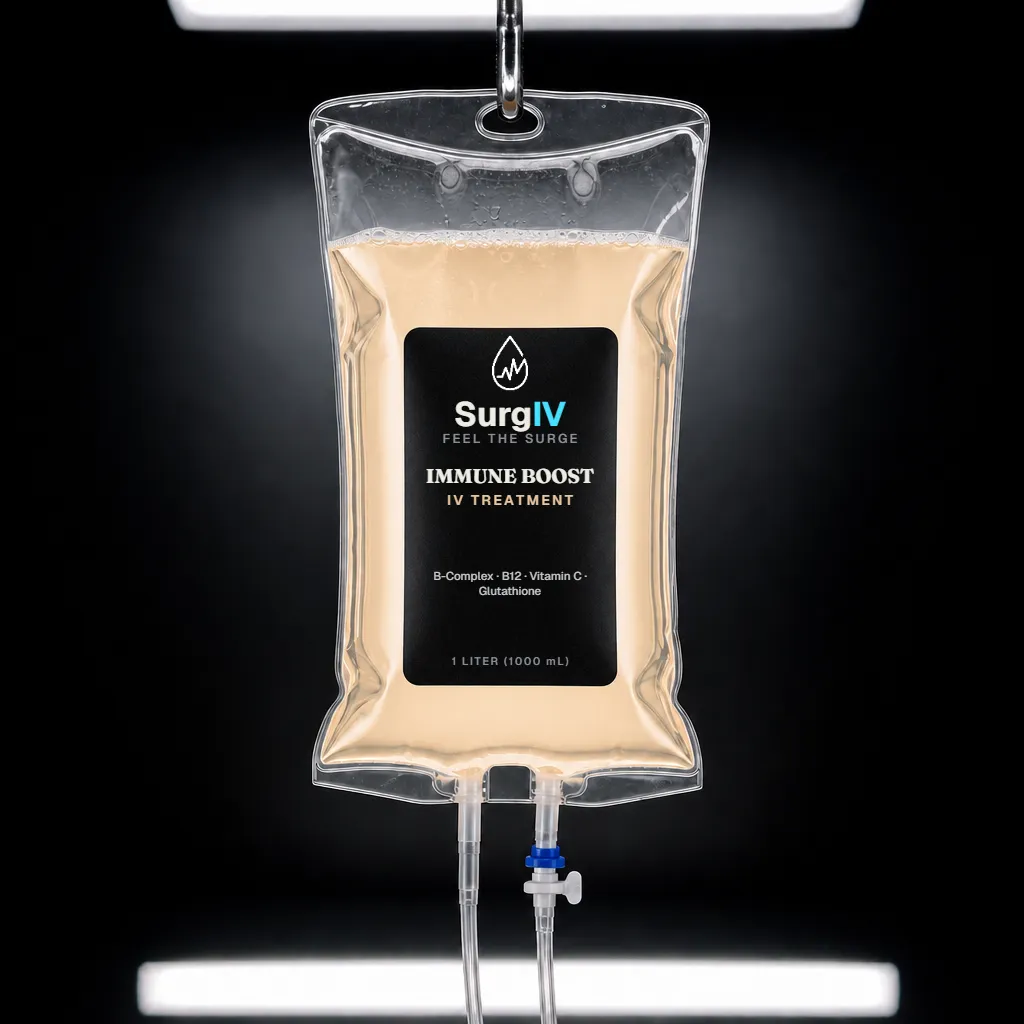
The pre-season booking
Immune Boost $299
High-dose C, zinc and fluids for both parents — before the first classroom cough arrives home.
B-Complex · B12 · Vitamin C · Glutathione
Rachel's list, amended
Rachel's back-to-school list now has a final section after the markers: "Parents: sleep reset Aug 1. Drips: both, first week. Towels: separate. Courage: pending." Her household's last September, she reports, was the first in eight years where both parents stayed upright through October. The merger came, as it always comes. The infrastructure held. That's the whole game.
This article is for general education and is not medical advice. IV therapy at SurgIV is administered by registered nurses under physician-written protocols, with a health screening before your first visit. Talk to your doctor about what is right for you.