8:20 PM, a high school kitchen table in Wellington, the homework saga continues. The ninth-grader from the powerhouse conversation has hit the next worksheet line — "ATP is the energy currency of the cell" — and this time his mother, Monique, gets ahead of him: "Okay, but here's the thing I looked up after last time, and it broke my brain a little." She reads it off her phone: the human body manufactures and spends approximately its own body weight in ATP every single day, while holding only about 250 grams at any given moment. The kid, finally interested: "Wait. That can't be right." It's right. And it changes how "I'm out of energy" should be understood.
The currency, not the calories
ATP — adenosine triphosphate — is the molecule your cells actually spend. Muscle contraction: ATP. Neuron firing: ATP. Protein building, ion pumping, thought, heartbeat: ATP, ATP, ATP. Food is not energy in any spendable sense — it's the raw material the mitochondrial refineries convert into this one universal currency. And the strange part is the storage: you carry only seconds' worth of hard effort in reserve. Sprint, and your existing ATP is gone almost immediately; what carries you is the production line spinning up, recycling the same molecules thousands of times a day. Energy in the human body is a manufacturing operation, not a warehouse.
You don't have an energy tank. You have a power plant with about ten seconds of buffer — which is why "low energy" is almost always a production story.
What that means for feeling tired
If energy can't be stockpiled, then chronic tiredness isn't an empty tank — it's a throughput problem, and throughput has identifiable inputs: mitochondrial capacity (built by training, degraded by sedentary decades), oxygen delivery (cardiovascular fitness, and adequate blood volume — which is why dehydration reliably feels like fatigue), and the cofactor supply. That last one is where nutrition stops being vague: B vitamins are direct participants in the energy pathways — not vague "support," actual chemical steps; magnesium matters because ATP is biologically active only when bound to it (the textbook writes it as Mg-ATP); and NAD⁺ is the coenzyme shuttling the electrons the whole line runs on. Short any of these and the plant runs under capacity on a full pantry — which is precisely what "tired with normal labs" feels like from inside.
Feeding the line
The practical translation: train (capacity), sleep (maintenance), hydrate (delivery), and keep the cofactors stocked — by plate first, and by direct delivery when demand outruns the pantry: big training blocks, brutal work stretches, post-illness rebuilds. Nothing here is a stimulant — caffeine masks throughput problems; cofactors fix them. Different products entirely, sold in confusingly similar packaging.
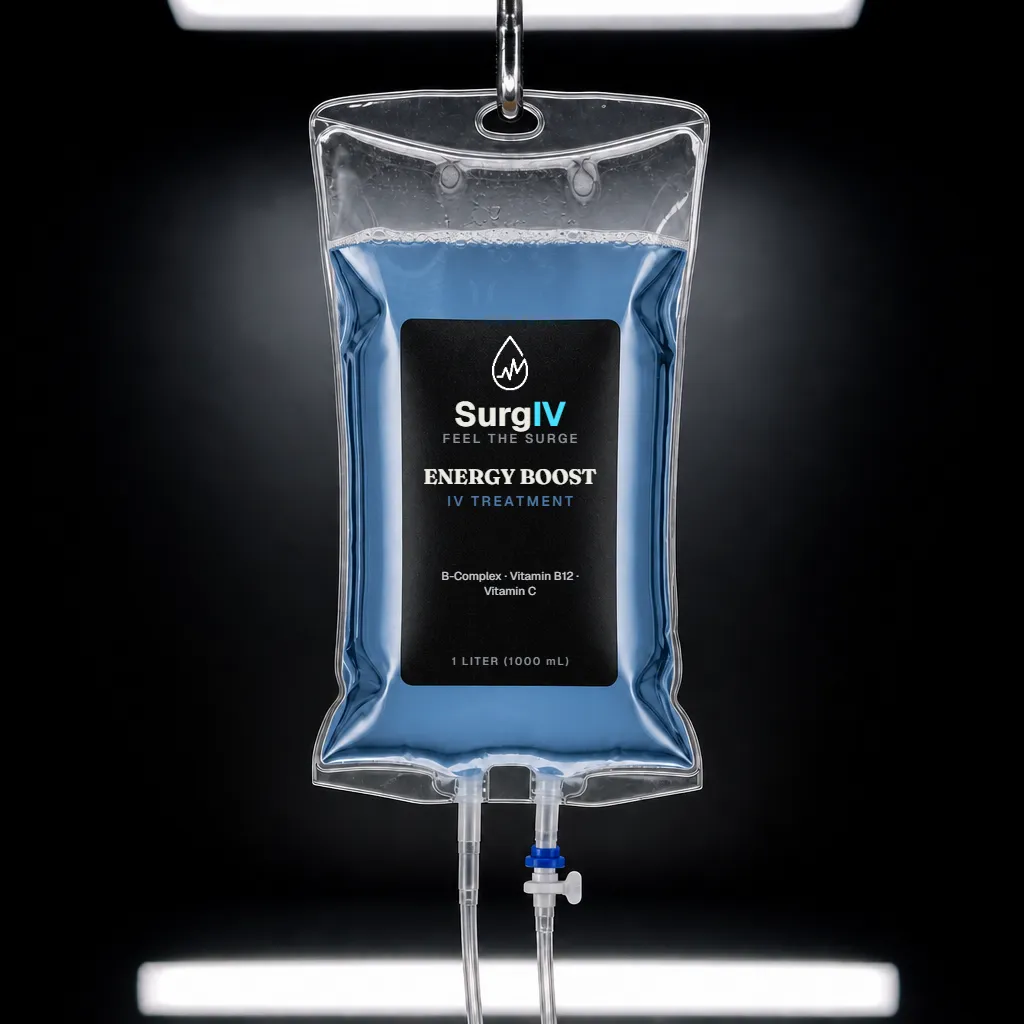
Supply the production line
Energy Boost $249
B vitamins are direct cofactors in ATP production. Deliver them properly.
B-Complex · Vitamin B12 · Vitamin C
The worksheet, upgraded again
The ninth-grader wrote "energy currency of the cell" on his test and got the point. He also, per his mother, explained the body-weight-per-day fact to his entire lunch table, where it was received as the best available fact of the week. Monique's own takeaway, delivered while closing the laptop: "Nobody's tired because they ran out of stored energy. We're tired because the factory's short-staffed. Staff the factory."
This article is for general education and is not medical advice. IV therapy at SurgIV is administered by registered nurses under physician-written protocols, with a health screening before your first visit. Talk to your doctor about what is right for you.