
5:52 AM, a home office in Palm Beach Gardens. The deliverable is sent. The client in London has it. And a consultant we'll call Priya, 36, is watching the sky turn pink with the specific hollow triumph of the all-nighter — victorious, wrecked, and about to face a full Thursday on zero hours of sleep. Her search history at 5:53 documents the universal next thought: "how to recover from all nighter."
Here's the manual — honest about what's salvageable today (some things), what isn't (your judgment), and how not to convert one lost night into a lost week.
First, the damage report
Know what you're working with: 24 hours awake produces impairment that research puts in the range of legal intoxication — reaction time, working memory, and judgment all measurably down, with the special trap that impaired judgment includes judging your own impairment ("I'm actually fine" is the condition talking). Meanwhile the night ran side tabs: hours of extra waking metabolism plus the deadline's coffee means you're dehydrated at stress rates, and the B-vitamin payroll just ran a double shift. Today's plan is therefore triage on three fronts: patch alertness, clear the clearable deficits, and protect tonight — because tonight is the actual recovery; today is just damage control.
The all-nighter's cruelest math: it impairs the exact judgment you need to manage being impaired.
The hour-by-hour
- Dawn: light and fluids, immediately. Bright morning light anchors your circadian clock (which is now confused and considering Tokyo time) and buys genuine alertness. Water with electrolytes starts clearing the night's side tab.
- Morning: front-load the caffeine, schedule the crash. Coffee works this morning — use it early and deliberately. Book your hardest obligations before noon; the trough hits early afternoon regardless of what you drink.
- The nap decision: if you're genuinely failing, one 20–30 minute nap before noon (alarm across the room) — long enough to patch, short enough to avoid sleep inertia and tonight's sabotage. The three-hour "deserved" morning sleep is the classic error: it feels like recovery and functions as a rollover, pushing the debt into night two and three.
- Afternoon: caffeine embargo, easy mode. Hard cutoff by ~1 PM — tonight's sleep is the entire repayment plan and afternoon espresso mortgages it. Downshift the calendar: no driving if avoidable, no big decisions, no contract signatures (see: judgment, impaired).
- Evening: land slightly early, not absurdly early. Bedtime 60–90 minutes ahead of normal — early enough to start repayment, close enough to normal that you don't wake at 3 AM having "finished." One good night clears most of a single all-nighter; the goal is making tonight good.
The deficit-clearing layer
Here's where the morning session earns its slot in the protocol: the sleep debt itself only sleep repays — no drip changes that, and we'd never claim otherwise. But the all-nighter's side tabs (the dehydration, the B-vitamin double shift) are fully clearable, and carrying them makes every sleep-deprivation symptom measurably heavier — the fog foggier, the crash crashier. The Energy Boost as a morning delivery clears that layer in an hour on your couch (the one appointment format compatible with your current judgment), so the only weight you carry into Thursday is the debt that tonight actually settles. Priya's version: nurse at 8:30, client call at 10 taken "as a functional human, allegedly," embargo honored, lights out at 9:40.
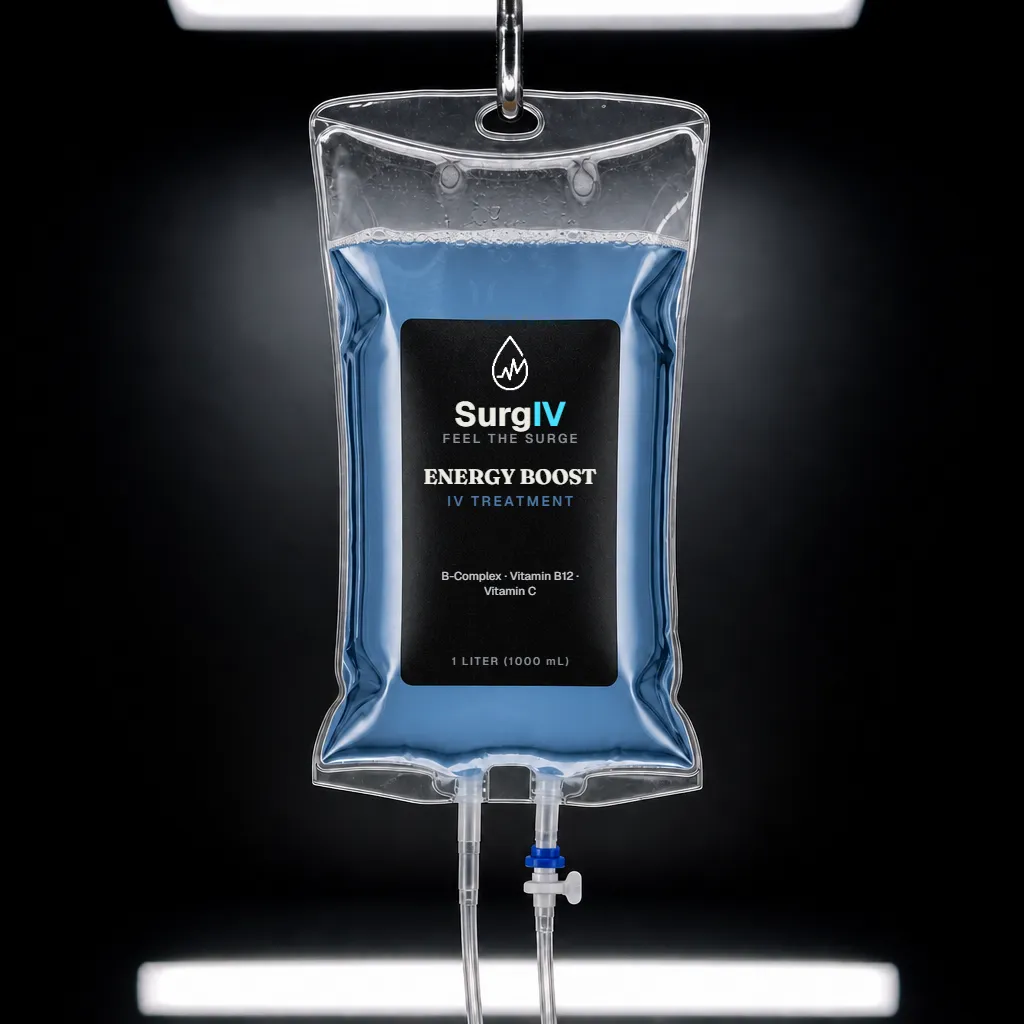
The morning-after infrastructure
Energy Boost $249
Hydration and B vitamins for the day you have to survive on the night you didn't get.
B-Complex · Vitamin B12 · Vitamin C
Priya, Friday morning
One properly-protected night later: "85% by Friday breakfast, 100% by Saturday. The all-nighter cost one day instead of the usual three." Her post-mortem note to her own team, now taped above her monitor, is the manual in one line: "The all-nighter is a loan. The interest rate is set by how you handle the next 18 hours." Borrow rarely. Repay same-day. And keep the morning-delivery number handy for the deadlines that win anyway.
This article is for general education and is not medical advice. IV therapy at SurgIV is administered by registered nurses under physician-written protocols, with a health screening before your first visit. Talk to your doctor about what is right for you.